Peace lilies eventually outgrow their pots and need repotting to continue thriving. When roots become cramped and soil depletes of nutrients, your plant's growth slows and overall health declines. Repotting gives your peace lily fresh soil, more space for root development, and renewed access to the nutrients it needs.
Knowing when to repot and how to do it properly ensures your peace lily stays healthy and continues producing its signature white blooms. Here are the signs that indicate it's time to repot and step-by-step instructions for doing it correctly.
Signs your peace lily needs repotting

Your peace lily will show clear signs when it needs repotting. The most obvious indicator is roots growing through the drainage holes at the bottom of the pot, which means the plant has completely outgrown its container. You might also notice roots circling the soil surface or the entire plant lifting slightly out of the pot.
Water behavior changes too. If water drains straight through without being absorbed, the roots have taken up most of the available soil space. Wilting shortly after watering suggests the roots can't access enough moisture, even when the soil is damp.
Growth patterns also reveal when repotting is overdue. Stunted growth or leaves that are smaller than usual indicate the soil has run out of nutrients. Even without these symptoms, peace lilies typically need repotting every 12-18 months depending on their growth rate.
If you haven't repotted in over two years, it's probably time regardless.
How to repot your peace lily
1. Choose the right pot and soil
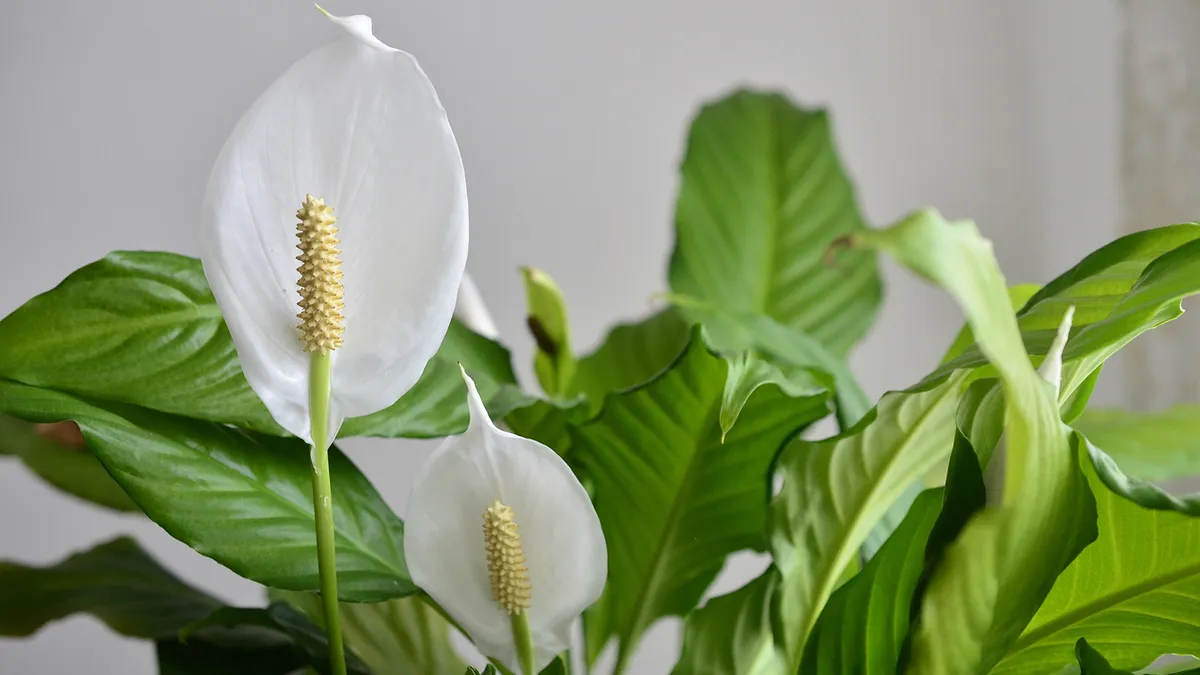
Select a pot one to two inches larger in diameter than the current pot. Going too large can lead to overwatering issues since excess soil holds moisture the roots can't absorb. Also, make sure the new pot has drainage holes at the bottom.
For soil, use a well-draining potting mix designed for houseplants. Peace lilies prefer soil that retains some moisture while still allowing proper drainage. You can use standard potting soil or mix in perlite or orchid bark for additional drainage.
2. Water your peace lily before repotting
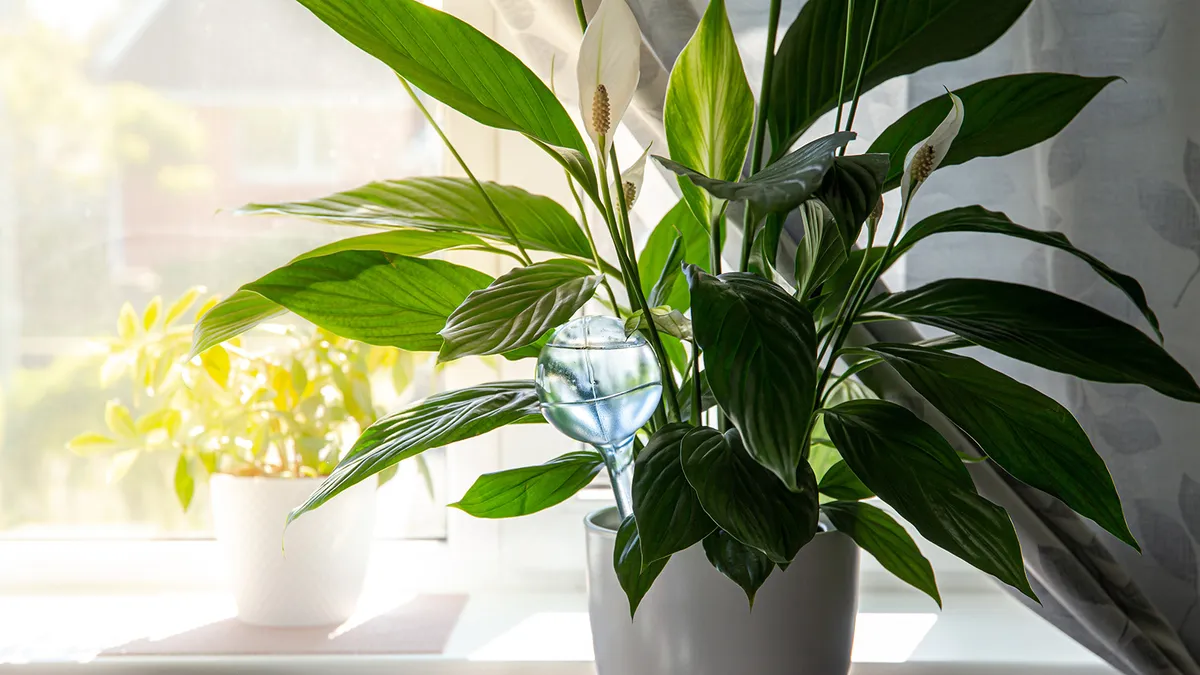
Water your peace lily thoroughly a day before repotting. Moist soil holds together better than dry soil, making it easier to remove the plant from its current pot without damaging roots. The moisture also reduces transplant shock by keeping roots hydrated throughout the process.
Don't water immediately before repotting or the soil will be too muddy to work with. A day ahead gives the soil the right consistency — damp but not soggy.
3. Remove the peace lily from its current pot

Turn the pot on its side and gently tap the bottom and sides to loosen the root ball. Carefully slide the plant out by gripping the base of the stems near the soil — never pull by the leaves. If the plant is stuck, run a butter knife around the inside edge of the pot to release it.
Once removed, gently shake or brush away loose soil from the roots. Inspect the root ball for any brown, mushy, or foul-smelling roots and trim these with clean scissors. Healthy roots are white or light tan and firm.

4. Place the peace lily in the new pot

Add a layer of fresh potting soil to the bottom of the new pot — about 2-3 inches depending on pot size. Position the peace lily in the center so the top of the root ball sits about an inch below the pot's rim. This leaves room for watering without overflow.
Hold the plant in place and fill around the sides with fresh soil, pressing gently to eliminate air pockets. Don't pack the soil too tightly or it will restrict root growth and water drainage. The plant should sit at the same depth it was in the previous pot as burying stems deeper can cause rot.
5. Water thoroughly and place in indirect light
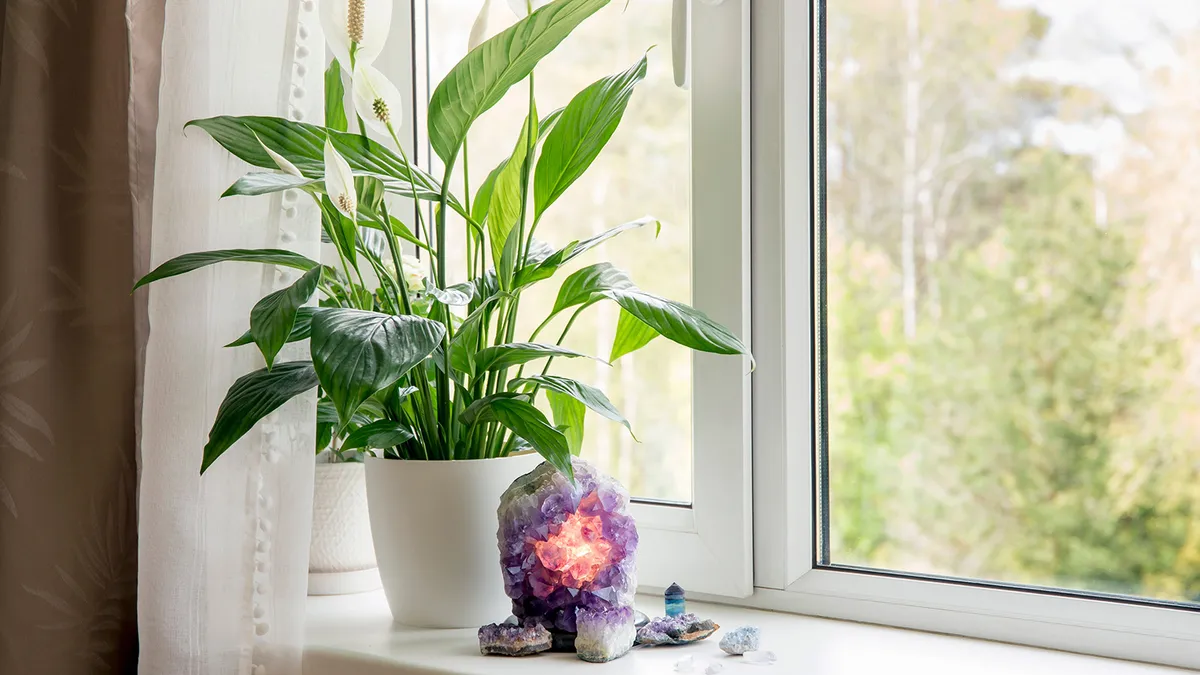
When removing a spent bloom, follow the flower stem all the way down and cut it as close to the base of the plant as possible, near where it emerges from the foliage. The stem won't produce new growth if you leave it in place, and removing it completely frees up energy for your peace lily to use elsewhere.
Make your cut at approximately a 45-degree angle rather than straight across. This angled cut prevents water droplets from collecting on the cut surface, which could allow fungal infections to develop.
After each cut, wipe your blade with disinfectant before making the next one to avoid spreading any potential bacteria or disease between cuts. Continue until you've removed all spent blooms and any yellowing or damaged leaves.

Follow Tom's Guide on Google News and add us as a preferred source to get our up-to-date news, analysis, and reviews in your feeds. Make sure to click the Follow button!
More from Tom's Guide
- Your peace lily needs dividing if you see these signs — here's how to do it
- 5 reasons your peace lily's leaves are turning brown
- You can double your peace lily blooms with simple pruning