Brown leaf tips on peace lilies look like classic signs of underwatering or low humidity. Most people respond by watering more frequently or misting their plant daily, expecting the brown tips to disappear. Instead, the problem persists or worsens, spreading from the tips further down the leaves.
The actual culprit isn't moisture-related at all. Fluoride and chlorine in tap water accumulate in peace lily leaf tips over time, causing the distinctive brown discoloration that ruins the plant's appearance. These chemicals don't flush out through normal watering; they build up progressively until visible damage appears.
Peace lilies are particularly sensitive to these additives compared to other houseplants. Here's why it happens and how to stop it.
Why tap water causes brown leaf tips

Most municipal water contains fluoride added for dental health and chlorine for disinfection. These chemicals are safe for humans but toxic to peace lilies, which evolved in tropical rainforests where water is naturally pure.
Fluoride doesn't break down or evaporate. When you water with tap water, fluoride travels through the plant and concentrates in leaf tips. Over weeks and months, it accumulates until it reaches toxic levels that kill leaf tissue, creating brown, crispy tips.
As you continue using tap water, more leaves develop brown tips and the damaged areas spread further down each leaf. The only solution is switching to water that doesn't contain these chemicals.
How to prevent brown leaf tips
1. Switch to filtered or distilled water
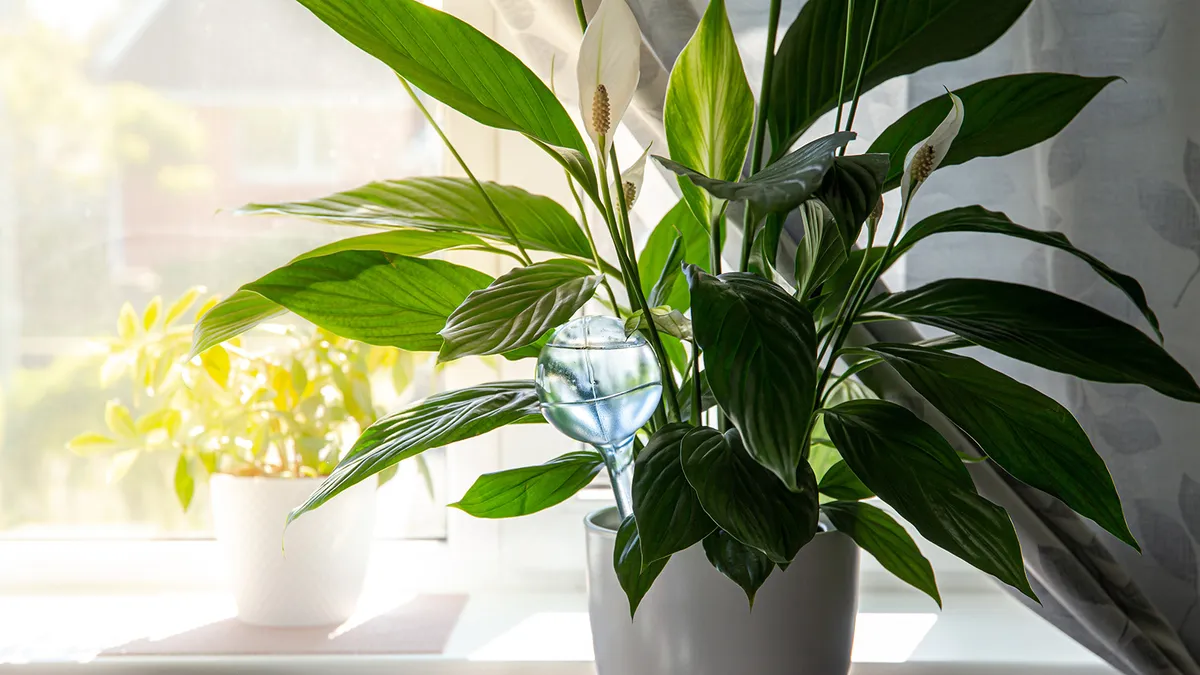
Stop using straight tap water for your peace lily. Switch to filtered water, distilled water, or rainwater — any source that removes or doesn't contain fluoride and chlorine.
Standard carbon filters like Brita remove chlorine effectively but don't eliminate fluoride. For complete fluoride removal, you need reverse osmosis filtration or distilled water. Rainwater collected in clean containers works perfectly and costs nothing.
If buying distilled water feels impractical for regular watering and you have a dehumidifier, you can repurpose the water by watering your plants with it. It's not distilled, but it won't have the fluoride and chlorine that cause dry, brown tips.
2. Let tap water sit before using it
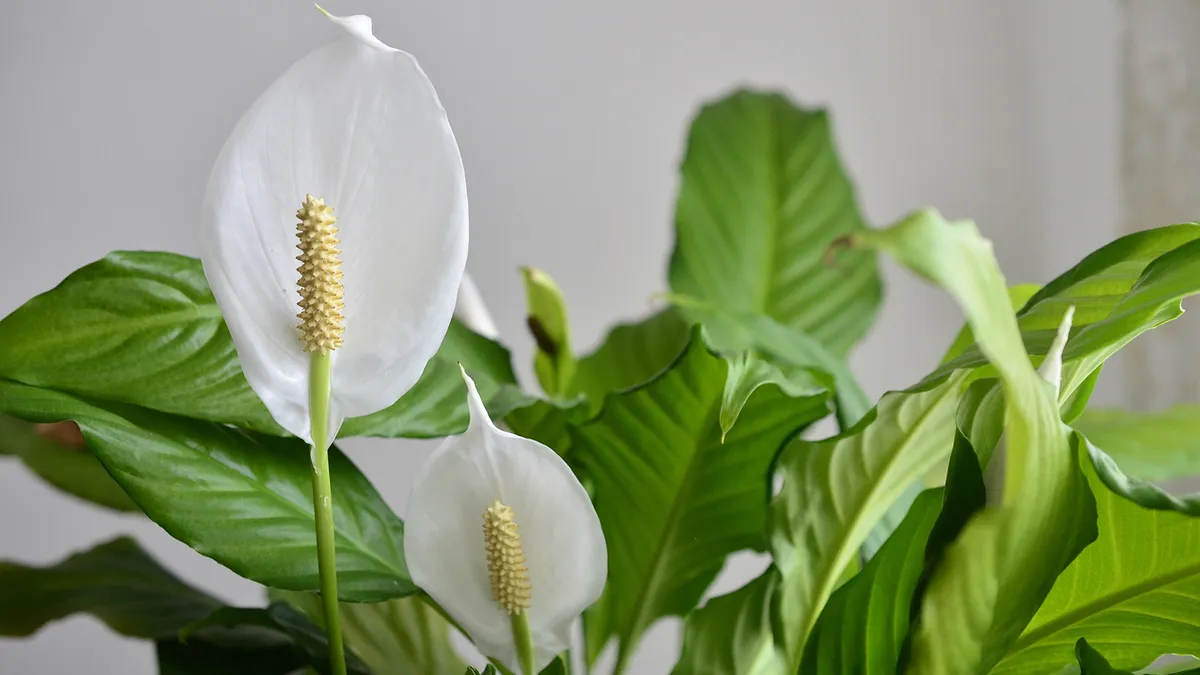
If switching water sources isn't practical, let tap water sit in an open container for 24-48 hours before using it. This allows chlorine to evaporate naturally, though it doesn't remove fluoride.
Fill a watering can or bucket, leave it uncovered overnight, then use it the next day. This reduces chlorine content significantly, which helps even though fluoride remains. It's not a perfect solution, but it's better than using fresh tap water directly.
3. Trim existing brown tips

For leaves already damaged, trim off the brown tips with clean scissors. Cut at a slight angle following the natural leaf shape to make the trim less obvious. This doesn't fix the underlying problem, but it improves appearance while you transition to better water.
Only trim brown, crispy tissue — don't cut into healthy green parts of the leaf. If more than half a leaf is brown, consider removing the entire leaf at its base to let the plant focus energy on healthy foliage.
4. Flush the soil periodically
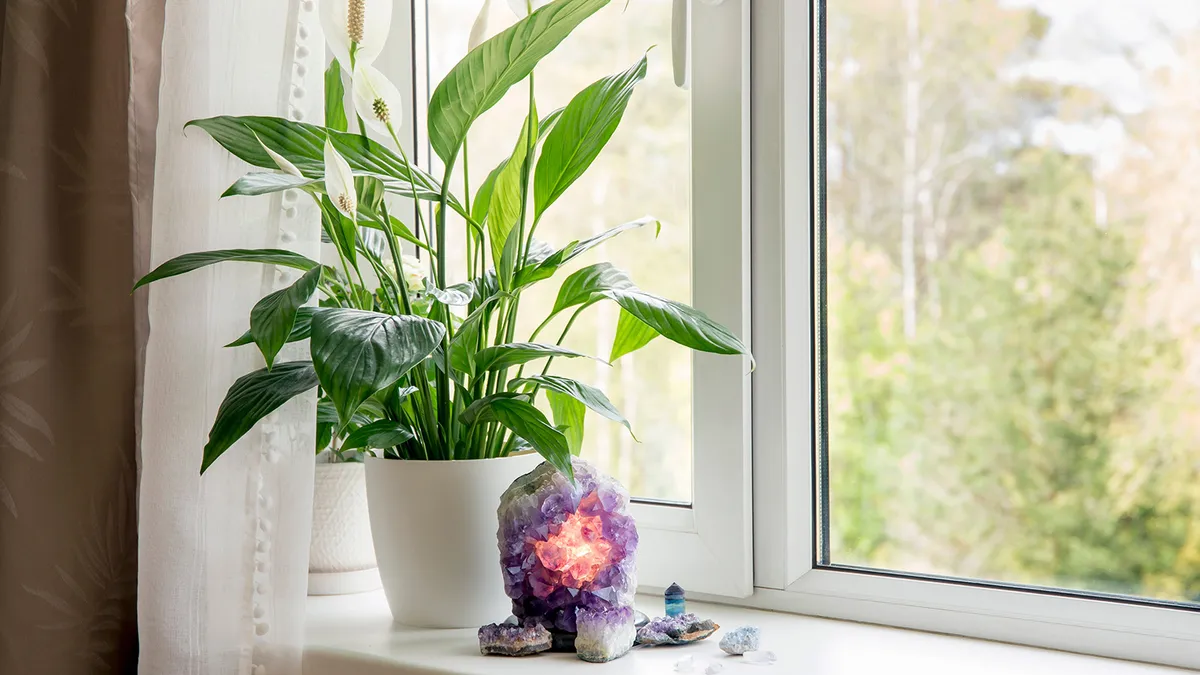
Even after switching to pure water, fluoride already in the soil will continue affecting your plant. Flush the soil every few months by running distilled or filtered water through the pot until it drains freely from the bottom. This helps remove accumulated salts and chemicals.
Do this in a sink or bathtub where excess water can drain away. Use 2-3 times the pot's volume in water — if your pot holds 1 liter of soil, flush it with 2-3 liters of clean water.
Why this matters
Peace lilies are marketed as easy, beginner-friendly houseplants that tolerate neglect. While this is partly true (they survive low light and irregular watering), their sensitivity to tap water chemicals isn't widely known. Understanding that tap water causes this specific problem saves you from wasting time on solutions that don't work.
The fix is simple: use better water. Once you switch, new growth emerges without brown tips, and your peace lily looks dramatically healthier within a few months as fresh leaves replace damaged ones. Peace lilies can live for decades and bloom regularly with proper care, therefore eliminating tap water chemicals is one of the most important adjustments you can make.

Follow Tom's Guide on Google News and add us as a preferred source to get our up-to-date news, analysis, and reviews in your feeds. Make sure to click the Follow button!
More from Tom's Guide