Fruit trees need plenty of nutrients to produce healthy growth and abundant fruit. Without proper feeding, trees struggle to develop strong branches, produce quality fruit, and resist disease. Fertilizing at the right time makes the difference between a disappointing harvest and baskets full of fresh fruit.
The timing of when you fertilize matters just as much as how you do it. Feed too early or too late in the season, and you'll miss the window when trees need nutrients most. Understanding when and how to fertilize fruit trees ensures your apples, pears, peaches, plums, and other fruit trees stay healthy and productive year after year.
1. When to fertilize fruit trees

The best time to fertilize established fruit trees is late winter (or early spring at the latest), just as new growth begins for the season. This is when trees need the most nutritional support to push out new leaves, branches, and eventually fruit.
Aim to fertilize when buds start to break but before flowers open — typically about six weeks before the tree reaches full bloom. This timing varies depending on your climate and the type of fruit tree.
You can continue feeding fruit trees throughout spring and into early summer if needed, but stop fertilizing by July. Feeding too late in the season encourages new growth that may not survive winter cold.
Late winter to early spring is critical. Trees are coming out of dormancy and preparing for their most active growing period. Providing nutrients at this time supports strong growth throughout the entire season and leads to better fruit production.
2. What fertilizer should you use?
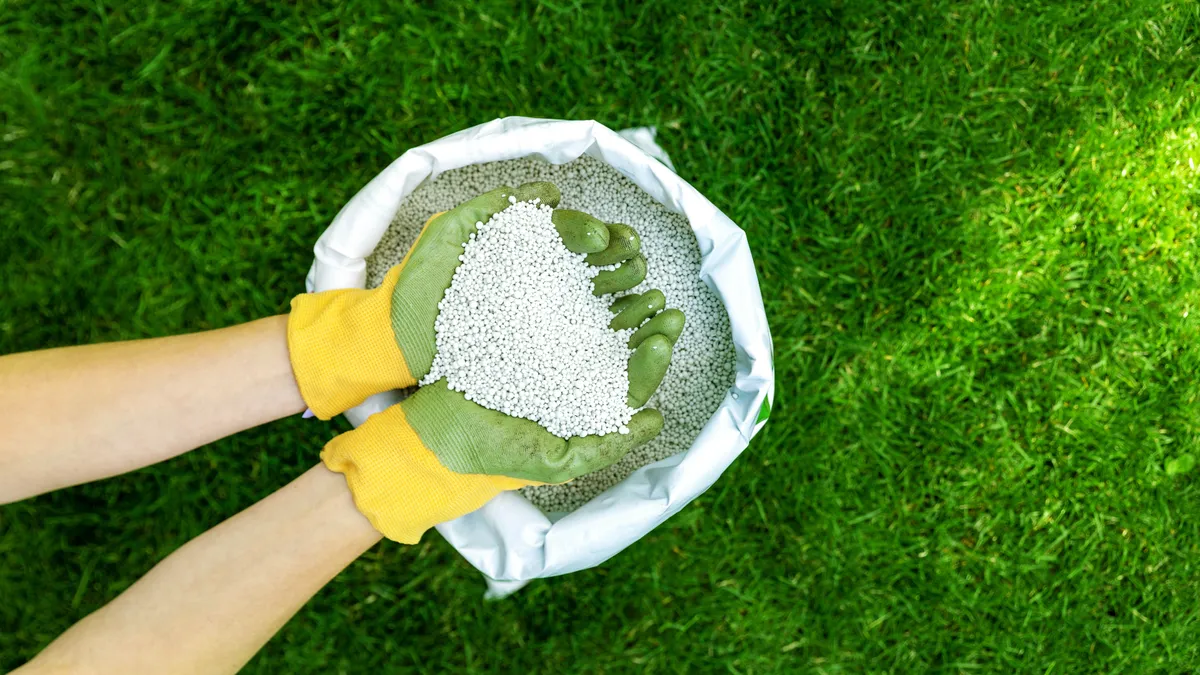
Choose a balanced formula or one designed specifically for fruit trees. A 10-10-10 fertilizer (equal parts nitrogen, phosphorus, and potassium) works well for most fruit trees.
Nitrogen supports leafy growth, phosphorus encourages root development and flowering, and potassium helps with overall plant health and fruit quality. Fruit trees need all three for optimal production.
Organic options like compost, well-rotted manure, or organic fertilizer blends provide slower-release nutrients and improve soil structure. Spread a 2-3 inch layer of compost around the base of the tree in early spring, keeping it away from the trunk. Organic amendments feed the tree gradually while improving soil health over time.
Synthetic fertilizers act faster and provide precise nutrient ratios, but they don't improve soil structure the way organic options do.
3. How to apply fertilizer to fruit trees

For granular fertilizer, sprinkle it evenly around the base of the tree, starting about a foot away from the trunk and extending out to the drip line — the outer edge where branches end. This is where feeder roots are located and where they'll absorb nutrients most effectively.
Use about one pound of fertilizer for each year of the tree's age, up to a maximum of 8-10 pounds for mature trees. Never pile fertilizer directly against the trunk, as this can burn the bark. After spreading granular fertilizer, water the area thoroughly to help nutrients soak into the soil.
Liquid fertilizer works faster because nutrients are immediately available to roots. Dilute it according to package directions and apply to the soil around the tree using a watering can or sprayer. Liquid fertilizers need more frequent application, usually every two to four weeks during the growing season, because they don't last as long in the soil.
Avoid over-fertilizing, which leads to excessive leafy growth at the expense of fruit production and makes trees more susceptible to pests and diseases.
4. Mulch fruit trees for added benefits

Mulching helps retain soil moisture, suppresses weeds, and gradually adds organic matter as it breaks down. Apply a 2-4 inch layer of organic mulch — wood chips, shredded bark, or compost around the base of the tree in spring or fall.
Spread mulch from about a foot away from the trunk out to the drip line or beyond. And make sure to keep mulch pulled back from the trunk itself to prevent rot and pest problems.
As organic mulch decomposes, it adds nutrients to the soil, supplementing your fertilizing routine. Replenish mulch once or twice a year as it breaks down.

Follow Tom's Guide on Google News and add us as a preferred source to get our up-to-date news, analysis, and reviews in your feeds. Make sure to click the Follow button!
More from Tom's Guide
- This Martha Stewart-approved trick shows you how to protect your trees
- How to prepare fruit trees for winter — 7 expert tips
- Your lawn is vulnerable to snow mold right now — here's how to protect it