Winter is the quietest time of the year for gardeners, since most plants are entering a stage of dormancy before spring. Without the need to push energy towards leaf development and general growth, plants require less to survive: less water, less nutrition, less sunlight.
Instead, they use this time to hunker down for the winter and conserve their strength for more hospitable environments. It’s similar to how a bear might hibernate until spring.
This is equally true for the peace lily, an attractive tropical species with glossy leaves and architectural white flowers. But just because it requires less water, that doesn’t mean your peace lily should be neglected.
In fact, it needs distinctly different care if it’s to survive through the coldest months of the year and bloom again in 2026.
Winter Care for Peace Lilies
Originally from tropical parts of the Americas and southeast Asia, peace lilies aren’t particularly well suited to harsh winters. Fortunately, the right treatment should shepherd the plant through the season and allow it to emerge in good condition next spring.
While the peace lily may require lower levels of care than other times of year, it still has specific needs to thrive.
Hydration

As previously mentioned, peace lilies need less water in the winter, but some hydration is still necessary for survival. Usual watering is once every week or so; in winter, spread your watering out so that you are only adding water to the container approximately every 10 days. One way to check if it’s time to rehydrate the soil is to measure how moist the upper inch of soil is. When it is thoroughly dry, it’s time to water.
Sunlight
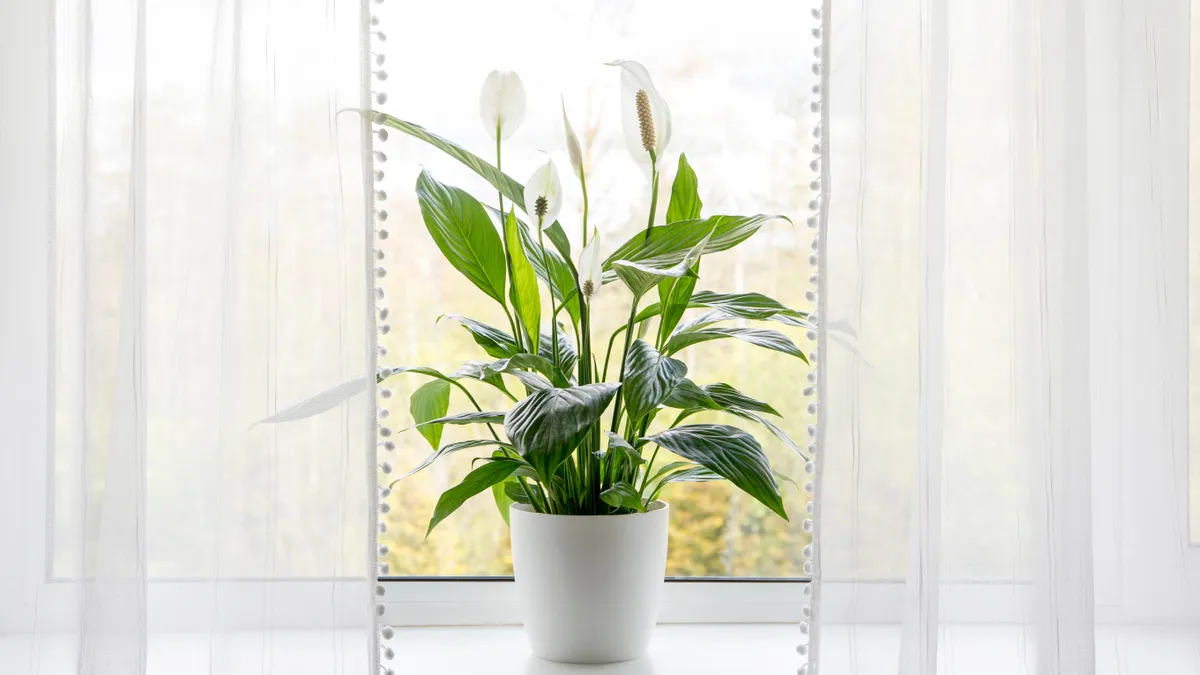
Peace lilies love the sun but they prefer bright, indirect light since their tropical homes would usually have a lot of tree cover impeding direct light. In the winter, it can be more difficult to get sufficient sunlight since the days are shorter, so make sure you put the peace lily in a south- or west-facing window and supplement with artificial light as needed.
Humidity
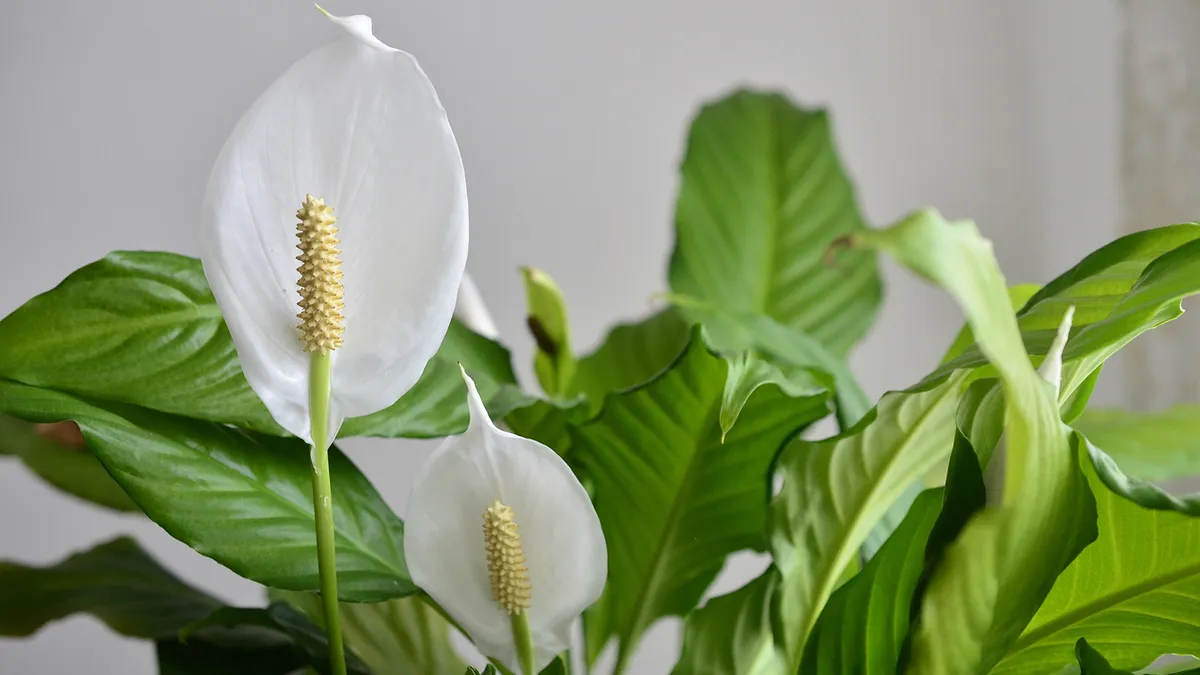
Tropical environments have high humidity, so it follows that the peace lily prefers high humidity levels, even in the winter. This can be especially challenging to achieve, since central heating dries out indoor air – which is already quite dry. Raise the moisture levels in the air with a humidifier, or consider putting the peace lily on a pebble tray. You can also mist the leaves with a spray bottle, but be careful to do this in the morning and not too heavily, as excess moisture can lead to a fungal infection.

Fertilizer

The purpose of fertilizer is to give plants additional nutrients for more bountiful growth. Since peace lilies fall dormant in the winter, you don’t need to supplement them as frequently. However, skipping the fertilizer altogether can be detrimental and leave the plant underfed when it begins growing again in the spring. For the right balance, mix up a solution of water-soluble fertilizer that is diluted to half strength. Apply it every 4-6 weeks for best results.
Signs your peace lily is struggling
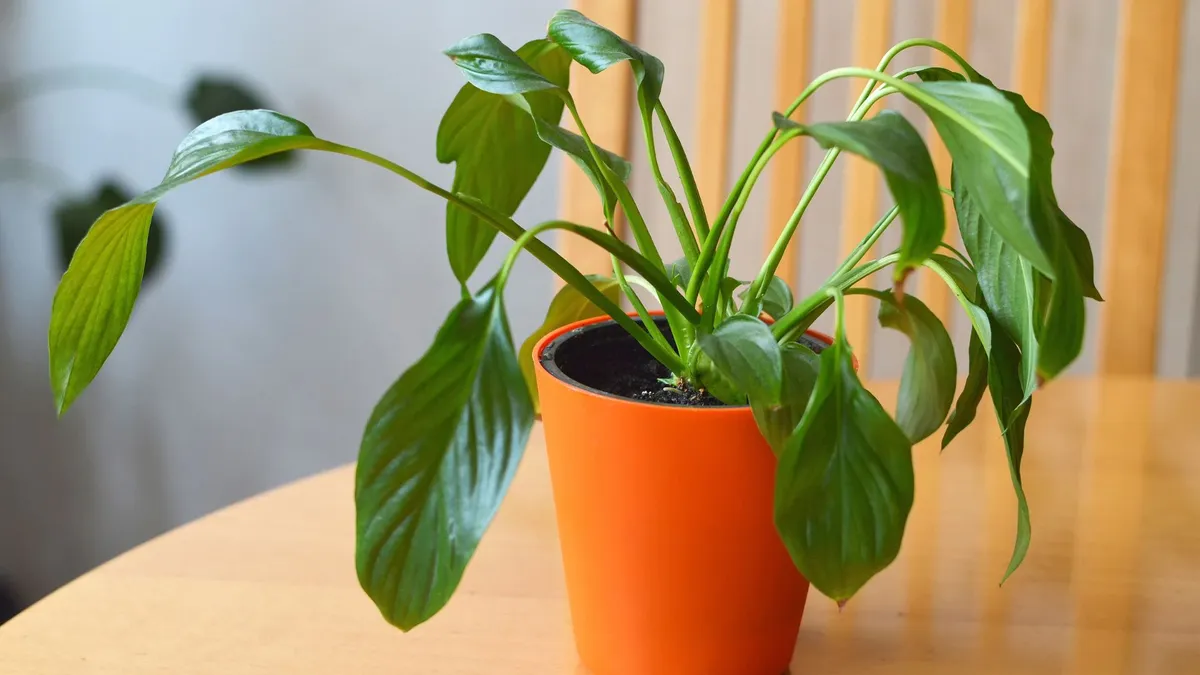
Despite best efforts, sometimes colder temperatures can disrupt a plant’s ecosystem or the adjusted care schedule might not be quite right for that particular peace lily. Here are a few signs to look out for, that signal you need to change things up a bit:
Yellow leaves
This could mean that the plant is overwatered, deficient in nutrients, or experiencing shock from the cold. Assess the soil moisture levels, your fertilizer schedule and the surrounding environment to see which is the most likely.
Wilted leaves
This could mean that the plant is either under- or over-watered. Check the moisture level of the soil; if it feels overly damp, then you’re underwatering and if it’s bone dry, then it’s probably due to underwatering. Adjust your watering schedule accordingly. There should also be no standing water in the bottom of the container.
Brown tips
This is usually a sign of low humidity, especially if not combined with yellowing leaves. Correct with a mister, a humidifier or a pebble tray.

Follow Tom's Guide on Google News and add us as a preferred source to get our up-to-date news, analysis, and reviews in your feeds.
More from Tom's Guide