It's no secret that I love animals and birds. If you've read any of my previous camera reviews, or have taken a look at my Instagram, you'll know that I absolutely adore photographing wildlife. It's my niche. But to be able to photograph wildlife properly, you need a telephoto lens that lets you get up close and personal with animals while still respecting their space — and I've spent the past weekend testing perhaps my favorite camera and lens combo yet.
The OM System OM-1 Mark II is, so far, one of the best mirrorless cameras I've had the pleasure of testing. Though I haven't published my full review of it yet (it will come soon, trust me), my first impressions of the camera are extremely positive. I spent the past weekend in nature, photographing Eurasian blue tits, European goldfinches, red deer, fallow deer, robins, and more. And honestly? I'm in love.
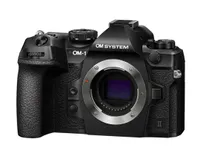
An extremely capable and competent camera packed with pro-level features, the OM-1 Mark II boasts rapid autofocus, excellent in-body image stabilization, blackout-free 120fps burst shooting, and lots more. I paired it with the OM System 150-600mm f/5.0-6.3 IS M.Zuiko Digital ED telephoto lens, which helped me capture some of my best photos yet. If you enjoy wildlife and want to step up from smartphone photography, the OM-1 Mark II feels like the right port of call.
Huge but never unwieldy to handle


The OM System OM-1 Mark II is one of the easiest cameras I've ever used, period. Its buttons and dials are well laid out and within easy reach; this camera simplifies photography, really. Each control is labeled appropriately and in an easy-to-read manner so even if you're new to photography, you should have no problem getting to grips with it.
I've been lucky in the sense that OM System sent me three lenses to test, and one of them was the OM System 150-600mm f/5.0-6.3 IS M.Zuiko Digital ED — a telephoto lens with a maddening 300-1200mm equivalent reach. With this lens, I was able to capture deer and birds from far, far away, acting as they do in their natural habitat.

Of course, the lens is... huge, which means it's long and heavy. The OM-1 Mark II, on its own, weighs 1.32lbs, and the lens weighs 4.55lbs. Combined, the kit weighs 5.87lbs — which is quite a bit. You need some arm strength to hold the camera up for long periods of time, especially when photographing birds overhead or in tall trees.
Make no mistake, though: the OM-1 Mark II and the 150-600mm lens never feel unwieldy to handle, or uncomfortable to wear around your neck. Both the camera and lens have great weight distribution which ensures your hands don't feel too fatigued. I would, however, recommend carrying a tripod if you plan on photographing a particular animal in a particular spot, as that will make handling the kit even better.
Drool-worthy autofocus and images

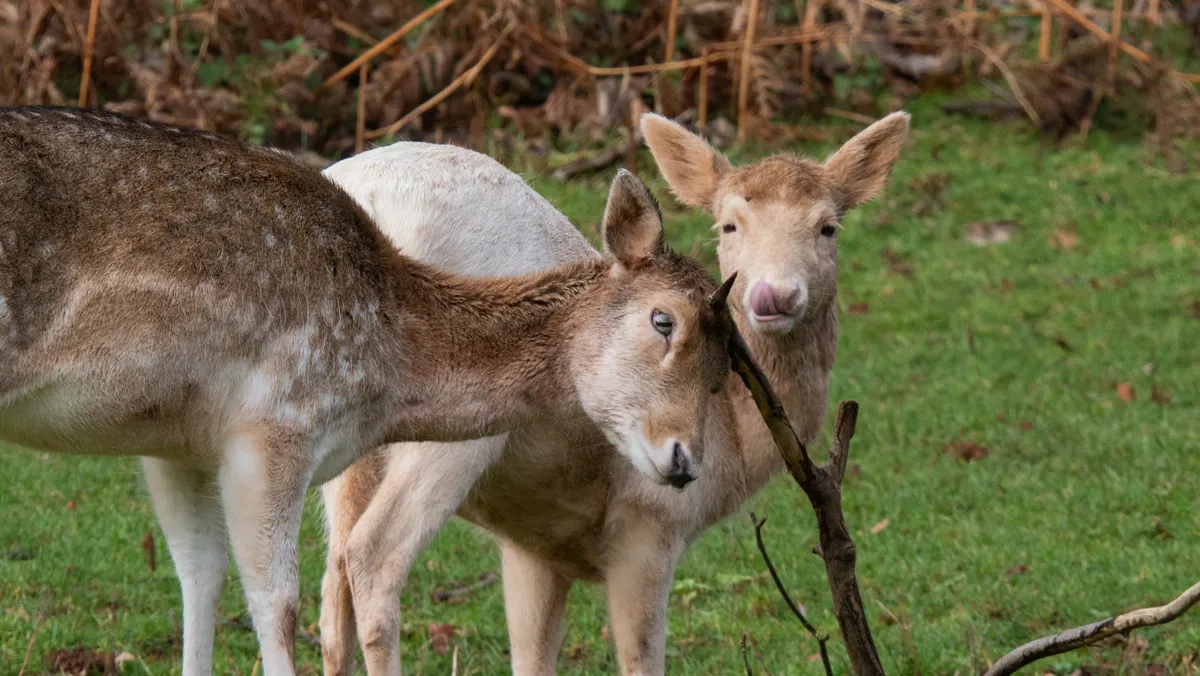


A wildlife camera is no good if it can't quickly focus on animals and birds — and the OM System OM-1 Mark II has no problem doing so. This camera is chock-full of pro specs that make photographing wildlife a walk in the park. First of all, its 20.4MP Micro Four Thirds sensor captures plenty of detail, and there's a High-Res Handheld Shot mode too, which stacks eight to 12 images to produce a 50MP image (80MP in Tripod mode). This is extremely useful and makes the camera stand out in a crowded market.
As for focusing, there are several subject detection modes, including birds, animals, planes, cars, etc. The camera utilizes 1,053 cross-type phase detection focus points which cover 100% of the image area for high-speed subject tracking. In my testing, so far, the autofocus is yet to let me down. It's rapid, really, taking mere milliseconds to focus on


In fact, the autofocus is so good that the camera has been able to spot birds before I have been. For instance, when I was out and about, I heard a European robin singing somewhere behind me, so I turned around but I couldn't see it — they're very good at camouflaging, after all. I pointed the camera in the general direction of the birdsong and instantly, the OM-1 Mark II found the robin and locked on to it. It basically worked better than my own eyes!
Alongside best-in-class autofocus, one feature I've been making extensive use of is the 120fps sequential/burst shooting and Pro Capture. Pro Capture, basically, starts buffering a running series of photos at 120fps when the shutter button is half pressed. This has helped me capture birds in flight, as well as skittish birds that move about a lot, refusing to stay in the same spot for more than a few seconds at a time. You can see examples of photos captured with this mode in the gallery above.
Another OM-1 Mark II feature I adore is the blackout-free sequential shooting, which means that you never loose sight of your subject while tracking them through the electronic viewfinder (EVF). It's something I appreciated on the Sony A1 II, but the A1 II's drive tops at 30fps — making the OM-1 Mark II the better option for high-speed photography. Oh, and the A1 II costs nearly three times more.
Worth ditching your smartphone for

Thanks to the advent of technology, there's always a camera in your pocket — in the form of a smartphone, of course. But even your shiny, brand new, up-to-date Google Pixel, Samsung or iPhone has limitations. A mobile camera can never really hold a candle to a mirrorless camera, especially when it comes to wildlife photography. Your phone may be able to focus on birds, but it will never be able to capture professional-looking snaps of them in flight, for example.
And that's why the OM System OM-1 Mark II is a formidable camera for those looking to either capture better photos or simply get close to animals without disturbing them. While your smartphone probably features a good digital zoom, the sharpness and crisp quality a camera lens captures remains undisputed.
There are loads of cameras out there, ones that excel at wildlife and high-speed sports photography. But if there's a mid-range, capable camera I can wholeheartedly recommend — even though I've been using it for just a couple weeks — it's the OM-1 Mark II ($2,399 / £2,049). Pair it with the 150-600mm f/5.0-6.3 lens ($2,999 / £2,499) and you've got yourself a winner.

Follow Tom's Guide on Google News and add us as a preferred source to get our up-to-date news, analysis, and reviews in your feeds.
More from Tom's Guide
- I just tested the Canon EOS R5 Mark II to photograph wildlife — and this one feature has changed how I take photos forever
- This $1,100 camera beats out $10,000 super telephoto lenses for wildlife photography, and I've taken some of my best photos yet
- I tested the Sony A1 II for 2 weeks — and its autofocus results blew my mind