I love colors (yes, even though my wardrobe consists mostly of black clothes). I love photographing colors. Capturing vivid greens, popping oranges, and subtle blues brings me a lot of joy. When I test the best cameras, I thoroughly enjoy analyzing how different shades have been captured by a camera's sensor. As someone whose niche is wildlife photography, I adore capturing animals' and birds' varied colors — it brings me a lot of joy.
So what happens when you take color away from someone who loves it so much? For the past two weeks, I've been testing the Leica Q3 Monochrom. As the name suggests, it's a black-and-white version of the standard Q3, and it features a mono sensor which shoots stills and video in black-and-white only. I was skeptical at first, but the more I used the camera, the more details were revealed to me — details I hadn't noticed before.
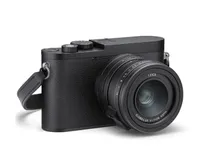
Because the camera features a mono sensor and the Bayer color filter array (CFA) over the sensor is absent, the Q3 Monochrom captures all the light at every pixel, resulting in a cleaner image, even at high ISO sensitivities. Though I always have fun testing cameras, reviewing the Q3 Monochrom was a challenge in the most fun way possible — and if you aren't a fan of black-and-white photography, you will be after you see the images I captured.
Slow and considered photography that's an utter delight

As a wildlife photographer, I'm used to always being on my toes when I'm out and about trying to photograph animals. Birds, especially, can be skittish and you can never let your guard down, especially if you want to get a good shot. The Leica Q3 Monochrom is not a wildlife camera. Sure, its 15fps drive is suited to casual wildlife photography, but it is in no way a fast snapper, like the OM System OM-1 Mark II or the Sony A1 II.
The Q3 Monochrom is designed for slow and considered photography, so it's meant for street, architecture, landscape and portrait photography. I won't lie, I haven't been a massive fan of street or architecture photography, because I've always felt it's too slow for me. That was true until I tested the Q3 Monochrom, and using the camera to photograph the beautiful streets of Bath, U.K. changed my mind.


Thanks to its 60.3MP sensor, the Q3 Monochrom captures images that are full of detail, as you can see in the gallery above. They're crisp, edges are defined, and the inky blacks appear deep while the subjects never appear flat. What makes this camera great for street photography and for capturing candid moments is the fact that there is good subject separation. In the shots of people standing against buildings or vehicles, they never appear to bleed into the background, so the images have a 3D pop to them.
Even though they're still images, there's a sense of movement to the images, which is also thanks to the 3D-ness captured by the Q3 Monochrom. Each image is characterful, and the monochromatic tones capture the overcast days and the Georgian architecture's moodiness very well.
Revealing hidden details in the shadows

The Leica Q3 Monochrom boasts remarkable high dynamic range performance, which is another reason why this is a fantastic camera for street and architecture photography. Offering up to 14+ stops, the Q3 Monochrom captures a wide dynamic range for flexibility in post-production. This, basically, means that you can make extensive adjustments to bright highlights and dark shadows while retaining (and even revealing) plenty of detail.


What do I mean by this, in practical terms? Have a look at the images in the gallery above. The first image is unedited, straight out of the camera. In the second image, I've reduced the highlights and boosted the shadows in Adobe Photoshop Lightroom. Doing so has revealed lots of detail in the shadows — you can clearly see the different textures in the bark and branches now. Also, doing so has even revealed new branches that weren't visible in the unedited image.
Having such a wide dynamic range at your disposal can come in clutch when you're shooting in challenging conditions. For instance, if your subject is standing in front of a very bright light source or in direct sunlight, you can save some highlights and walk away with a very usable photo after making adjustments in post.
The Q3 Monochrom's ISO (100-200,000) can be pushed to its very limit too, and you can still get a usable photo (with some drop in sharpness) at the highest sensitivity. Because of the black-and-white sensor, images taken at high ISO have a film-like grain, which, in my opinion, adds even more character to them. For the complete low-down on the image quality, check out my full Leica Q3 Monochrom review.
Tactile and beautiful handling

Leica cameras rarely disappoint when it comes to real-world use and handling, and the Leica Q3 Monochrom is no different in this regard. Even though I wish the camera had a sculpted grip for a more secure hold, it's still a sheer delight to use. The camera isn't too heavy, weighing 1.64 lbs (with battery and SD card), and it measures 5.11 x 3.64 x 3.16 inches, so it's compact enough to carry in a small bag or around your neck.
What I really like is that Leica has chosen to forego its classic red dot on the Q3 Monochrom. Don't get me wrong: I love the pop of color the red dot adds on most of its other cameras, but this is a low-key, black-and-white camera, and I like that you don't draw attention to yourself when you're photographing the streets. The Q3 Monochrom is inconspicuous, and it's as stealthy as a Leica gets.
The Q3 Monochrom delivers a hassle-free shooting experience, thanks to its straightforward and well-placed dials and buttons, and its stripped-back menu system. Its fixed 28mm lens has clear markings on it, and it features a dedicated macro mode too, giving you more flexibility and freedom while shooting.


Photographing the streets (and the occasional wildlife, casually) with the Q3 Monochrom has opened my eyes to how many details there are all around us, even in manmade objects. I'm a street photography skeptic no more, and the Q3 Monochrom is the camera to thank for that.

Follow Tom's Guide on Google News and add us as a preferred source to get our up-to-date news, analysis, and reviews in your feeds.
More from Tom's Guide
- The Leica Q3 Monochrom shoots only in black-and-white and costs nearly $8,000 — here’s why I love it
- Best mirrorless cameras in 2026
- I tested and loved the controversial Leica M EV1, but I’d choose this 4.5-star camera instead