




You might be noticing that as you get older, your body doesn’t respond to exercise the same way it used to. That’s completely normal, but it doesn’t mean strength gains are off the table, especially for your core. You just need to train a little differently.
Physiotherapist and personal trainer Grace Heinrichs, who works at X-Club Pilates & Wellness, sees this all the time with her clients.
As we age, she explains, muscle mass naturally decreases, movement can become more limited, and the body gets a little slower at activating muscles. Over time, the deep muscles that support your core can start doing less of the work, while bigger surface muscles step in to compensate, often leading to stiffness rather than true strength.

Doctor of Physical Therapy, HCPC Registered Physiotherapist, Chartered Physiotherapist, Reformer Pilates Instructor, and Personal Trainer currently working at X-Club Pilates & Wellness in London, UK.
The encouraging part? This is something you can absolutely work on.
“There is good news in all of this: the core responds beautifully to intentional, low-load, well sequenced training at any age,” Heinrichs says. Here's five exercises for the core that she swears by.
What is the workout?
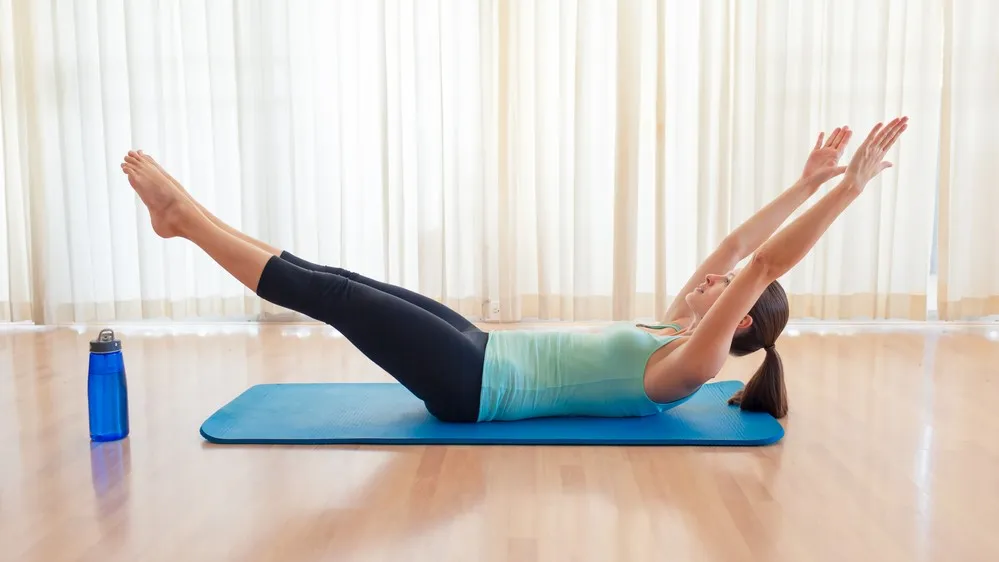
Designed with physiotherapy and Pilates principles in mind, Heinrich says this workout is suitable for most older adults and requires very little equipment. You can perform it on the floor, mat, or gym space.
1. Transversus Abdominis (TvA) Activation
- Lie on your back with knees bent and feet flat on the floor. Place your hands on your hips in a C grip.
- Tilt your pelvis slightly towards your face to flatten your lower back into the floor, hold it in neutral. With even pressure across your spine take a relaxed breath in.
- As you exhale, gently draw the the lower abdomen inward, as if you were zipping up a snug pair of pants or narrowing your waistline. The pelvis and ribcage should stay still: no tilting, try to maintain neutral. Breathe normally while holding the contraction.
- Hold for 10 seconds.
- Relax completely.
- Repeat 10 times for three rounds.
- Tip: think support, not tension. This should feel subtle, ~10% effort compared to a curl up which would feel like 100% abdominal effort.
2. TvA Leg Extensions
- Lie on your back with knees bent and feet flat on the floor. Place your arms long by your side body, press palms into floor.
- Tilt your pelvis slightly towards your face to flatten your lower back into the floor, hold it neutral
- Draw transversus abdominis in and lift your right knee into tabletop. Extend your right knee straight, away from your body.
- Pull your knee back into table top and place your foot back on the floor. Relax TvA and then re-engage before you initiate the left knee into tabletop.
- Continue to alternate keeping your pelvis still.
- Do 10 repetitions, for three rounds.
3. Sit-to-Stand with Slow Lowering
- Sit on a chair, feet hip-width apart. Exhale and stand drawing your TvA down and in.
- Press through the heels of your feet to stand, avoid using momentum or the upper body.
- Lower back down to the chair by pushing your hips back like you are closing a car door with your bum.
- Do 10 repetitions, for three rounds.
4. Seated marching with TvA
- Sit on a chair, feel your spine grow towards the ceiling, feet hip-width apart.
- Inhale to prepare, and exhale draw TvA in while marching one knee off of the chair.
- Lower the knee back down and relax TvA.
- Repeat on the other side.
- 10 repetitions, for three rounds.
5. Standing Weight Shifts
- Stand upright, feet hip-width apart.
- Gently draw TvA in towards your spine.
- Shift weight side to side into each foot, imagine your spine getting longer as you shift your weight.
- This activates your multifidi to provide segmental stability and control in your spine.
“The biggest mistake people make is assuming core work needs to be high intensity to be effective. In reality, the opposite is often true,” Heinrichs says.
Instead of pushing to exhaustion, she recommends slowing things down and focusing on controlled movement, steady breathing and good alignment. A few well-performed reps will always beat racing through dozens with poor form, and progress should come from gradually increasing challenge rather than going all out.

Follow Tom's Guide on Google News and add us as a preferred source to get our up-to-date news, analysis, and reviews in your feeds.
More from Tom's Guide
- 'Aging muscles respond very well to progressive strength training' — a personal trainer shares a 5-move workout to build muscle after 65
- A yoga teacher swears by this hip mobility move for tight hips — I’ve seen the benefits firsthand
- This hiking fleece is my favorite winter running layer — just ask my washing machine

