“The golden rule when I'm training seniors is safety first always,” personal trainer Josh Schlottman says. “I'll always recommend they consult with their healthcare provider before starting the exercise program and get medical clearance. This is especially important if they have pre-existing conditions like heart disease or arthritis or have been sedentary.”
It can be daunting starting out on a new fitness journey, but it’s important to distinguish between good pain, caused by working muscles you might not have used in a while, and bad pain, which will feel sharp or shooting. Below, coach Josh Schlottman shares his go-to moves for seniors for building strength and balance.
Preventing falls is essential and even more so when working out — Josh reminds his clients to ensure their workout area is free from any trip-hazards like rugs or cords, and to wear supportive footwear.

Josh is a personal fitness trainer and nutritionist with 20 years of experience. He holds a Bachelor's degree in Exercise Physiology and Nutrition Science. He's a Certified Strength and Conditioning Specialist (CSCS) by the National Strength and Conditioning Association and a Certified Personal Trainer (CPT) by the American Council on Exercise.
What are the exercises?
The exercises below build functional fitness. By this, we mean they strengthen the muscles needed to do everyday tasks, such as getting up from a chair, lifting a grandchild out of a car seat, or carrying a heavy bag of groceries.
Good form is essential, so remember to move slowly and with control. If you feel a sharp or stabbing pain at any point, stop.
1. Door frame rows
“This is a standing bodyweight exercise that strengthens your back using only a door frame. It targets the rhomboids and lats while also improving posture,” says Josh.
How: Stand facing an open doorway. Grip the insides of the doorway with your hands. Then lean back slightly until your arms are extended. Pull your chest to the doorframe by squeezing your shoulder blades together. Finish by slowly extending your arms back out.
2. Inside to outside foot weight shifts

“This bodyweight exercise specifically helps with ankle mobility and stability while strengthening the small muscles of the feet. These are the first line of defense against falls,” says Josh.
Stand tall (you can hold a chair for support). Slowly shift the weight onto the inside edges (arches) of your feet while lifting the outer edges slightly. Then roll your weight to the outside edges by lifting the inner edges. Try not to lock out your knees.
3. The golfer’s lift
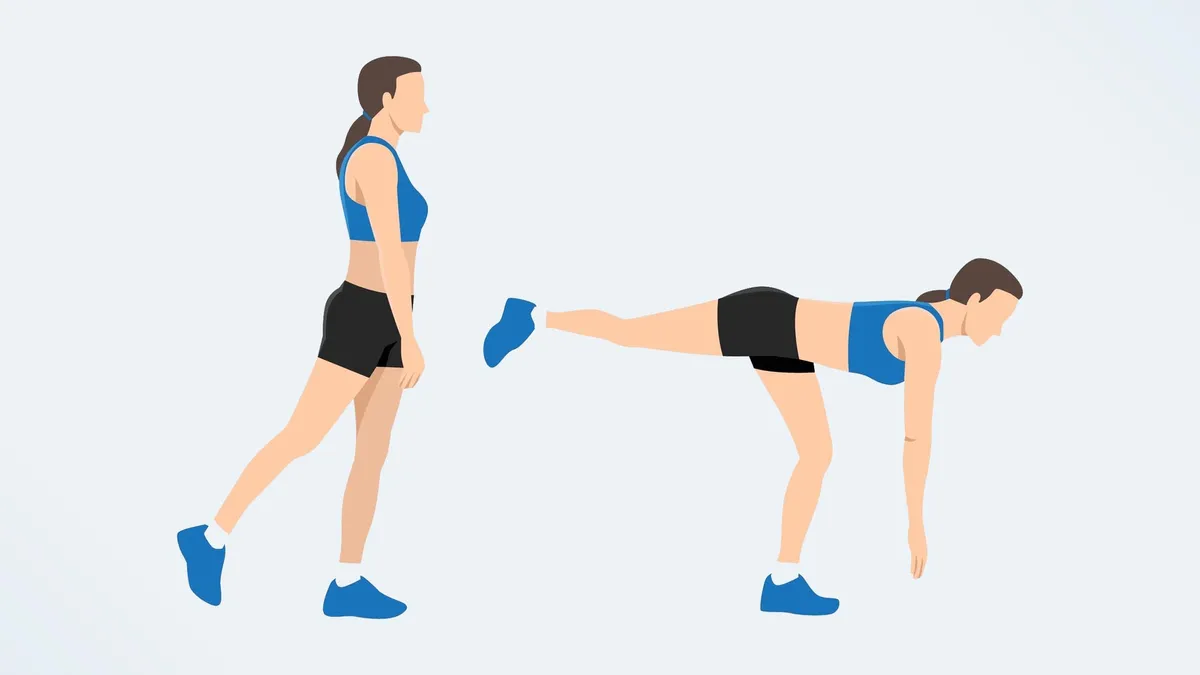
“This is a functional movement pattern that helps pick up small objects safely. It’ll strengthen your lower back, hips, and hamstring while also training functional balance,” says Josh.
Use a chair for stability help. Reach down with one hand toward the floor like you’re picking up a golf ball. At the same time, simultaneously lift the opposite side leg straight out behind you to act as a counter balance. Keep your back straight and pivot at your hip.
4. Power punches

“This is a high energy power move for upper body speed that’ll also improve coordination,” Josh adds.
Stand in a staggered stance with one leg forward and one leg behind you. You can hold light weights if you want. Extend one arm in a punching motion across your body while rotating your torso. Move quickly and explosively with as much force you can safely do. Retract your arm quickly and repeat. Then alternate sides.
5. Power sit to stands

“This variation of the Sit-to-Stand focuses on speed to develop power that’s needed to get out of cars and chairs. The legs are your primary target for power training because they’re essential for mobility and catching yourself if you fall from tripping,” Josh advises.
Sit in a chair and then stand up as quickly and explosively as you safely can. After you reach the top, sit back down slowly and under control.
6. Power step
“This exercise helps with fall prevention. It’ll come in handy if you ever trip, slip, or stumble. You’ll be able to react quickly and better keep yourself upright so you stay safe,” says Josh.
Start in the standing position with your feet hip-width apart. Then lean forward with your whole body until it starts falling forward. Try not to bend at the waist and feel the weight shift to your toes. As you start falling forward, you’ll feel that sensation when it’s time to catch yourself, or else you’ll fall to the ground. Once you feel this, then quickly take a large and powerful step with one foot in front of you. Make sure to plant it with force into the ground so you stop the forward momentum. Go back up to the starting position and repeat with the other foot.
At first, it’s best to do this exercise with a wall, table, or couch a few feet in front of you, just in case, so you can catch yourself. It’s a little awkward at first to get used to, but very useful to help prevent falling.
What else should seniors remember?

“As we age our connective tissues (tendons & ligaments) lose collagen and become less elastic. Kind of like how a grape turns into a raisin due to dehydration. They become stiffer and less resilient,” Josh explains.
“So seniors need to hydrate more than younger athletes to try to maintain tissue suppleness. Well hydrated connective tissue stays more supple, absorbs force better, and less likely to get injured. ‘Raisin like’ tissue are stiffer, more prone to injury, more fragile and will take longer to heal from strain or overuse.”

Follow Tom's Guide on Google News and add us as a preferred source to get our up-to-date news, analysis, and reviews in your feeds.
More from Tom's Guide
- 'I’m 72 and in the best shape of my life: Here’s the 5 simple isometric bodyweight exercises I prioritize to counter age-related muscle loss.'
- I’m a personal trainer who works with seniors — these are the 4 exercises I wish everyone would do before they turn 60
- 'I'm a 63-year-old personal trainer: These are the 5 simple bodyweight exercises I give to my clients that build muscle faster than walking workouts.'