
 Club Benefits





You can go running without spending a cent, but if you want to track your progress or improve your times, then the best running watches are a great investment. These smartwatch-like wearables come with GPS for location tracking, detailed training analysis and recovery insights and long battery life for extended runs.
To test these watches, we go running in them! Several members of the team run regularly, and we even have a resident marathon runner who puts these watches to the test during training and longer endurance sessions.
Best running watches available right now
Why you can trust Tom's Guide Our writers and editors spend hours analyzing and reviewing products, services, and apps to help find what's best for you. Find out more about how we test, analyze, and rate.
Best running watch overall


Our pick for the best Garmin watches is also our top running watch: the Garmin Forerunner 570. It comes in two sizes (44mm, 47mm) with a bright and vibrant AMOLED display that we found you can easily see, even in sunny conditions, while out running. And it's lightweight and comfortable enough to wear all day.
Garmin watches are a popular choice for runners, and you could make the argument that the whole range could appear in this roundup. But what makes the Forerunner 570 standout is its features-to-price ratio. It's not the most premium watch (that'd be the $1,100 Fenix 8) but it also has more insights and data than the Forerunner 55.
Central to the whole experience is the Elevate V5 heart rate sensor, which is the most recent and accurate in Garmin's range, and the dual-band GPS that creates detailed records of your runs, even on busy, dense city streets or twisting, wood-lined trails.
Plus, the Forerunner 570 comes with Garmin's Incident Detection and LiveTrack safety features. If the watch detects that you fall while on a run, it'll alert your emergency contacts. While LiveTrack lets you share your location with specified contacts during your workout once you activate it by holding down the light button on the watch.
We found that the heart rate readings were as accurate as a chest strap and the battery lasted around five days with heavy use and daily runs (and was partly run down by the bright display). It is a little disappointing that the 8GB of onboard storage is only for music, though, and not offline maps (which are available on other Garmin models).
Finally, not that it makes a difference to the running experience, but the Forerunner 570 is also one of the most colorful in Garmin's lineup. The company isn't known for bold or vivid designs, but the 570 comes with several color options for the bezel, helping it standout among the (slightly boring) rest of the range.
- Read our Garmin Forerunner 570 review
Best budget running watch


Coros isn't as well-known as Garmin, but it should be, because the Coros Pace 3 is easily the best budget running watch you can buy right now. It comes with reliable tracking, accurate multi-band GPS and near week-long battery life in real-world settings.
Like the Polar Vantage V3 (which we feature later on this guide), the Pace 3 is a multi-sport watch that has dedicated (and useful) running modes, and is comfortable and lightweight to wear throughout the day and during workouts.
To support your training analysis, there's an optical heart rate sensor, pulse oximeter for measuring blood oxygen levels and a barometric altimeter to track elevation. You can also connect a Bluetooth heart rate chest strap, but the (relatively) common ANT+ standard isn't supported here.
All of this data feeds into Coros' EvoLab, which gives you an overview of your weekly training load, and analysis of your longer term training and fitness level, so you can work out if you're doing the right amount of exercise to hit your fitness goals.
The EvoLab analysis is available on all Coros watches, even the more expensive ones, so the Pace 3 is a more affordable way to get these insights. And, like the Garmin Forerunner 570, you also get a recovery advisor and race time predictor, which are useful if you're training for a specific event.
We tested the Pace 3's heart rate accuracy against the Polar H10 chest strap during warm conditions, where the optical readings are generally better than in cold weather, but it was impressively close to the Polar strap's readings. It's still worth pairing a strap with the watch, but even if you don't, you'll still get accurate insights.
- Read our full Coros Pace 3 review
Best running watch for beginners

If you're just starting to get into running, there's no need to spend hundreds of dollars on watches that have more features than you really need. What'll serve you best is something that is a step up from a fitness tracker, focused on running and won't break the bank. In short, you need the Garmin Forerunner 55.
It is designed to be an entry-level Garmin and it replaced the Forerunner 45, which served a similar purpose. The watch looks quite a lot like other Garmin watches, but with less flourish, which is partly why it's also a fraction of the price of the Forerunner 570.
You still get many essential Garmin features though, like the PacePro training tool, which gives you gentle speed and cadence suggestions on your run. And the more you track, the better the watch's recovery recommendations become. This kind of coaching it what separates the Forerunner 55 from the best fitness trackers.
What you won't find here is third-party apps, music storage (for phone-free runs) or mobile payments through Garmin Pay. Plus, the display is relatively small at just 1.08 inches. So long as those aren't dealbreakers for you, the Garmin Forerunner 55 is an excellent way to ease yourself into running.
- Read our full Garmin Forerunner 55 review
Best adventure running watch

The Polar Vantage V3 is probably the best value running watch (not the cheapest, but with the most features for your money). We were impressed by the range and diversity of activities you can track and the volume of sensors packed into a watch that is half the price of the Garmin Fenix 8, but offers a similar experience.
It's an outdoor adventure watch at heart, which is why you can record more than 150 activities, including things as varied as badminton and jazz dance. Each of these modes are actually customized for the activity, as we found when we tried the Vantage V3 on a snowboarding trip, and it showed distance, speed and session maps.
All of this is sort of par for the course with sports watches, but what makes the Vantage V3 really stand out is its training metrics. This is an area Garmin used to dominate, but it lost a lot of goodwill from the running community when it launched a paywall for some digital features.
Polar puts them all out there for you to access, and the training plans and metrics are easy to digest, while the recovery insights are genuinely actionable and helpful. There's the Leg Recovery test, which tells you how long to wait until your next tough run. And it factors in things like your sleep to create more personalized recommendations.
The only drawback on the Polar Vantage V3 is that it's not a smartwatch. You can't store music, use it for mobile payments or download a wide range of third party apps. But Polar seems to be happy not to compete with Apple here, and was comfortable designing an incredibly impressive sports watch at a good price.
- Read our full Polar Vantage V3 review
Best running watch for iPhone

The Apple Watch Ultra 3 is the best running watch if you're after a multi-functional option that can track your runs, keep tabs on your health and integrate well with your iPhone. Unlike Garmin, Coros and Polar devices, which are running watches with smart features, the Ultra 3 is a smartwatch that can track your runs.
Of course, many of the best smartwatches can do that, but the dual-band GPS here pits it against the top Garmin models and makes it reliable enough to run out in wooded areas and dense urban areas like cities.
Plus, the customizable Action button can be used to take laps, which puts it ahead of the standard Apple Watch 11 (which was released at the same time in late 2025). The main thing you miss out on compared to Garmin et al is the detailed training analysis. Apple's is fine, but it's surface-level, and doesn't give you in-depth insights.
And you may have heard that Apple watches have terrible battery life, and most of them do, only lasting around a day between charges. The same isn't true of the Ultra 3, which makes use of its larger body to increase the battery capacity to up to 42 hours. Still a fraction of the weeks you can get elsewhere, but it's better.
So it depends what you need from a running watch. If you have an iPhone, like the sound of an Apple Watch, and do some runs (but aren't aiming for elite tracking/training analysis), then the Ultra 3 is a fantastic option that can support your daily activities and outdoor workouts.
- Read our full Apple Watch Ultra 3 review
Also tested
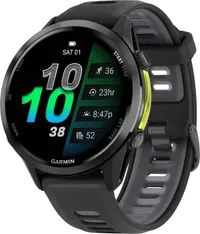
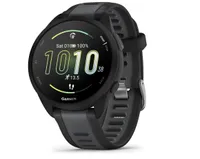
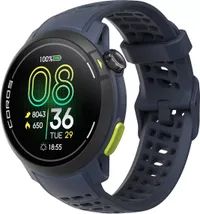
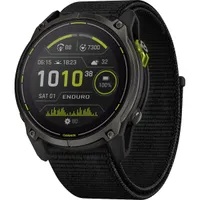
There are a lot of running watches out there, and even from those we test, not every model can be the best. So these are the models that didn't quite hit the mark, but are worth considering if you're after more options.
How we test the best running watches
We take our testing seriously because runners rely on accurate, reliable data to train smarter, stay healthy, and improve performance. Even today’s entry-level running watches pack in features like GPS, heart rate monitoring, and step tracking, but we go deeper than the spec sheet.
Our reviewers are experienced runners who put each watch through its paces in real-world conditions, including open parks, urban streets with tall buildings, and forested trails. We look at core performance factors like GPS accuracy, heart rate tracking, and battery life, and also assess advanced features such as VO2 Max estimates, recovery time, sleep tracking, and music storage.
To ensure heart rate data is accurate, our tester Nick tests the watch against a chest strap monitor, which is widely regarded as the gold standard for heart rate accuracy, and includes this comparison data in his reviews.
We also consider how intuitive the watch is to use mid-run, how comfortable it is to wear for long periods, and how well its companion app presents and stores training data.
How to choose the best running watch for you
The type of running watch you need largely depends on how often you run and your running goals. Casual runners should find they have all they need in a simpler model with GPS and heart rate tracking, while runners and athletes training for marathons or triathlons may need advanced features like interval training, VO2 max monitoring, and recovery suggestions to aid their training.
For beginners, basic tracking of distance, pace, and heart rate should be enough to monitor progress and stay motivated. Those who consider themselves as a more intermediate runner looking to improve performance may want watches with metrics like cadence, stride length, and heart rate zones to help fine-tune their training.
Meanwhile, for those training for races or aiming for specific fitness goals, advanced features such as lactate threshold, VO2 max, and interval training support can offer more detailed insights.
Battery life is key if you’re running long distances or doing multi-day events. Watches designed for ultra runners or adventurers can last for days on a single charge, while others may need daily charging if you use GPS and other features regularly.
FAQs
What is the best watch to keep running pace?
Pace is a metric that's offered on a wide range of sports watches and smartwatches, and as long as the watch offers good GPS accuracy you can expect its pacing stats to be quite reliable.
However, I personally don't think current or instant pace is the best stat to use on the run, because even slight GPS wobbles can make pace jump around. I prefer to use lap pace, which shows the average pace of your current mile or kilometer, or rolling pace, which shows the pace of the last mile of kilometer you've run.
By virtue of using longer distances to measure the stat, these are both more accurate than current pace no matter what running watch you're using. You can also adjust the length and type of the lap you're using for lap pace on most watches if you'd like a shorter or longer distance, or to use time instead of distance.
Is Garmin better than Apple Watch?
First and foremost, neither is a bad option. Garmin tends to hold the majority vote for being the more reliable brand in the running watch sphere.
However, Apple has made large leaps in increasing its running watch credentials such as the option to create custom runs, the addition of heart rate zones, plus plenty of performance metrics such as feedback on your power, cadence and ground contact time.
That being said, Garmin not only has a much larger range of running watches for runners of all abilities and budgets to choose from but, Garmin watches also provide a more seamless user experience for runners with features like route planning and coaching tools integrated into the watch and Garmin Connect app.
Meanwhile, Apple requires the effort of third-party apps for advanced features like route planning. Ultimately, it depends on your needs as a runner.
If you want all the smartwatch features Apple has to offer then an Apple Watch can act as a great running watch. Alternatively, if your fitness and running progress is your main concern, this is Garmin's bread and butter as a brand.
What is a good running watch for a beginner?
The best running watch for beginners is the Garmin Forerunner 55. It's relatively inexpensive (even in smartwatch terms) and builds on the basic tracking you get on the best fitness trackers.
Garmin's range is massive, so it's not entirely surprising that they offer some models more catered for beginners. You still need to navigate Garmin's slightly confusing ecosystem (there are several apps for your phone, the interface isn't as user-friendly as it could be), but it's still easily the best option.
The company's run tracking is the gold standard its competitors try to replicate, there's integration with Strava, the most popular run tracking app, and built-in GPS (not a given at this price) and 20-hour battery life, which should easily see you through multiple sessions.
It has some of Garmin's top features, like PacePro, which gives you speed and cadence alerts during your run, along with recovery plans, suggested downtime and workouts to help improve your performance.
You don't get the full Garmin experience with the Forerunner 55 — there are no third-party apps, contactless payments or on-board music storage — but if you're just getting started with running, you won't miss these. And once you're ready to take a step up in your training, there are loads of great Garmin watches to choose from.
What is the running watch with the best battery life?
While we'd never recommend a watch that can't see you through a long run or marathon, some watches last longer than others. So, if you want to avoid taking your watch off for charging too much, you'll need a running watch with the best battery life.
Although a lot of smartwatches use a general battery life spec, taking into account everyday wear, we look specifically at the time you get with GPS on, as that's a good indicator of how long it'd last while running.
By some distance, the Garmin Enduro 3 is the winner here, reaching 80 hours on GPS between charges. It's a pretty staggering figure, but that performance comes with a price tag to match, so we'd only recommend that watch if you really need it's hugely comphrensive set of outdoor-focused features.
The watch that has the best balance of battery, features and price is the Coros Pace Pro. This lasts 38 hours with GPS active, but you could easily stretch this further by switching on the raise-to-wake feature instead of the default always-on display.
You included the Apple Watch Ultra 3, why not the Google Pixel Watch 4?
The Apple Watch Ultra 3 is a very capable running watch for iPhone users, and the Pixel Watch 4 is Google's (almost) competitor model, designed for its Pixel smartphones, but there are a few reasons it didn't make the list.
It's more of a smartwatch than a running watch. Until quite recently, the Pixel Watch series barely had any fitness features. But after Google bought Fitbit, it merged the fitness tracker's software into the Pixel Watch range (and stopped making Fitbit trackers, but that's another story).
Fitbit's strength has always been it's mass market appeal. The best Fitbit trackers can handle most activities, but they don't excel in any of them, like the way Garmin specializes in running. So while the company did introduce some running metrics, in the latest model, it's still not really a running watch.
But that's sort of what I said about the Apple Watch Ultra 3, so why the difference? The Pixel Watch 4 is more of a smartwatch than a fitness or run tracker, and that's clear from the way that the company really focused on adding Gemini (Google's AI platform) into the watch.
And so all combined, the Pixel Watch 4 is more like an extension of your smartphone, with some fitness tracking built in, but it's not a dedicated device designed for runs or outdoor activities, which is really what differentiates the Apple Watch 11 from the Ultra 3.

