Tom's Guide Verdict
The LG C6 OLED is undoubtedly a fantastic TV. It performs brilliantly, and its gameplay-enhancing features are truly remarkable. It’s a very small improvement over last year’s LG C5 OLED, though, which makes it slightly less ideal. If you’re someone who wants the latest and greatest specs at any cost, you should definitely get the C6. But if not, snagging a C5 on sale is still your best bet.
Pros
- +
High brightness and strong color at this price range
- +
Fantastic gaming features for both console and PC players
- +
Screen is virtually reflection-free
- +
New Magic Remote is a big improvement
Cons
- -
Only a marginal improvement over the LG C5 OLED
- -
Sound system leaves something to be desired
- -
AI features feel superfluous to the experience
Why you can trust Tom's Guide Our writers and editors spend hours analyzing and reviewing products, services, and apps to help find what's best for you. Find out more about how we test, analyze, and rate.
Price: $2,699.99
Screen size: 65 inches
Model: OLED65C6
Resolution: 3,840x2,160
HDR: HDR10, Dolby Vision, HLG
Refresh rate: 144Hz (Up to 165Hz)
Ports: 4x HDMI 2.1
Audio: 2.2 Channel
Smart TV software: webOS 26
Size (without stand): 56.7 x 32.5 x 1.8 inches
Weight (without stand): 36.6 pounds
By all accounts, the LG C6 OLED is as near-flawless as last year’s C5 OLED, which was the best TV of 2025. In fact, it’s technically better than the C5 in just about every way. That means if you’re upgrading to an OLED for the first time, it’s going to feel like a massive step up from the TV you’re coming from.
However, if you’re coming from last year’s LG C5 — or even 2024’s LG C4 OLED — the C6 isn’t a huge leap, prioritizing performance improvements that are actually detectable to the eye for a smattering of AI features that don’t really move the needle one way or the other.
There’s no doubt the C6 is an improvement over its predecessor, no matter how small. You’re no worse off buying last year’s C5 at a deep discount, or waiting until the back half of the year when the C6 inevitably drops its price to make way for LG’s next addition to the OLED lineup, but if you don’t mind paying the premium the C6 OLED is still the TV we’d recommend for most folks.
LG C6 OLED review: Price and release date
The C6 is part of LG’s 2026 OLED lineup. It launched in March 2026, starting at $1,399 for the 42-inch version and $2,699 for the 65-inch. We reviewed the 65-inch model, but you’ll be able to choose from four different sizes:
- LG C6 OLED (42-inch): $1,399.99
- LG C6 OLED (48-inch): $1,599.99
- LG C6 OLED (55-inch): $1,999.99
- LG C6 OLED (65-inch): $2,699.99
These prices are in line with the ones that launched alongside the C5, and you can expect to see similar, if not identical, performance no matter which size you get. It’s also important to note that the baseline C6 foregoes the 77-inch and 83-inch options that the C5 OLED released with. This time, LG has taken a different approach to the C6’s larger counterpart by categorizing it as a completely different model called the C6H.
The LG C6H OLED includes those 77- and 83-inch options, and throws in a newer, brighter RGB Tandem OLED panel in place of the C6’s standard WOLED panel. Of course, that upgrade brings a major price hike with it — $3,699 for the 77-inch model, and a whopping $5,299 for the 83-inch.
LG C6 OLED review: Design
The LG C6 OLED is a beautiful-looking TV. It’s got a decently thin profile at just 1.8 inches in depth, but it still feels well-constructed when moving it around. The perfect balance between sleek and sturdy.

It’s got a really nice, durable central pedestal with a brushed metal finish rather than dual legs, which I prefer, though your mileage may vary depending on the type of media console you have. Or, you can always just mount it on your wall.


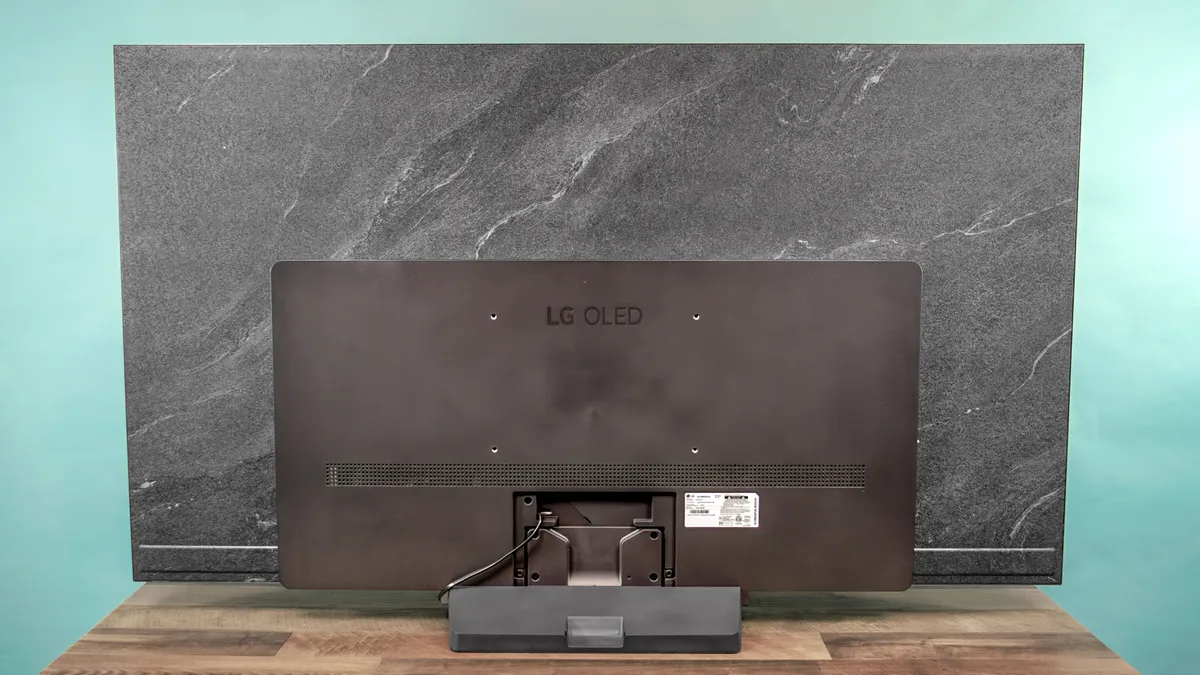
I also like the faux-marble finish that LG installed on the back of the TV (which was also present in the C5), but after you set it up, you’re probably not going to be seeing the back all that much. Either way, the TV is minimalistic enough to fit into any living room, so you can rest assured that it won’t cramp your style.
LG C6 OLED review: Ports
The LG C6 comes with a suite of ports that is identical to the C5: You’ll get four HDMI 2.1 ports (a big selling point for gamers), one of them being eARC-compatible for those who want to pair the TV with one of the best soundbars, which we recommend doing.


You’ll get two USB-A ports as well, plus an Ethernet connection for improved internet performance. An optical digital audio out port, 3.5mm jack, serial port, and antenna/cable input are also present, as well as support for WiFi 5 and Bluetooth 5.3 for remote speaker and audio connections.
LG C6 OLED review: Performance
While testing out the LG C6 OLED, I watched a variety of TV shows and films to get an idea of just how good the follow-up to the LG C5 OLED was.
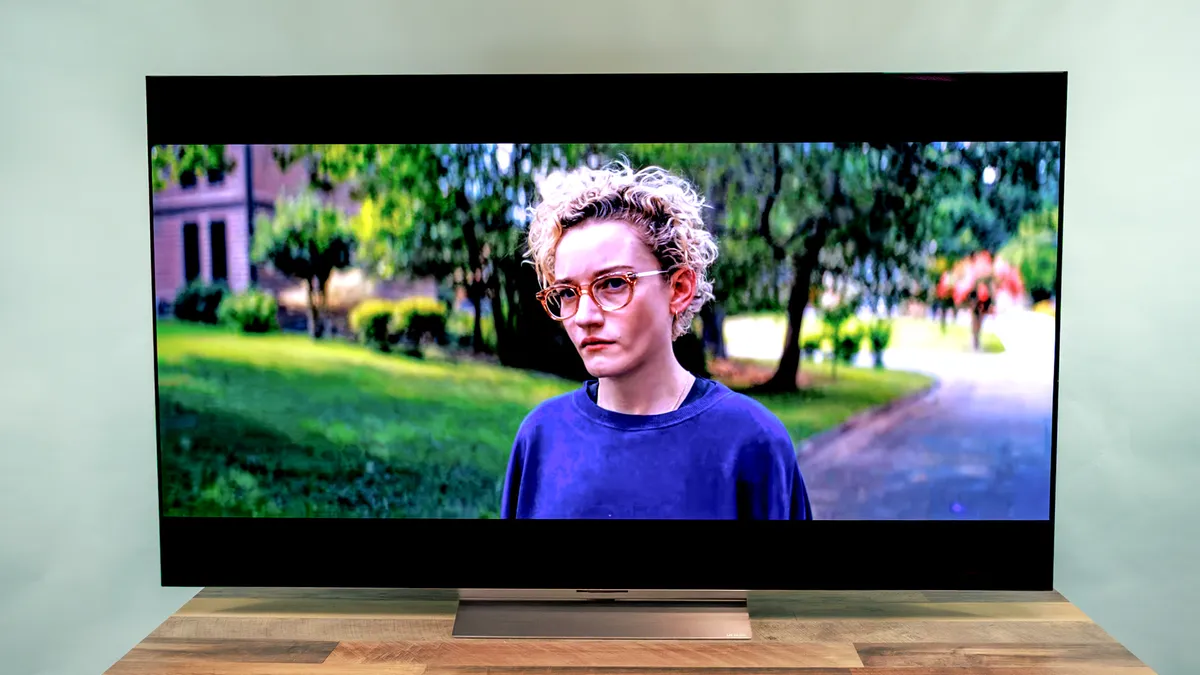
I started putting the C6 through its paces by using it in the way that most people will: Streaming. I watched a few scenes from 2025’sWeapons, and I was super pleased with the depth of color that came through. Not to be morbid, but I’ve never seen fake blood look so good. I also streamed an episode of Hulu’s Paradise, and the show’s cool blue tones really popped on the C6, which only added to the show’s atmospheric pilot.
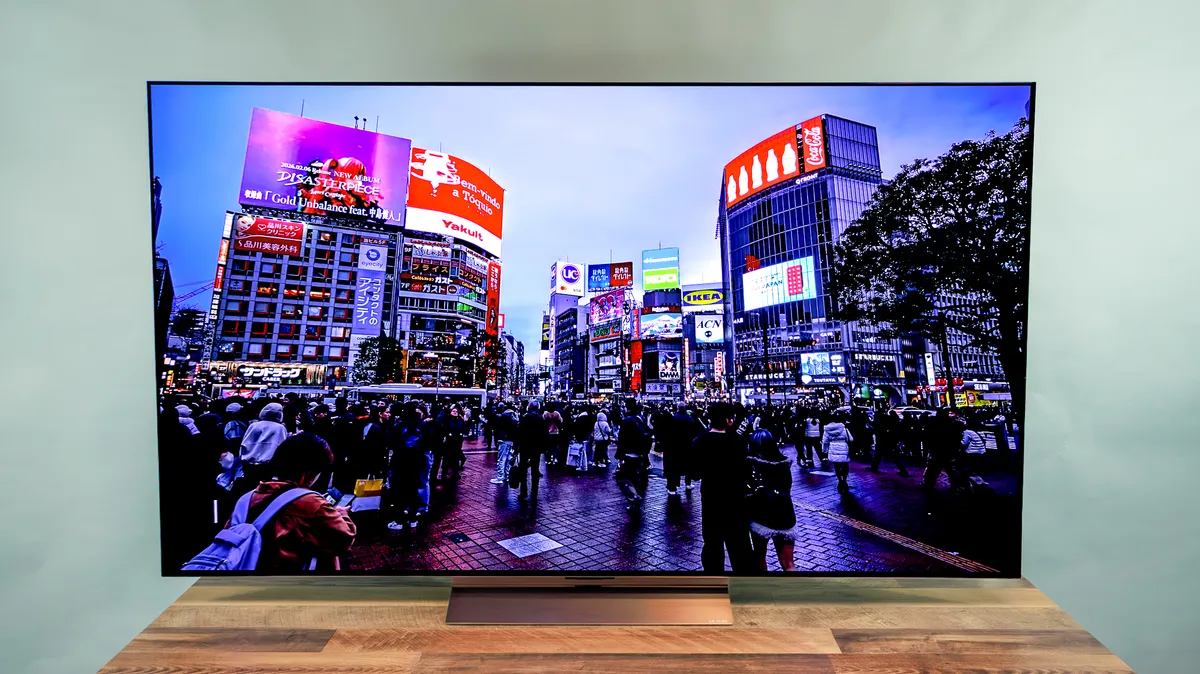
Video streaming on YouTube looked similarly fantastic, from immersive 8K walking tours of Shinjuku to retro clips from Cartoon Network’s Teen Titans. I was never not happy with what I was seeing on the screen, which speaks to just how great of a TV the C6 is.

The TV has a nice selection of different picture modes that can really level-up your viewing experience. Standard, Eco, Filmmaker, and Vivid modes are just some of the presets you’ll be able to play around with, all of them bringing worthwhile enhancements to the table. Filmmaker Mode should still be your default, however, as it makes everything look warmer and more cinematic, especially when viewing in a dark room. Support for Dolby Vision over HDR10+ is a welcome bonus here, too.
As a gamer, though, the biggest highlight of the LG C6 is its Game Optimizer mode, which cuts down on input lag and boosts FPS on both console (4K at 120Hz) and PC (up to 4K at 165Hz, a step up from the C5’s 144Hz max). While playing Marvel’s Spider-Man 2 with the game mode turned on, I was able to reach a consistent 120 frames per second without any noticeable tradeoffs in texture quality or ray-traced surfaces.

Switching on the variable refresh rate mode to remove screen tearing only made things better, and the reduced input lag had every button press feeling instantaneous. This mode is essential for anyone who plans to game on the C6.
The C6’s other AI enhancements, aside from the Game Optimizer, aren’t as impressive, but may vary depending on what content you consume the most. The AI HDR Remastering feature is supposed to detect SDR content and convert it to appear like HDR, but I didn’t think it worked all that well — it felt like it placed an unnatural-looking filter over what I was watching, and I just wasn’t a fan. There’s also an AI brightness control feature that senses the ambient light in the room and adjusts the screen’s brightness accordingly. I thought this worked fine, but I prefer having full control over on-the-fly brightness tweaks.
How we test TVs
We follow a standard testing protocol for every TV we review at Tom’s Guide. Our benchmarks include a series of technical and subject tests designed to rate the set’s performance.
For our technical tests, we use a Jeti spectraval 1501-HiRes spectroradiometer, a Klein K10-A colorimeter, a Murideo 8K-SIX-G Metal pattern generator, and Portrait Displays’ Calman TV-calibration software to take measurements. We also use a Leo Bodnar 4K Input Lag Tester for determining the TV’s gaming prowess.
Subjective tests vary based on the reviewer, but usually feature anecdotes from a diverse selection of movies, TV shows, and other content reflecting the types of things you may actually want to watch on the TV.
LG C6 OLED review: Test results
Similarly-priced TVs
| Row 0 - Cell 0 | LG C6 OLED |
LG C5 OLED |
Samsung S90F OLED |
Sony Bravia 8 II |
SDR Brightness (10%, in nits) |
355 |
335 |
255 |
103 |
Delta-E (lower is better) |
1.53 |
1.25 |
1.12 |
3.59 |
Rec. 709 Gamut Coverage |
97.89% |
99.67% |
99.99% |
99.99% |
HDR Brightness (10%, in nits) |
1,355 |
1,165 |
1,231 |
1,584 |
UHDA-P3 Gamut Coverage |
99.77% |
99.45% |
99.99% |
99.99% |
Rec. 2020 Gamut Coverage |
75.92% |
76.18% |
89.03% |
90.55% |
Input latency (in milliseconds) |
12.9/9.1 (Boost) |
12.9/9.1 (Boost) |
9.1 |
16.3 |
From our test results, you can see that the C6, like its predecessor, really excels when it comes to brightness. At 355 nits of SDR brightness, the C6 pulls out ahead of its similarly-priced competitors like the Samsung S90F OLED (255 nits) and the Sony Bravia 8 II (103 nits). When it comes to HDR brightness, it’s on par with both of those TVs at 1,355 nits (the S90F and Bravia 8 II reaching 1,231 nits and 1,584 nits, respectively).
In the Delta-E department, which is how we measure a TV’s color accuracy, the LG C6 OLED is also a high performer compared to its competition. When it comes to Delta-E, the lower the number we get as a result, the better, and in the case of the C6, we got a Delta-E of 1.53. The LG C5 got a better Delta-E result at 1.25 funnily enough, and both still get slightly outperformed by the Samsung S90F’s Delta-E of 1.12. You probably wouldn’t notice this when watching with the naked eye, though — all three have great color accuracy.
When it comes to gaming, the C6 is an absolute powerhouse with only 9.1ms of input latency in gaming mode, the same as the C5 and the Samsung S90F. When paired with the C6’s impressive brightness and color accuracy, you end up getting a very balanced experience that is a joy to behold.
LG C6 OLED review: Audio
If you’re like me and typically don’t like stock TV speakers, the LG C6 OLED most likely won’t change your mind. The C6’s speakers aren’t terrible by any means — they don’t crackle or buzz even at high volumes — but like most TVs, the sound is mostly swallowed up by the wall behind it.
The C6 does include some AI enhancements for audio, but none of them made much of an impact on me during my test period. In fact, I really did not enjoy the AI-enhanced dialogue clarity mode, which raised speaking volumes to an almost irritating degree and completely washed out all other audio in any given scene. Unless you want it to sound like the actors are speaking directly into your ears, I don’t think you’ll get too much use out of this feature.
If you want your LG C6 setup to sound its best, I recommend getting one of the best soundbars.
LG C6 OLED review: Interface and apps
The C6’s webOS 26 is really easy to use, but most of its improvements from webOS 25 are AI-centric, so if that’s not your cup of tea, there’s not much to be excited about here. Still, I think the layout of the home screen, menu navigation, and OS performance are all great.
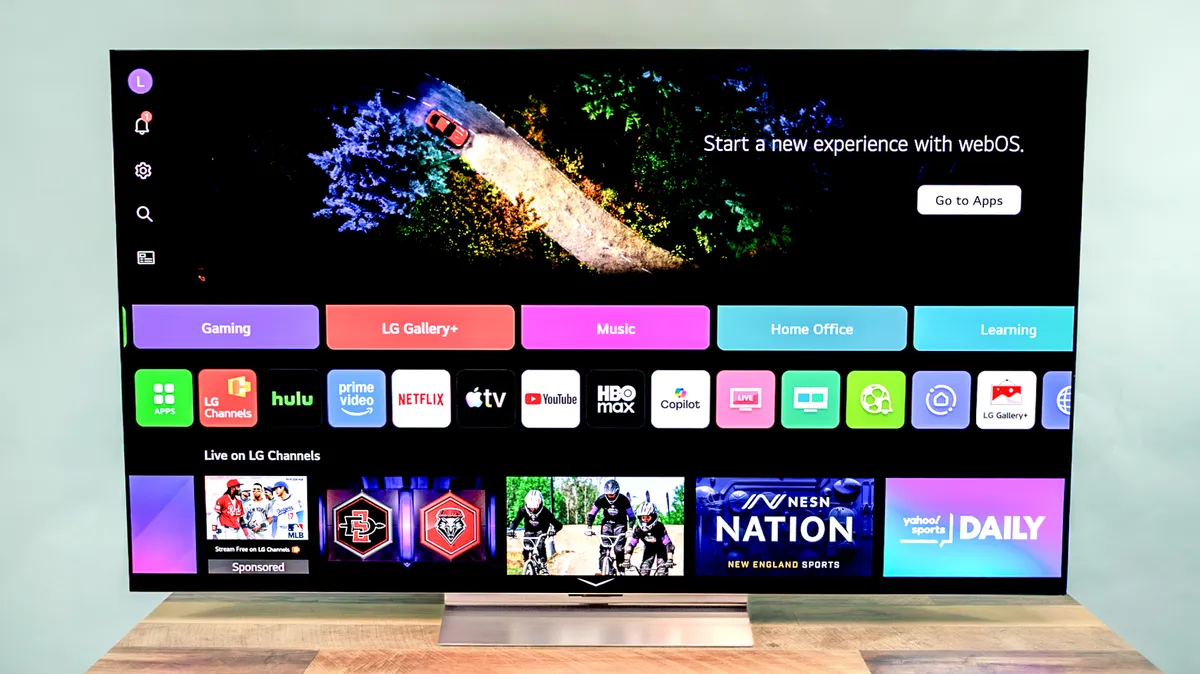
I didn’t run into any noticeable bugs or lagtime like I did with Tizen OS on the Samsung S85F OLED — webOS 26 ran smooth as butter, especially in conjunction with the new Magic Remote.
WebOS 26 leans much harder into AI features than webOS 25 did, which introduces Google Gemini and Microsoft Copilot integration for more personalized recommendations and AI-powered search results. These worked fine for me in practice, but it’s not a feature I would personally use much, if at all. If you make use of AI in your daily life, you may like these additions, but if you don’t, they’ll probably be meaningless to you.
LG C6 OLED review: Remote
I quite like the 2026 version of LG’s Magic Remote. In practice, the remote functions essentially like a Nintendo Switch Joy-Con. It pairs your usual buttons with a motion-sensing point-and-click function that’s super easy to switch between on the fly, which makes menu navigation and typing less time-consuming. The center scroll wheel is nice to have, too, and it’ll get you to the end of your Netflix algorithm much faster than button-pressing your way there.


Beyond that, the remote features dedicated app buttons for Netflix, Prime Video, and Disney+, as well as buttons for settings, inputs, and the home screen. There’s also an AI button that allows you to choose from the TV’s AI-enhancing features, and voice control support. My favorite addition to the remote is the replacement of the 2025 version’s accessibility button — now, there’s a completely customizable heart button that you can program to do whatever you want, whether it’s your favorite streaming app or a specific TV function.
The only quirk I don’t love about the remote is that there’s no dedicated mute button. To mute the TV, you have to hold the “volume down” button for a second, which is slightly annoying at worst. But you can assign the mute function to that aforementioned programmable button, so there is a workaround if it bothers you as much as it did me.
LG C6 OLED review: Verdict
The LG C6 OLED, like the C5 when it launched in 2025, is one of the best OLED TVs you’ll find this year. It’s a brilliant-looking TV, both in physical design and on-screen performance. You’ll get top-tier brightness and color, best-in-class gaming features, and an easy-to-use OS that significantly cuts the fat out of the navigation experience.
As I said earlier, however, this TV is only an incremental improvement over the C5, and most won’t even pick up on those improvements during use. Not only that, but you can buy the nearly just-as-good C5 for over $1,000 less.
If your mind is made up on buying the LG C6 OLED, you won’t be disappointed. This is LG’s best-yet mid-range OLED TV, but we’d be remiss if we didn’t at least mention the similar-performing C5 — or, if you’re looking to go with a competitor, the Samsung S90F and S95F OLED. You’re almost equally as likely to be as happy with those, and you’ll save a good amount of cash in the process.
The C6 OLED is a strong contestant for the title of best TV of 2026. Now the ball is in Samsung and Sony’s court to show us if they can produce something better.