If you’re shopping for an OLED TV, there’s an extra detail to consider in addition to the size, performance and price of your screen: matte versus glossy.
When you get down to the surface of the display, the best OLED TVs on the market come in the glare-free, matte variety or arrive with the good ol’ fashioned, glossy finish. And, while the differences between the two may be subtle, they’re worth understanding if you’re on the verge of buying a premium TV.
As with many aspects of TV technology, there are pros and cons to each type of OLED screen — and passionate debate as to which is superior. The reality, though, is that the nature of your living space may be the best indicator as to which you should buy.
Matte (glare-free) OLED screens: pros and cons

Before we get into the advantages and disadvantages, a little history: It wasn't too long ago that all OLED TVs were built around traditional, glossy-style displays. In 2024, Samsung introduced the world to the S95D OLED TV — the first to feature Samsung's glare-free finish.
Since then, the eye-catching design element has made its way to several Samsung-branded TVs, including the TV-maker's top OLED of 2025, the S95F. In his Samsung S95F review, my colleague Stephen Lambrechts remarked that the S95F's glare-free feature is "astonishing," and that it puts Samsung "streets ahead of the competition when it comes to glare reduction"
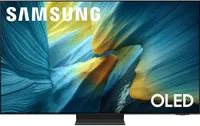
These days, it's also a key feature of select Samsung Neo QLEDs, both 4K and 8K. Like many portrait-style TVs, Samsung also uses a glare-free look for The Frame and The Frame Pro, as the design flourish goes a long way towards achieving the painting-on-a-wall appearance.
But while glare-free screens can be found in rival brand TV lineups (like Hisense and TCL), Samsung is the only major OLED-maker with matte-style screens on some of its OLED TVs. LG, Panasonic and Sony keep with glossy screens. This is a great relief for some folks, as a matte finish can have an interesting effect on OLED TVs.
First, let's go over the advantages. The glare-free finish on Samsung OLEDs work by successfully scattering incoming light across a wider swath of the screen's surface. TVs with glossy displays sometimes leverage anti-reflective coatings as well, but they don’t diffuse direct light nearly as well. This is why they're so effective when it comes to blunting the impact of big blobs of direct light, like that of a window or light fixture.
In certain scenarios, the scattering of unwanted light can have a negative effect on the picture, too.
However, in certain scenarios, the scattering of unwanted light can have a negative effect on the picture, too, particularly when it comes to contrast. All of that scattered light needs to go somewhere, and if you're watching in an well-lit room, you're liable to notice that the affected area of the picture doesn't quite seem as deep and visually rich.
When this happens, black levels are lifted, and near-black detail is flattened out. Darker sequences that feature a lot of dark gray and black may take on a purplish hue rather than the inky, jet-black presentation we've come to expect from OLED displays.
You're less likely to notice this in a dimly lit room. You almost certainly won't notice this with the lights off. But it's unmistakable during the day or with nearby lights on, as the entire surface of the screen is scattering incoming light and lifting the TV's darkest elements. Glossy OLEDs, on the other hand, take a different approach.
Glossy OLED screens: pros and cons

Many glossy OLED TVs (like those from LG, Panasonic and Sony) feature anti-reflective screens designed to tamp down incoming glare, but they're not as effective at this process as the glare-free Samsung OLED TVs we've seen in recent years. That said, there are positive tradeoffs to report.
When it comes to intense, direct light from a single source — like the aforementioned example of a window or a single light fixture — even the most anti-reflective, glossy OLED TVs struggle to scatter the light. However, by keeping the light localized to a tighter region of the picture, glossy OLEDs maintain the deep, high-contrast look that most folks associate with OLED TVs.
This benefit pays off while watching TV during the day, or while watching in a well-lit room. This is, of course, provided that you're not too distracted by direct glare.
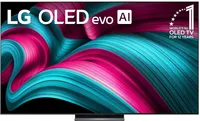
Matte vs glossy: Which OLED screen is right for you?

As mentioned, there is no discernible difference between the two screen styles in a dark room. If you were to watch a glossy LG OLED side by side with a similarly priced, glare-free Samsung OLED, you might notice subtle differences in performance, but the nature of the screens' surface wouldn't be easily apparent. With enough ambient light in the room, the difference is easy to spot.
My expert recommendation? If you're planning on putting your new OLED TV in a room that, generally speaking, receives a fair amount of ambient light, you might want to consider the deeper perceptible black levels of a glossy screen. Yes, the shape and intensity of certain reflections might be more apparent, but to my eyes, this phenomenon is less distracting than a flatter-looking picture.
That said, if you're planning on placing your new OLED directly next to a window (or opposite an strong light source), you stand to benefit the most from Samsung's glare-free design. For some people, eliminating the shape and dramatically reducing the intensity of glare will make for an all-around better viewing experience.
If you're still on the fence, why not take a field trip to a local brick-and-mortar store to see both styles in person? With real-world examples right in front of your eyes, you might find yourself leaning further in one direction.

Follow Tom's Guide on Google News and add us as a preferred source to get our up-to-date news, analysis, and reviews in your feeds.
More from Tom's Guide