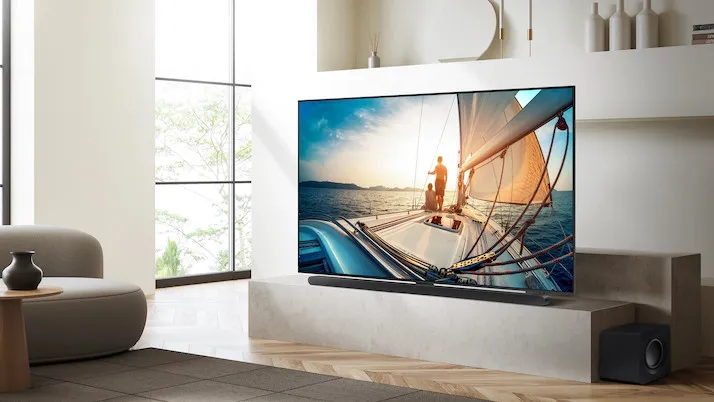
The next generation of HDR is here. HDR10+ Advanced and Dolby Vision 2 are coming, bringing support for screens with higher brightness, more advanced tone mapping and more.
The two new formats are the latest players in the long-lasting battle between Dolby and Samsung — one that took its previous form in Dolby Vision and HDR10+, and saw Samsung refusing to license Dolby Vision for its TVs.
Samsung's HDR10+ Advanced continues the company's push for a more open approach, while Dolby Vision 2 sticks to its premium proprietary model that often requires hefty licensing fees. But how do the new standards compare and is there a clear winner between them? Will Dolby continue its reign?
What is Dolby Vision 2?

Dolby Vision 2 is the next evolution of Dolby's premium HDR format, building on what the original Dolby Vision established. The new standard offers a range of improvements, including support for 12-bit color depth and peak brightness levels of up to 10,000 nits according to Dolby — far beyond what even today's most-advanced TVs can actually reach.
At the heart of Dolby Vision 2 is an AI-powered system called Content Intelligence, which dynamically adapts the picture based on both the content being displayed and the viewing environment. The technology includes bi-directional tone mapping, allowing the best TVs to leverage their higher brightness and wider color capabilities while staying true to the creator's original artistic intent. It also includes Dolby's new "Precision Black" feature to improve details in darker scenes.
Dolby has actually split its new format into two tiers: standard Dolby Vision 2 and Dolby Vision 2 Max. Clear details about the differences aren't really available just yet, but it seems as though the Max tier is built to offer more advanced features, particularly around motion handling, mostly for the highest-end displays out there.
What is HDR10+ Advanced?

Unlike Dolby Vision 2, HDR10+ Advanced is not being released in different tiers.
HDR10+ Advanced is Samsung's answer to next-generation HDR, designed as a direct competitor to Dolby Vision 2. Expected to launch early this year (likely alongside Samsung's new TV lineup), the format builds on the original HDR10+ while sticking to Samsung's approach to open-source, royalty-free standards that any manufacturer can implement without licensing costs.
The new format is designed specifically for modern high-end TVs capable of reaching 4,000 to 5,000 nits of brightness, though it should scale well across different display capabilities. HDR10+ Advanced has granular control across six key upgrade areas: increased brightness range, accurate color performance, local tone mapping zones, genre-based processing, intelligent motion smoothing and cloud game optimization.
Unlike its predecessor, HDR10+ Advanced uses extended statistical metadata and AI-driven algorithms that enable dynamic enhancement of content on a scene-by-scene or even frame-by-frame basis. Notably, unlike Dolby Vision 2, HDR10+ Advanced is not being released in different tiers.
So, what's the difference?

You might have realized that the two new formats actually share a range of similar improvements. But what about their differences?
Motion handling
Dolby Vision 2 introduces a feature called Authentic Motion, which gives filmmakers more control over motion smoothing on a shot-by-shot basis. It allows creators to reduce judder in specific scenes while maintaining the cinematic quality in others, providing explicit control rather than relying on automatic TV processing.
HDR10+ Advanced implements "HDR10+ Intelligent FRC" (frame rate conversion) to address similar motion issues. The format embeds metadata that dictates both when motion smoothing should be applied and at what intensity, with adjustments based on content type, image brightness and ambient viewing conditions. Both formats ultimately offer dynamic motion adjustments set by content creators, ensuring viewers get more lifelike motion without the soap opera effect, with screens able to adjust frame rates up or down on a scene-by-scene basis.
Metadata usage
The two formats take very different approaches to metadata handling. Dolby Vision 2 employs dynamic metadata with more granularity, allowing studios and colorists to manually fine-tune aspects of the image during production.
HDR10+ Advanced, while also using dynamic metadata for scene-by-scene adjustments, leans more heavily on AI-based algorithms and automation. Its extended statistical metadata captures nuanced variations in image tonality, while genre-specific metadata allows content to be optimized based on content type. This more automated approach makes implementation potentially easier for content creators but sacrifices some of the manual control that Dolby Vision 2 prioritizes.
Both formats offer some big improvements in how they handle the higher brightness levels of modern TVs.
Brightness
Both formats offer some big improvements in how they handle the higher brightness levels of modern TVs. They both use ambient light sensors to adapt picture quality depending on the viewing environment. That means darker scenes can remain detailed and visible even in brighter rooms, while highlights are more controlled to prevent washing out.
Dolby Vision 2 uses its Content Intelligence system to balance brightness and contrast based on the viewing environment. HDR10+ Advanced offers an HDR10+ Bright feature that uses AI-driven algorithms to dynamically enhance brightness based on the display's specs.
Gaming
Dolby Vision 2 includes plenty of features that will improve gaming, like the Precision Black feature — but these are enhancements that are built for all kinds of content, rather than anything gaming-specific.
HDR10+ Advanced, however, places a much stronger emphasis on cloud-based gaming with its dedicated HDR10+ Intelligent Gaming optimization. This includes an adaptive cloud gaming mode that monitors ambient lighting conditions and makes real-time tone mapping adjustments specifically for cloud-based games. The format also includes optimizations for reduced latency and improved visuals in streamed games.
When will Dolby Vision 2 and HDR10+ Advanced become available?

Dolby Vision 2 has already been announced, but it has yet to officially roll out. Currently, there are no available TVs or content with the format.
As a proprietary format, however, it will require licensing fees from both content creators and display manufacturers who seek to implement it. This hasn't really limited its adoption in the past, except for with some manufacturers — like Samsung.
HDR10+ Advanced is scheduled to launch early this year, likely alongside Samsung's newest TV lineup. In previous years, Samsung's flagship models (like the top-shelf S95F OLED) have received the widest array of features and enhancements. It remains to be seen if HDR10+ Advanced will be included in the brand's next wave of flagship TVs.
As an open-source, royalty-free format, any manufacturer can implement it without licensing costs, potentially allowing for wider adoption across price points. Amazon Prime Video has already committed to supporting the format, though we have yet to see actual content with it.
Dolby Vision 2 vs HDR10+ Advanced: outlook
The main difference between these competing formats comes down to philosophy. HDR10+ Advanced emphasizes automated AI optimization that works without creator intervention, potentially offering more consistency across different content types without requiring specialized production work. Dolby Vision 2 prioritizes creative manual control, giving filmmakers and content creators more direct influence over how their work appears on consumer displays.
Licensing costs could play a role in their overall reach. Dolby Vision's licensing requirements have somewhat limited its implementation, especially among budget and mid-range TVs — though all the major players have adopted it except Samsung.
Samsung's royalty-free approach with HDR10+ Advanced could lead to wider adoption among manufacturers and streaming services that might be reluctant to pay additional licensing fees, but only if Samsung is able to get creators to widely adopt the format. That said, Dolby Vision's established position in the premium content space definitely gives it certain advantages.
We'll have to wait and see if one format wins out over the other, but in all likelihood, they'll both exist in the ecosystem, and eventually, many TVs will support both of them.

Follow Tom's Guide on Google News and add us as a preferred source to get our up-to-date news, analysis, and reviews in your feeds.
More from Tom's Guide