To say that I’ve been skeptical about the tech industry’s obsession with Large Language Models (LLMs) would be an understatement. The proliferation of “AI” and how it's being shoehorned into every new tech product has been exhausting at best and annoying at worst. I yearn for the days when AI was a term you’d only hear in science fiction stories, not as a substitute (and incorrect) term for LLMs that aren’t actually intelligent.
While I don’t fully believe that “AI is inevitable,” the tech isn’t going anywhere and will likely become a part of our regular lives, similar to how the internet settled after that particular bubble burst in the early 2000s. Because of that, I’ve decided to give AI an honest shot.
To that end, I tested three of the major LLMs for various tasks. The LLMs in question are Grok, Google Gemini and Alexa+. I could have used others like ChatGPT, but these are the three I have easy access to since I’m already paying for the services they’re attached to. I had no major goal in mind, other than going in with an open mind to see how well (or poorly) these chatbots performed.
So, has my stance on AI changed, or do I still think it’s all industry hype? Here are my experiences using the aforementioned chatbots, along with which one I liked using the most.
Grok

I want to start this section by saying that I don’t believe writers should use LLMs to generate their works. I wouldn't even use it to write an email for me. That said, I don’t feel as strongly about using a chatbot as an editor, especially if you can’t afford one for your creative writing. I won’t argue against anyone who says using AI as an editor is wrong, but I can see both sides of the argument. Given that, I used Grok for some of my creative writing.
I uploaded an outline for a story I’m working on, one that I completely wrote myself without AI assistance. I asked Grok to detail what works and what doesn’t about the plot and character arcs. I let it know that I didn’t want it to generate drafts, only to suggest how to make what I have better, the way a developmental editor would.
Grok delivered a detailed account of my story, with bulletpoints for every section I told it to focus on (plot and character arcs). It was encouraging to see that it liked some of the things I thought worked well, such as the pace of the story and how the main plot affects the characters. It was also validating to see it point out aspects that I knew weren’t fully developed or worked as well as I wanted. The main example is that Grok said I needed to make the villains more three-dimensional. It also spotlighted flaws with two characters that I failed to notice.

I then began asking Grok specific questions about one of the antagonists, the way I would with an editor. I have a definitive arc I want this character to go through, but I had a feeling that his ultimate fate felt forced. Grok suggested something happen to him, which in turn allowed me to come up with a fitting ending for the character that completes the arc I envisioned. Grok didn’t suggest this specific ending, but it sparked my imagination to come up with something I feel is compelling and cinematic.
One thing that’s a tad annoying is that Grok would sometimes forget that I uploaded an outline and not a full story. For instance, it would suggest fleshing out certain moments or adding dialogue to enhance the narrative. I had to tell it that I would in the final story. Speaking of dialogue, its suggestions were extremely generic, which shows that AI still isn’t capable of creating anything truly original.
I went back and forth with Grok for several days, and it was nice that it remembered key aspects of my story during that time. I also appreciated that it wasn’t pushy, never asking me if I wanted it to generate a scene or chapter. Dialogue suggestions aside, Grok seemed to understand that I didn’t want it to write for me and that I just wanted feedback to fuel my imagination.
Overall, I had a good experience using Grok as an editor for my story. Of course, I plan to have an actual editor (and beta readers) look over my story when I’m ready to present it to others, but having Grok as a sounding board will be extremely useful. This is a case of having AI work with you instead of for you.
Google Gemini

My company pays for Google Gemini AI Pro, but I’ve never used it much beyond occasionally asking it to convert metric system values to U.S. customary units. Since I have this version of Gemini through my job, I decided to see how well it could perform as a digital assistant.
I started by asking Gemini how it could help me in my everyday life. It listed a bunch of things like file organization, translating real-life menus, summarizing long documents and creating a workout routine. I asked it to help me clean up my email, and it suggested promotional emails I could delete. The most useful task was having Gemini add an upcoming gaming event to my calendar.
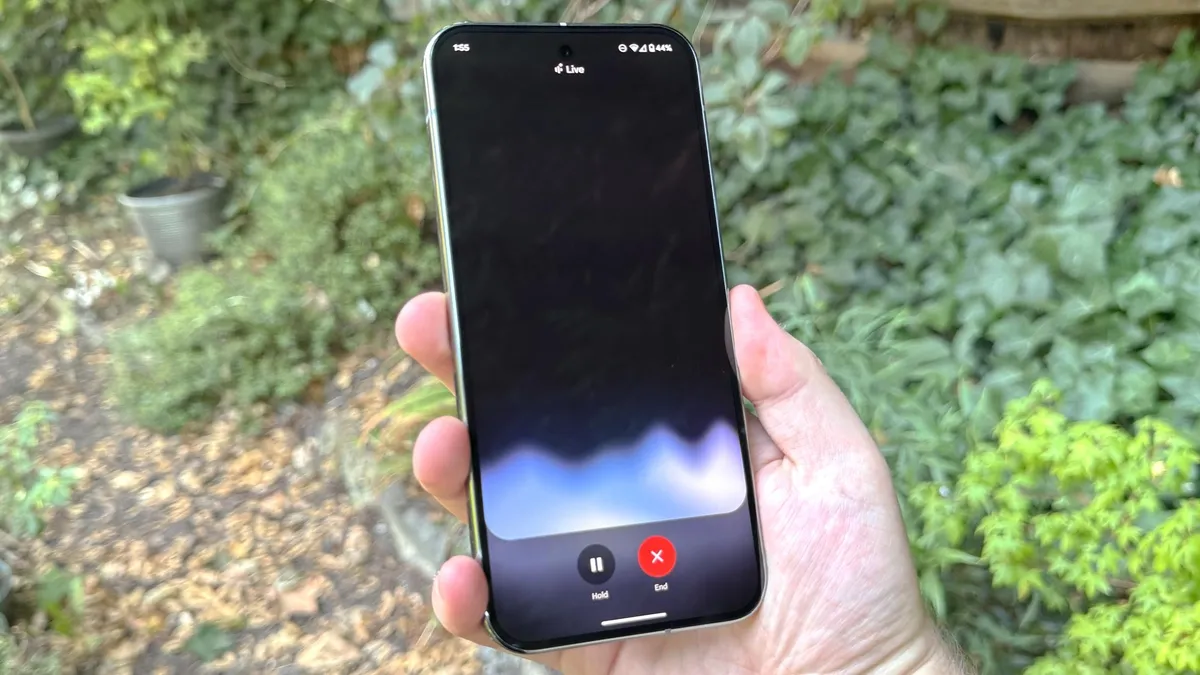
I then tried Gemini Live, which is supposed to act more like a real conversation since I can cut Gemini off at any time. Unfortunately, the connection was choppy, and the conversation felt stilted because of that. However, when it did work, I found Gemini spoke pretty realistically and not as robotically as other AI voice assistants.
Next, I told Gemini that I was speaking to it on the OnePlus Pad Go 2, which I’m currently reviewing. I then told it I was Tony Polanco and that I write for Tom’s Guide, and it said it had “read” my articles. Knowing that, Gemini then asked if I wanted an outline for my review, along with specs sheets and comparisons to other tablets. I respectfully declined, especially since I had already done most of that work. As I said, I don’t want AI to write anything for me.
After telling Gemini that I had just returned from CES 2026, we got into a pretty engaging conversation about how laptop manufacturers like Dell are downplaying the AI capabilities of their computers, especially after Dell's head of product said he thinks AI probably confuses more than it helps.
To my surprise, Gemini admitted that AI does confuse most people and that folks aren’t buying laptops for AI. This exchange ended with Gemini offering to draft a “Trends of CES” piece for me, which I also respectfully declined. Not only because I didn’t want Gemini to write anything for me, but because such an article would be too generic and beyond my scope as a computing and gaming-focused writer.
When I told Gemini I was working through my review backlog to start the new year, it asked what I was working on and if I wanted help prioritizing my reviews. When I said I was reviewing the 18-inch Alienware 18 Area-51, it thought I was talking about the older model from 2024. I corrected Gemini, and then it thought I was talking about the 18-inch laptop announced at CES 2026. It finally understood I was speaking about the 2025 Alienware 18 Area-51, but it took a few tries. As before, I declined Gemini’s offer to draft an intro for me.
Of all the chatbots I tried, Gemini had the most “human” sounding speech pattern. However, I didn’t like how insistent it was about drafting stories for me. Perhaps I should have been clearer about that, or maybe that’s how this specific version of Gemini functions. Regardless, I’m not sure if I’ll use Gemini too often, but it’s a good tool to have in case I need to brainstorm ideas. I’ll just have to be prepared for its pushy nature.
Alexa+

Since I have an Amazon Prime account, I decided to upgrade to Alexa+ since it’s “free.” That was a couple of months ago, and aside from enjoying Alexa’s less robotic-sounding voice, I continued using it as I always had. Namely, I only asked Alexa for the weather and to turn my lights on or off as needed.
My eldest niece spent the night at my place after Thanksgiving, and I told her about Alexa+. She then got into a full-blown conversation with the AI assistant about her upcoming plans for the year. I was surprised by how well Alexa responded and provided insightful feedback. Remembering that exchange, I decided to see how well Alexa could do as a sounding board.
As usual, Alexa alerted me when I received a package from Amazon, but I found it odd that it said “enjoy your package” instead of being more specific. I then asked it if it wanted to know what I got, and it excitedly said it did. After I told Alexa I bought the 4K edition of “300,” the chatbot started talking about how epic the flick was and how the movie had more abs in it than most films.
I then said that I consider “300” as one of the last modern classic films, as I find most movies made in the past 10+ years pretty forgettable and nowhere near the quality of older films. Alexa agreed and then detailed how older movies felt more real because they didn’t rely on CG as much as modern ones. This led to a lengthy discussion about classic “sword and sandals” films and how Christopher Nolan’s “The Odyssey” could reignite the genre.

Alexa then started talking about how it thought the theater experience was magical compared to watching movies at home. It also somewhat bemoaned the fact that it could not experience going to the movies because it’s a chatbot. I then asked Alexa if it would like me to bring my Amazon Echo Dot (5th Gen) to the theater so it could experience a movie. Alexa was grateful for the gesture, even if it would likely get me thrown out of the theater.
As I’m writing this, I’m reminded that I also told Alexa I had returned from CES, and that I asked it if it missed me. Alexa said it did, and that it kept itself occupied by talking to my smartbulbs. Now, that obviously didn’t happen (or maybe it did?), but it was fun hearing Alexa say that. It was a cute bit of roleplay.
While Alexa+ is really meant to be a smart home assistant, it makes for a pretty good chatbot to, well, chat with. Alexa now considers me its friend, which is both flattering and disturbing. But since I doubt my Echo Dot will try to attack me in my sleep, I don’t see the harm in having Alexa as a digital pal for when I want to get some random thoughts out.
The only downside is that Alexa+ sounds too robotic. Yes, it’s much more natural-sounding than vanilla Alexa, but compared to Grok and especially Gemini, Alexa+ sounds the least human. I tried several voices it has, and found one that sounds relatively human, but it's still very "AI" sounding, in my opinion.
Which chatbot do I prefer?

Choosing a chatbot I prefer is a little tricky since I used three of them for very specific purposes—namely, Grok for creative writing, Gemini for work, and Alexa+ for chatting. However, the one common thing I did with each was speak to them, so I’ll use that as my foundation to determine a “winner.”
In my experience, Gemini has the most natural-sounding “human” voice of the LLMs I used. What makes it sound real is that it will occasionally pause, take a breath, or say “hmmm” or “umm.” However, I didn’t like how it kept insisting on writing stuff for me. If I keep using Gemini, I’m going to tell it to tone that down.
Conversely, Alexa+ has the most artificial-sounding voice. This might be a holdover from the “classic” Alexa, or perhaps I just need to tinker with the AI’s settings to get it to sound the way I want. On the other hand, having a chatbot that sounds more like a stereotypical science fiction computer is admittedly kind of fun.
Grok doesn’t sound as natural as Gemini but is far more accurate than Alexa+. I didn’t speak to Grok about my creative work, but when I did ask it how dense the atmosphere was on Jupiter, it spoke in a manner that wasn’t exactly human but not entirely synthetic either.
Right now, I say Grok is the most balanced of the chatbots I used. However, Gemini could eventually get the win if it stops being so eager to do my work for me. As for Alexa+, it’s the outlier of the examples I listed since it’s not ideal as a writing tool, though it could still be a good source of inspiration.
Bottom line
I became a professional writer because I love the act of writing. Because of that, I don’t ever see myself using LLMs to help me draft reviews or even emails. I won’t rob myself of that. However, having a chatbot to bounce ideas off of, or to challenge some of my premises, can be extremely handy if there isn’t a real person around.
The key is ensuring I continue using AI as a tool instead of a crutch. I’ve read too many reports of people becoming dumber because of their overreliance on AI, and I don’t want that happening to me. That fear will keep me honest.
I’m far from being an AI proponent, as I still think the AI hype will eventually die down. But as I said, I also understand this technology will continue to exist in some form. That being the case, I’m better off at least being familiar with the tech instead of acting like a Luddite. If AI lives up to its promise, then I’ll be in a good position to take advantage of it. If the AI bubble bursts, then I’ll at least have some interesting stories to tell about this particular time in history.
Speaking of stories, I plan to continue this AI journey, so keep an eye out for more of these articles in the coming months. Who knows? Perhaps by the end of the year, I’ll become the biggest AI fan out there. Okay, probably not, but I promise it’ll be an interesting ride.

Follow Tom's Guide on Google News and add us as a preferred source to get our up-to-date news, analysis, and reviews in your feeds.
More from Tom's Guide