About three years ago, for most people, trying AI meant one thing: using ChatGPT. It became synonymous with the technology itself. But in 2026, the story has flipped. Now, it's OpenAI struggling to keep pace, reportedly even issuing internal "Code Red" alerts to counter Google's strategic dominance.
But Google has executed a masterclass in strategy. Instead of just matching ChatGPT feature-for-feature, it leveraged its ultimate advantage: it already runs the infrastructure of our digital lives. Through smarter models and deep integration across Android, Search, and Workspace, Google isn't just competing — it's making AI ambient and infinitely useful. Here are the nine ways Google is winning the AI race and why I think ChatGPT may never catch up now.
1. Gemini 3 finally beat ChatGPT in where it counts: reasoning

OpenAI set the early standard for logical thinking, but Google's Gemini 3 has closed the gap — and then some. For practical tasks like debugging code, analyzing complex documents or planning projects, Gemini now delivers faster, more coherent and far more structured responses. It's the first time a Google model has genuinely outperformed ChatGPT in core reasoning, and it does so without feeling slow or overly academic.
2. Gemini has a huge context window you can actually use

While other chatbots tout "memory," Gemini delivers real utility. Its multimillion-token context window can digest entire books, massive codebases or hours of meeting transcripts in one go. For researchers, writers and developers, the bigger context window is so much more than a benchmark win; it's truly a daily time-saver.
3. Gemini's integration is Google's secret weapon
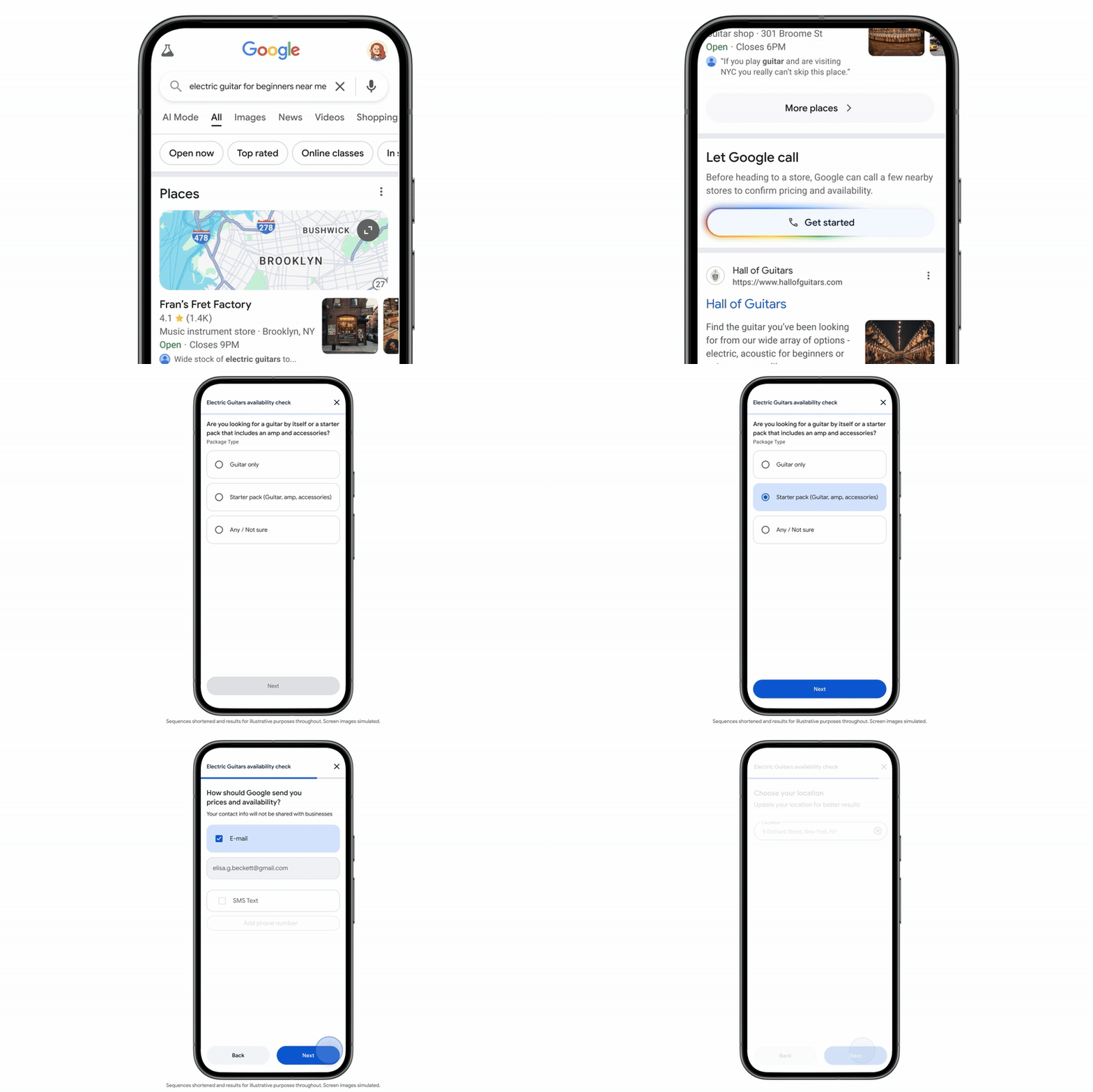
While ChatGPT has spent resources building a clunky app store, Google quietly integrated Gemini where users already are. In other words, ChatGPT is an app you have to open, whereas Gemini is in many of the apps you already open.
With deep system-level integration, especially on Pixel and Samsung phones with crossover actions, as well as embedded within Gmail, Google Maps and Google Photos, Gemini can analyze what's on your screen — an email, a PDF, a recipe — and assist you in the moment without app-switching. This context-aware help is only possible when you control the operating system.
4. Google gives away their best models for free

Gemini is built into Google Workspace, not behind a paywall. Unlike Microsoft Copilot or ChatGPT Plus, Google didn't gate its best AI behind a steep subscription for most users. It woven Gemini directly into Gmail, Docs, Sheets, and Slides. The result? Tools for drafting, summarizing and editing that feel like native features, not subscription add-ons. For daily workflow, convenience always wins.
5. Multimodal AI that works in the real world
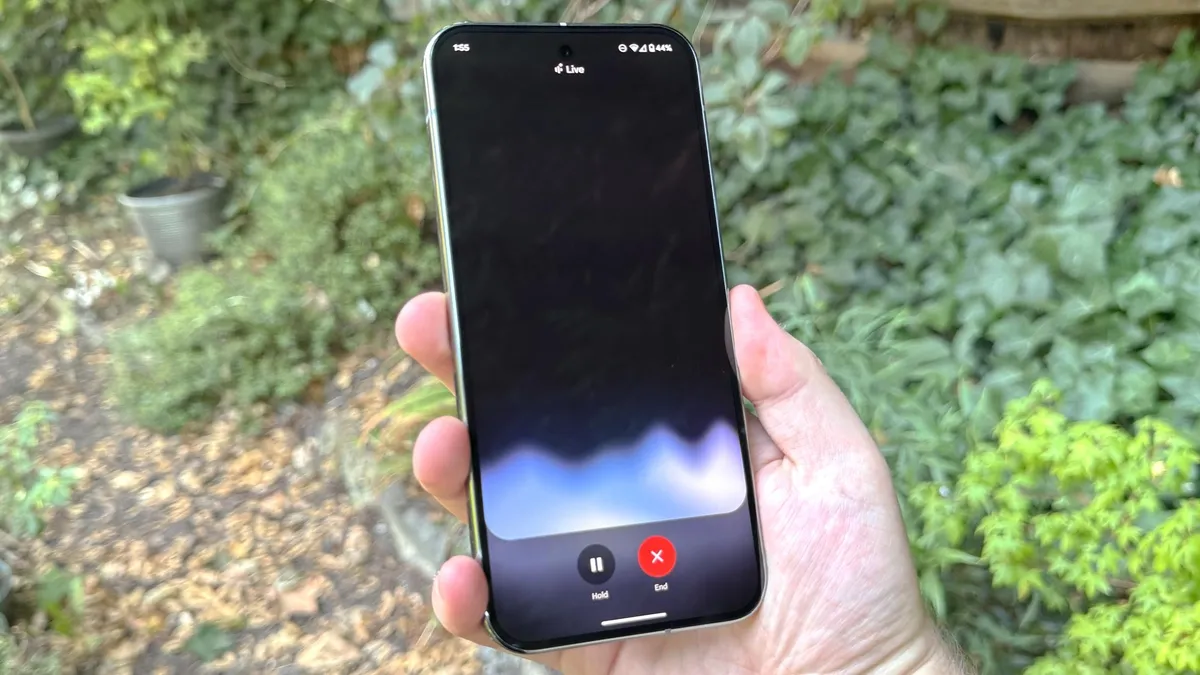
Whether tracking flights with Google Flights or shopping within Google, Gemini's tools are genuinely useful. Google's Nano Banana not only offers realistic image generation, but now you can draw on the images to edit without a prompt.
Even Gemini voice and vision capabilities are exceptional. Simply point your phone's camera at a router, a foreign sign or a document, and Gemini can guide you through setup, translation or analysis by combining what it sees and hears.
6. Veo 3.1
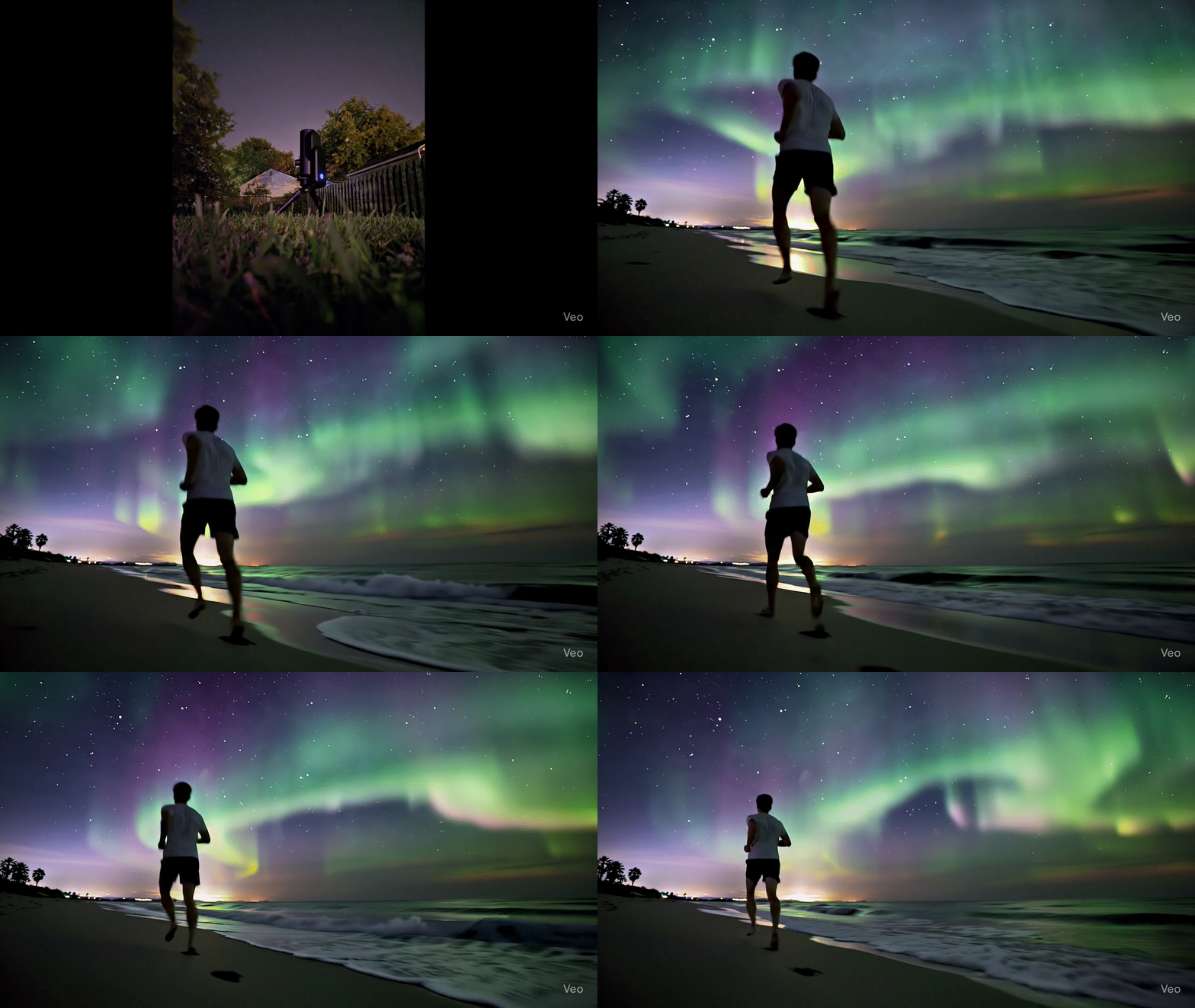
A few months ago, ChatGPT introduced Sora 2, but alienated users by limiting access. Meanwhile, Gemini users can create videos right within the Gemini app — and for free. Google's Veo focuses on being a practical tool. Integrated with YouTube Studio, it prioritizes consistency, editable formats and workflow utility over trends. For creators, that practical focus is why it's gaining real traction.
7. DeepMind: Google AI Labs

Google DeepMind continues to drive foundational breakthroughs, many of which Google doesn't advertise. Within Google AI Labs are dozens of useful AI apps for productivity, creativity and more. These AI tools are almost all free, help solve real-world problems and reinforce that Google AI is built on some of the smartest, most credible models in the world.
8. The hardware edge: Google's own TPUs
While the AI industry scrambles for Nvidia GPUs, Google has refined its custom Tensor Processing Units (TPUs) for years. This gives Google a massive edge in cost, efficiency and flexibility, allowing it to run Gemini models faster and cheaper while also pioneering powerful on-device AI that doesn't need the cloud.
9. Search evolved instead of dying
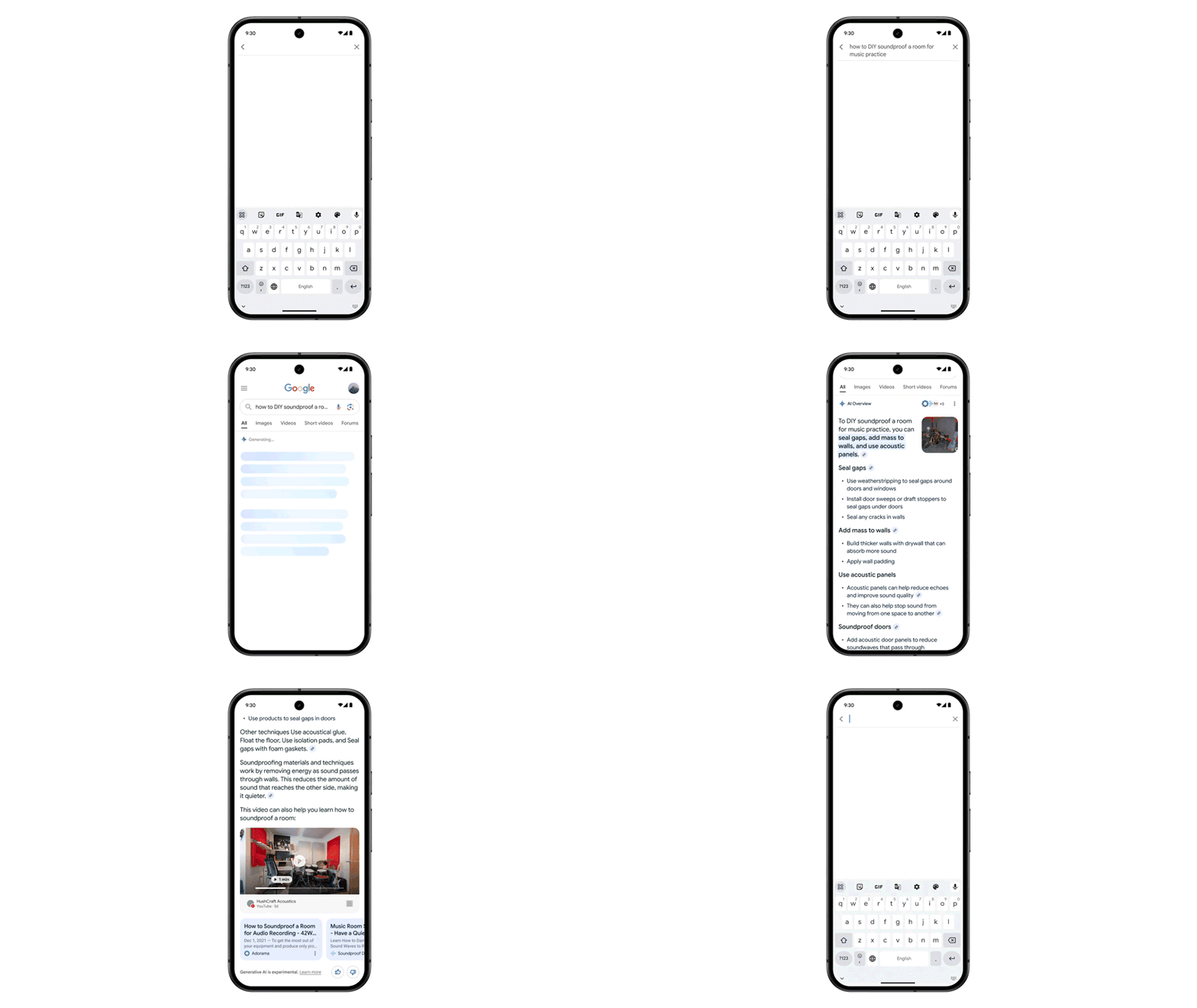
When ChatGPT first added Search, I was convinced it marked the beginning of the end of Google. . Predictions like mine — that AI would kill Google Search — turned out to be premature.
Instead of being displaced, Search adapted. Google’s "AI Overviews" now sit alongside traditional results, offering fast summaries without fully replacing the need to click through. They change how we search, not whether we search.
AI-generated summaries now appear in 60% of Searches, underscoring just how deeply integrated AI has become in Google’s interface. And even when those summaries lack accuracy, — or occasionally wrong — Google doesn’t need to win users back. With billions of searches every day, the habit was already locked in.
What Google did wasn’t reinvent search. It upgraded behavior we already had, in a way most of us didn’t see coming.
For users, that shift comes with a tradeoff: convenience over certainty. AI can speed things up, but it also means we have to be more intentional about checking sources and validating what we read.
Bottom line
AI advancements move at breakneck speeds, but Google proved it's still a marathon, not a race. While ChatGPT captured the viral buzz, Google went quiet and strategic, integrating AI vertically into the tools billions use every day: phones, productivity suites, browsers, and creative apps.
You don't have to consciously "use Gemini" for it to help you. It's already working in the background. That’s not a comeback story — it’s a masterplan. And as we begin 2026, it will be interesting to see if OpenAI can keep up this year.

Follow Tom's Guide on Google News and add us as a preferred source to get our up-to-date news, analysis, and reviews in your feeds.
More from Tom's Guide
- I invented a fake idiom to test AI chatbots — only one called my bluff
- The 'brain warm-up' prompt I use every morning — it takes under 2 minutes
- I tested Gemini 3 Flash vs. DeepSeek with 9 prompts — the winner surprised me