Snow looks harmless as it piles up on your roof, but the weight adds up faster than you'd think. A foot of accumulated snow can push your roof close to its weight limit, and older homes or those with flat roofs have even less tolerance. Heavy snowfall can stress the structure, cause leaks, or lead to ice dams forming in your gutters.
Climbing up to clear it yourself isn't a great option in winter conditions. Icy ladders and slippery roofs create obvious risks. But a roof rake keeps you on the ground while letting you remove the dangerous buildup. Here's how to use one.
1. Check if your roof needs clearing

Six inches to a foot of snow is the general threshold for clearing your roof. The exact limit depends on your roof's age, type, and condition, but waiting until snow reaches deeper levels makes removal significantly harder.
Heavy, wet snow requires faster action than light powder. If snowfall is followed by rain or mild temperatures, the added moisture increases the weight considerably. Clear it as soon as possible in these conditions.
Keep an eye on weather forecasts too. Clearing snow before the next storm hits prevents accumulation from multiple weather systems, which compounds the risk to your roof.
2. Prepare the area and wear protective gear

Snow and ice will fall as you rake, so clear the ground around your house first. Move vehicles, cover plants you want to protect, and remove any objects that could be damaged by falling snow or ice.
Dress for cold weather and safety. Wear insulated boots with good traction, warm gloves, safety glasses, and a hard hat. The hard hat protects you from falling chunks of ice, which can be surprisingly heavy and sharp.
Before starting, make sure to check your surroundings — note the location of power lines, gutters, tree branches, and any other obstacles you'll need to work around.
3. Start clearing from the roof edges

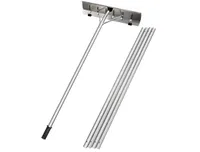
First, assemble your roof rake and position yourself at one corner of the roof. Place the rake blade about two feet from the edge. Stand clear of where the snow will fall — don't position yourself directly underneath.
Pull the rake down toward you while keeping it parallel to the roof surface. Use light, consistent pressure. Let gravity do most of the work rather than forcing the rake downward, which can damage shingles. Your goal is removing most of the snow while leaving about an inch or two behind.
Work carefully around gutters to avoid damaging them. The rake should clear snow without catching on or bending the gutter system.
4. Work your way up the roof

After clearing the first two feet from the edge, slide the rake higher to reach the next two or three feet of accumulated snow. Repeat this process until you've cleared five to six feet from the edge of the roof.
Pay attention to roof features as you work. Rake around skylights but avoid raking directly on top of them. Stay clear of chimney edges where the rake could damage flashing. Clear snow from exhaust vents as thoroughly as possible — this improves ventilation and reduces ice dam formation.
Take breaks when needed, as roof raking requires sustained overhead motion that strains your shoulders and back.
5. Clear the ground and check downspouts

Once you've finished raking, grab a shovel and clear the snow that fell around your house. This prevents the removed snow from creating new problems.
Pay particular attention to downspouts. Snow piled against them can create blockages in your gutter system, which defeats part of the purpose of clearing your roof in the first place. Make sure water has a clear path to drain away from your foundation.
If you're unsure about any part of the process or your roof is too high to reach safely with a roof rake, call a professional. Snow removal services have the equipment and experience to handle challenging situations safely.

Follow Tom's Guide on Google News and add us as a preferred source to get our up-to-date news, analysis, and reviews in your feeds. Make sure to click the Follow button!
More from Tom's Guide
- Don't let your shed rot this winter — take these 3 preventive steps
- You can de-ice your car windshield in seconds with this one kitchen item
- How to winterize your sprinkler system before it freezes