Indoor hydrangeas brighten winter months with their large, colorful blooms, but they’re notoriously fussy about their environment. If your hydrangea looks wilted, droopy, or generally unhappy despite your best efforts, you’re not alone. Winter conditions create the perfect storm for hydrangea stress.
Hydrangeas communicate their needs through their leaves and blooms: drooping flowers signal thirst or humidity issues, yellowing leaves suggest watering problems, and weak stems indicate lighting or overcrowding concerns. Here are the five most common reasons indoor hydrangeas wilt in winter and how to address each one.
1. Underwatering
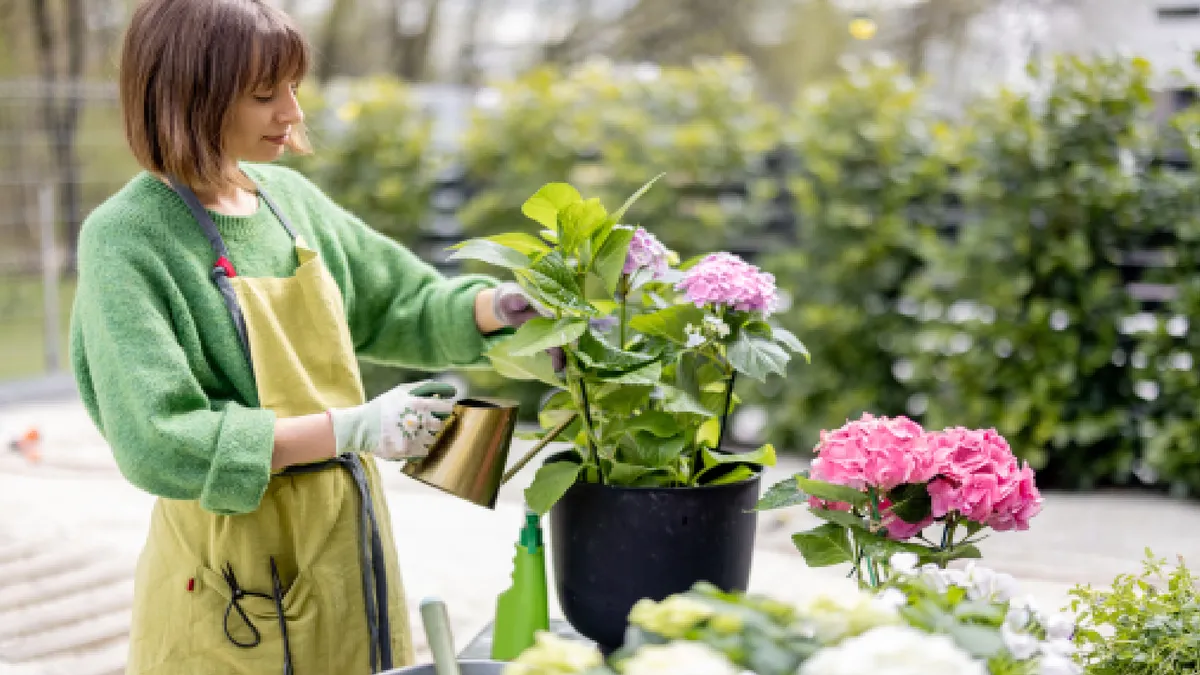
Hydrangeas need consistent moisture to support their large blooms and foliage. When soil dries out, the plant loses turgor pressure — the internal water pressure that keeps stems and leaves upright. This causes dramatic, immediate wilting that makes the entire plant look like it’s collapsing.
Check soil moisture by pushing your finger about two inches into the soil. If it feels dry at that depth, your hydrangea needs water. During winter, indoor heating dries out soil faster than you might expect, even though plants generally need less water in cooler months.
Water thoroughly when the top inch or two of soil feels dry. Pour water until it drains from the bottom of the pot, ensuring the entire root ball gets moisture. Wilting from underwatering usually reverses within hours after watering. If your hydrangea doesn’t perk up by the next day, another issue is likely at play.
2. Low humidity

Central heating creates desert-like conditions indoors during winter. Humidity levels drop significantly, and hydrangeas, which naturally grow in humid environments, struggle when air becomes too dry. Low humidity causes blooms to wilt and brown at the edges, even when soil moisture is adequate.
The most effective fix is increasing humidity around your plant. Mist the blooms and foliage daily with room-temperature water using a spray bottle. This provides immediate moisture to leaves and flowers, though the effect is temporary.
For longer-lasting humidity, place your hydrangea pot on a tray filled with pebbles and water. The water level should sit just below the pebbles so the pot doesn’t touch it directly. As water evaporates, it creates a humid microclimate around the plant. You can also group plants together to create a more humid environment.
If blooms have already browned from low humidity, trim off damaged flowers. This encourages the plant to focus energy on healthy growth rather than trying to save unsalvageable blooms.
3. Insufficient light

Winter days are significantly shorter than summer, and natural light intensity drops even when skies are clear. Hydrangeas placed in spots that worked perfectly in summer may not receive enough light in winter, leading to weak, elongated stems that can’t support blooms properly.
Move your hydrangea to the brightest available spot in your home. South or west-facing windows provide the most winter light. The plant should receive bright, indirect light for most of the day — direct winter sun is generally fine and won’t scorch leaves like harsh summer sun would.
If you notice stems stretching toward the light source or becoming thin and weak, insufficient light is the problem. Rotate your plant every few days to ensure even growth on all sides.
Strong light encourages compact, sturdy growth that can support heavy blooms without drooping. Weak light causes spindly stems that collapse under the weight of flowers.
4. Root-bound

Check if your hydrangea is root-bound by gently removing it from its pot. If roots form a tight, circular mass around the soil or protrude from drainage holes, it’s time to repot.
Choose a pot one to two inches larger in diameter than the current one. Larger pots hold more moisture, which can lead to overwatering and root rot. Gently loosen circled roots with your fingers before placing the plant in fresh potting soil.
Hydrangeas need moisture but won’t tolerate waterlogged roots, so make sure to use well-draining potting mix designed for indoor plants or add perlite to standard potting soil to improve drainage. Then water thoroughly and place the plant in bright, indirect light.
5. Too many leaves

Indoor hydrangeas sometimes produce dense foliage that overwhelms the root system’s ability to supply adequate water. This is especially problematic in winter when roots are less active. The plant tries to support too many leaves and blooms, leading to overall drooping and stress.
Remove excess foliage from the lower stems to reduce the plant’s water demands. Focus on yellowing, damaged, or crowded leaves that contribute little to the plant’s health. Use clean, sharp scissors or pruning shears to make clean cuts. Removing lower leaves also improves air circulation around the base of the plant.
After removing excess leaves, the remaining foliage should perk up within a few days as the root system can better support what’s left. This is particularly helpful for plants that look perpetually stressed despite adequate water and light.

Follow Tom's Guide on Google News and add us as a preferred source to get our up-to-date news, analysis, and reviews in your feeds. Make sure to click the Follow button!
More from Tom's Guide
- Your peace lily won't survive winter if you don't change these 5 things
- Winter composting is a secret weapon for spring gardens — 3 methods nobody talks about
- 3 reasons your Christmas cactus is wilting and how to fix it now