When I grow up, I want to be as strong as Nancy Mimms — at age 73, she’s a dancer and a Bay Club fitness instructor. Mimms has danced all her life, starting with ballet at age 12, and shows no signs of slowing down just yet. She truly proves that age is no barrier to strength and vitality, and spends her days training seniors to safely strength train. Below, she shares her go-to exercises with Tom’s Guide — get ready to feel inspired.
As a reminder, if you’re a complete beginner or you’re returning to exercise after a specific injury, it’s always best to seek personalized advice from a qualified professional. If at any point you feel in pain, stop the exercise and seek professional help.

Nancy Mimms is a certified personal trainer and group fitness instructor with Bay Club. She's a 30+ year veteran of the dance fitness scene. Her teaching and training have taken her from east to west coasts as well as Europe. She's ACE certified and a personal trainer (ACSM Clinical Exercise Physiologist).
What are the exercises?
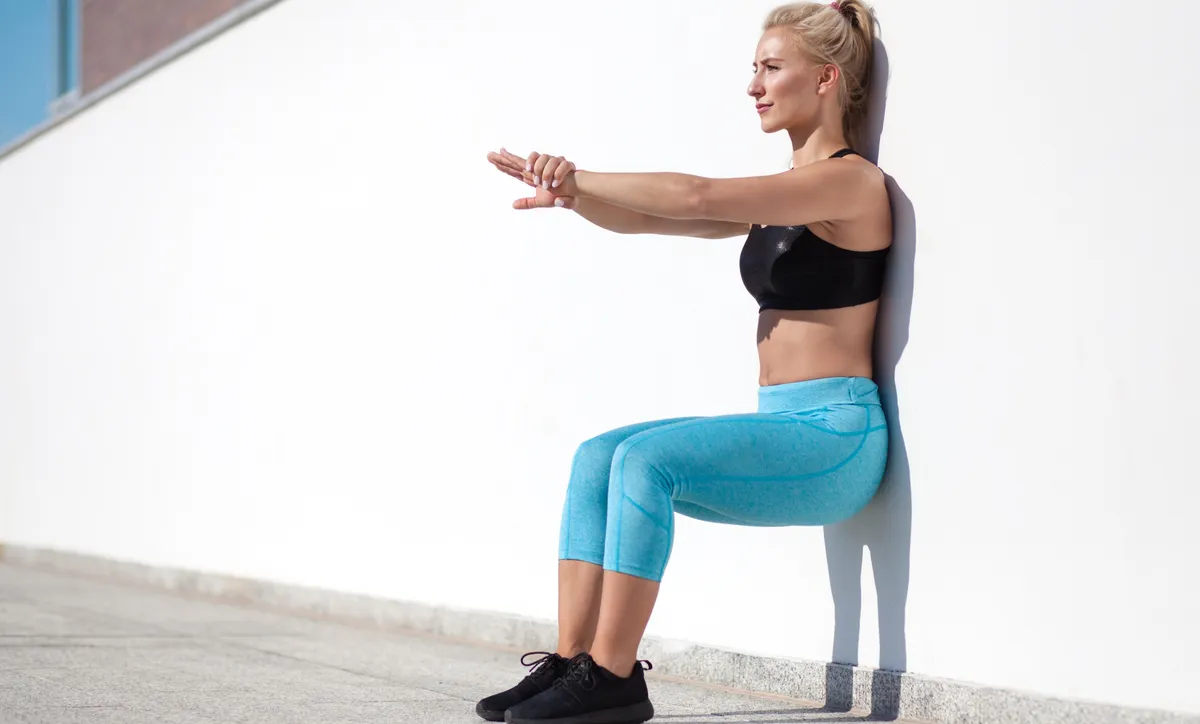
Ready to get started? You can do all of the exercises below with just your bodyweight, or with a set of light weights and resistance bands to increase the intensity. Check out the best adjustable dumbbells for working out at home here.
- Squats: “Wall sits with or without weights; stand with your back against a wall, move your feet away until your knees are perpendicular to your shins. Lower your body and hold this position for up to 1 minute (or more). For a more intense workout, hold dumbbells in each hand. If you don't have dumbbells, hold two 1-gallon water jugs. You can pour out some of the water if they are too heavy. Once you’ve mastered that, move away from the wall and do repetitions of 12-15 with or without dumbbells.”
- Side Steppers (hip abduction) with a mini resistance band: “Choose a circular band that can go around your thighs (less intense) or your ankles. Start in a modified squat position and step to the side, adding distance to the point of fatigue. Repeat traveling in the opposite direction so that you are changing lead legs. This exercise is great for strengthening your hips and outer thighs. The resistance bands come in different strengths. The wider “booty bands” fit around your thighs.”
- Farmer’s Carries: “This may seem like a simple exercise, but if you hold enough weight in your hands, it challenges both your core and grip strength. If you don’t have weights, load up two shopping bags with canned goods or, again, use water jugs. The weight should be equal on both sides. This exercise can be based on distance or time.”
- Wall push-ups: “Place your hands palms against a wall at shoulder height. The further away from the wall, the more intense. From there, find a table and do some reps there. As you get stronger, try lowering your body, knees to the floor, and use the couch as your means of support. Next, go to the floor and try to do as many reps as possible, keeping your hips level with your shoulders.”
- Planks: “Same strategy as with the push-ups. The closer you are to the floor, the harder the exercise. Legs should be straight with wrists, elbows, and shoulders in alignment. Start with 30 seconds and increase your time as you get stronger. To challenge the obliques, try a side plank. For beginners, lower the bottom knee. Increase your time up to one minute. Once you have mastered that, try doing the side plank with both legs straight. Visualize someone holding your wrist as you reach towards the ceiling.”
What are the benefits?

All of the exercises above will help build the functional fitness you need to live an independent life. By this, we mean that all of the exercises mimic everyday movements, such as carrying two bags of groceries or getting up from a chair. By strengthening your muscles, you’ll help avoid injuries and falls.
After the age of 30, we naturally lose 3-7% of our muscle mass per decade. This rate doubles after the age of 60. Strength training is the only way to reverse this, as it can preserve the fast-twitch muscle fibres. This helps you retain power during everyday activities, but also helps the body correct itself if you were to miss your footing or trip.
Finally, strength training is a fantastic way to boost your cognitive function and metabolic health, both equally important as we get older. Even using just your bodyweight, you’ll get a fantastic workout, and all of the exercises above are easy to adapt as you get fitter and stronger.

Follow Tom's Guide on Google News and add us as a preferred source to get our up-to-date news, analysis, and reviews in your feeds.
More from Tom's Guide
- 'I’m 72 and in the best shape of my life: Here’s the 5 simple isometric bodyweight exercises I prioritize to counter age-related muscle loss.'
- I’m a personal trainer who works with seniors — these are the 4 exercises I wish everyone would do before they turn 60
- Forget sit-ups — this is my go-to exercise to strengthen my hips, activate my deep core and build functional alignment