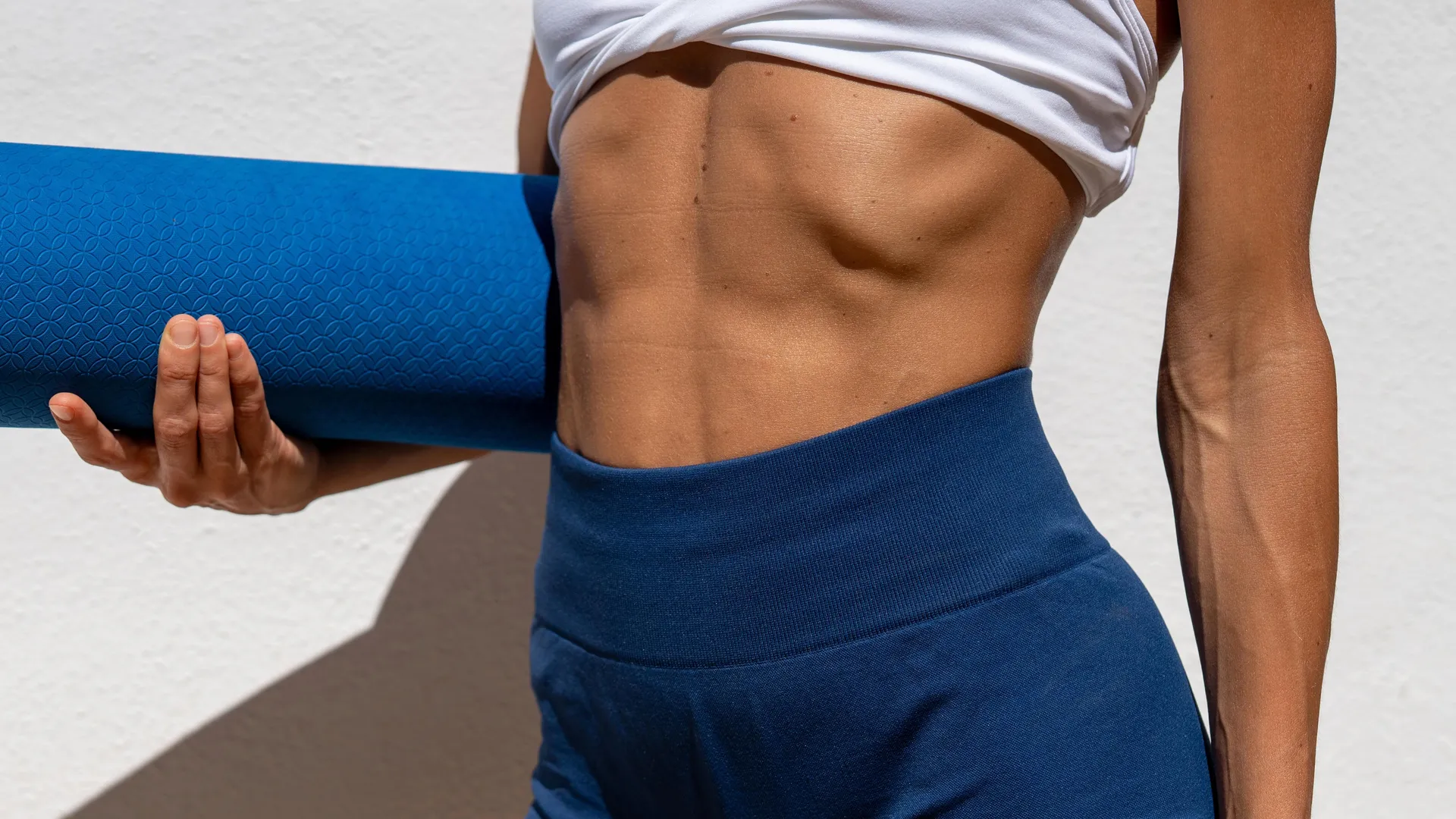
As a runner, I consider a strong core as important as strong legs. Your core is your body’s corset, stabilizing you as you run, walk and lift. Pilates is a great way to strengthen your body without any impact — you’ll focus on full-body alignment, strengthening your core and addressing any muscle imbalances, all with small, controlled movements.
I’ve been practicing Pilates for the past decade, and have used it to get me across the finish line of five marathons, as well as to rebuild my core following the birth of my baby two years ago. One of my go-to exercises when it comes to really working my obliques, as well as my inner and outer thigh muscles, is the side-lying double leg lift. Read on to find out more.
As a reminder, if you’re returning to exercise following an extended break, you’re a complete beginner, you’re recovering from an injury, or you’re pregnant or postpartum, it’s always best to seek personalized advice from a qualified professional.
What is the exercise and how do you do it?
The Pilates side-lying double leg lift looks far simpler than it feels, but it’s a fantastic move for working your deep core, internal and external obliques, and thighs. You’ll only need your bodyweight for this exercise, but you might want to lie on one of the best yoga mats to make things more comfortable.
Here’s how to do it:

- Lie on your side, cradling your head with your lower arm, or extending your arm out in line with your body and resting your head on it. Rest the other arm in front of your body.
- Make sure your hips and shoulders are stacked, and move your legs slightly forward of your hips for stability.
- Engage your abdominal muscles, thinking about bracing your core as if you were about to be punched, and zipping your deep core and pelvic floor muscles up and in.
- Squeeze your inner thighs together and lift both legs towards the ceiling, controlling the movement with your obliques — the muscles that run along the side of your abs.
- Pause at the top, then lower both legs back to the mat with control.
Throughout the exercise, your hips should stay in line with each other — avoid rocking back or arching the spine. Aim to do 6-10 reps on each side, and complete all your reps before moving on to the other side.
What are the benefits?
Strong obliques
The leg lift here must come from your obliques, not your hips. Even if you only manage to lift your legs a few inches off the ground, really focus on moving from your core. As both legs lift, you’ll be firing into the inner and outer obliques, but your deep core muscles, the transverse abdominis, will be working hard to keep your body stable as you move.
Targeting the deep lower back muscles
This exercise also works the quadratus lumborum — a deep muscle in the lower back that stabilizes your spine and pelvis. A weak QL muscle is the primary source of deep lower back and lateral hip pain, so this is a good one to target, especially if you spend a lot of time sitting behind a desk.
Working into the thighs
Those little leg lifts, they’re working the inner and outer thighs, or the adductors and abductors if you will. As you lift, the top leg will work the glute medius and TFL muscle to lift against gravity. At the same time, the bottom leg will be working the adductors to stay lifted from the ground. This, in turn, can help improve your hip stability, reducing your risk of knee strain during exercise and helping you move with better balance.
Targeting lateral stability
If, like me, you’re a runner, you’ll spend a lot of time moving in a traditional forward-and-back plane of motion. This exercise works in a frontal plane, helping you master lateral stability, which is essential for improving balance and reducing injury risk.

What are the progressions?
Once you’ve mastered this exercise, you can increase the intensity by adding additional equipment, or instability:
- Add weights, a resistance band, or a Pilates ball: You can easily add additional load to the exercise by adding equipment. If you have a set of the best ankle weights, place those around your ankles to make your legs work harder. You can also place a mini-band around your ankles or thighs and push against the band as you lift. This will force the glute medius to work harder as you lift. Alternatively, place a Pilates ball between your ankles and squeeze as you lift. This can help activate the inner thighs and pelvic floor muscles.
- Lift your arm to the ceiling: The less support you have from the floor, the harder your core has to work to stabilize your body. Instead of balancing your top hand on the floor in front of you, extend it to the ceiling, or rest it on your top hip.

Follow Tom's Guide on Google News and add us as a preferred source to get our up-to-date news, analysis, and reviews in your feeds.
More from Tom's Guide
- SWEAT app review: I've been using this app for the past decade, and here's why I think it's the best workout app for women
- Not sit-ups, planks, or crunches: I do this simple Pilates exercise every single day to build a strong and stable core and work on my hip flexor mobility
- 'I’m a Pilates instructor, and I recommend these 5 core exercises to help older clients build strength and improve posture'