Keeping fit as we get older is one of the best ways to stay independent for longer, but if you’re a complete beginner or returning to exercise after an extended break, it can be hard to know where to start. The good news is, it’s never too late, and one woman who truly believes in this is Portia Page, a 63-year old personal trainer, Pilates instructor, and Balanced Body educator.
Below, she shares the five bodyweight exercises she recommends to seniors to improve their strength and mobility, as well as the advice she shares with her clients who are returning to the gym or just getting started.
As a reminder, if you’re recovering from a specific injury, it’s always a good idea to seek personalized advice from a qualified professional.

Portia Page has been in the fitness industry for over 25 years as a teacher, competitor, program director, instructor trainer, international presenter and video co-star, fitness director and creator. She is a Gold Certified Pilates Teacher through Pilates Method Alliance, and a Master Instructor of Balanced Body® for Pilates, AI3D, Barre, Bodhi™, MOTR™, and CoreAlign®, holding current certifications with ACE, AFAA and PMA, with BS in Cognitive Science from University of California at San Diego.
What are the 5 bodyweight exercises you recommend to seniors?
“I’ve never ‘stopped’ working out — for me, it’s always been a part of my life," Page tells Tom’s Guide. "When I do go for a period of inactivity, I remember: working out feels hard at the beginning, yet within a few minutes, it’s already better, and long-term? No question — it works!”
“The good news? Your muscles don’t care how old you are — they respond to training at ANY age. I’ve seen people in their 70s and 80s gain strength in weeks. Biology is generous like that.”
Page’s simple routine involves “no fancy circus tricks”, just these 5 bodyweight exercises:
1. Sit-to-stand (chair squats)

This exercise builds leg strength and mimics everyday activities like getting up from a chair or toilet. It’s one way doctors test leg strength in seniors — here’s how many reps you need to be able to complete after 60 to be considered ‘above average’.
- Sit with your feet hip-width apart on the front of a chair. You should have a 90-degree bend in your knees, and your feet should be flat on the floor.
- Place your hands on your thighs, at the side of the chair, or across your body (this is the hardest variation).
- Lean forward slightly, shifting your weight into your feet, and engage your core as you push through your feet to stand up.
- Slowly lower yourself back down to the chair, controlling the movement. Gently tap the chair before standing again.
2. Wall push-ups

“These work on your upper body strength, are safer than floor push-ups, and are great for your shoulders and posture,” says Page. “I do mine against my kitchen counter while waiting for that first cup of coffee.”
- Start by standing in front of a wall and take a couple of steps back. You should be able to stand with both hands flat against the wall.
- Bend your elbows and move your torso towards the wall, keeping your back straight and your core engaged.
- Push the wall away to straighten your arms and return to your starting position.
3. Backward lunges
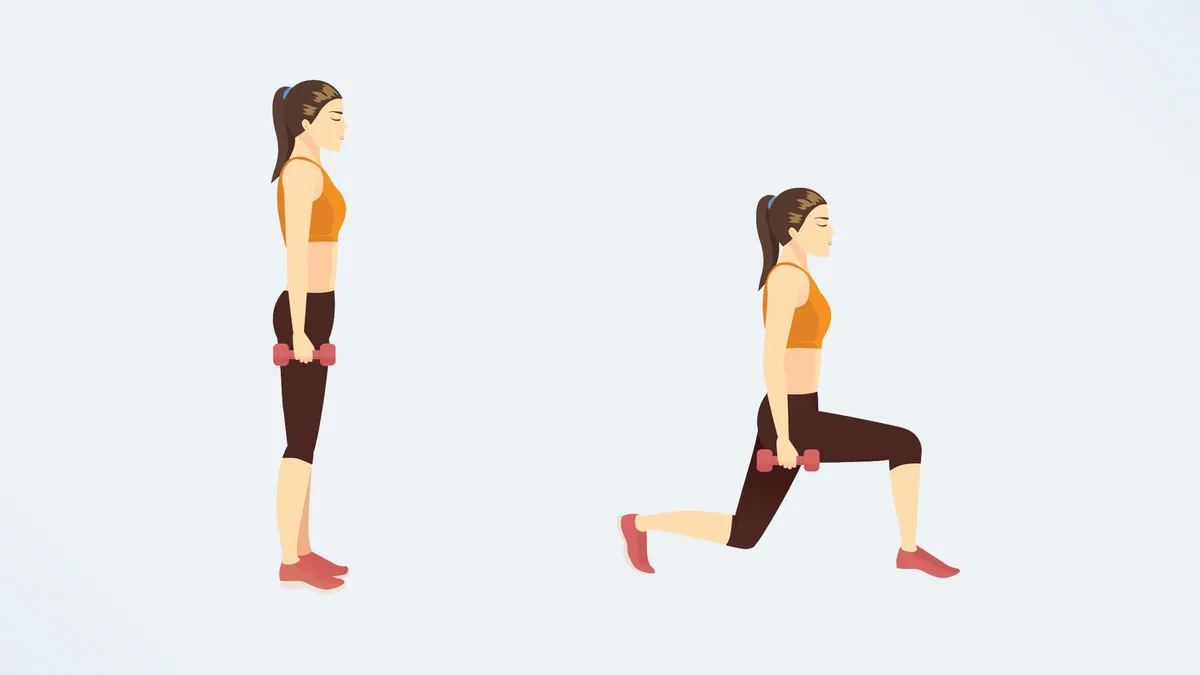
“These are great for hip strength, balance training, and building the muscles you need for walking,” says Page.
- Start standing tall, feet hip-width apart. If you’re holding dumbbells, hold one in each hand, arms down by your side.
- Step one leg back, then bend both knees so your back knee just touches the floor and your front knee is stacked over your ankle or foot.
- Keep your chest upright, then push up through your front heel to stand upright.
- If you want to get into a deeper reverse lunge, try placing your front foot on a step.
4. Standing heel raises

“Heel raises strengthen the calves, feet, and ankles, improve balance, and reduce your risk of falls,” Page says. Here's how to do them.
- Start by standing tall, with your feet hip-width apart. To increase the intensity, hold a dumbbell in each hand.
- Raise onto your tiptoes, pausing for a few seconds at the top of the movement and feeling the stretch through your calves.
- Lower your heels back to the ground slowly and with control.
5. Bird dog

If you can, get down onto the ground, using a yoga mat to reduce the impact on your joints. This exercise works on your core stability, spine support, and coordination.
- Begin on your hands and knees, in what is known as the tabletop position — wrists directly in line with your shoulders and knees in line with your hips
- From here, extend your left arm straight ahead and your right leg behind you. Engage your core and concentrate on maintaining a flat back. You should be looking down at the floor.
- Hold the position briefly, then return to the starting position. This is one rep.
Page recommends doing a 5-8 minute warm-up, then doing 6-8 reps of each move, and repeating the circuit 2-3 times, resting when needed. This workout will target your legs, core, upper body, and balance. Try to do the bodyweight circuit two to three times per week.
While walking workouts help your cardiovascular fitness, they won’t strengthen your muscles and bones in the same way as strength training, even when using just your bodyweight. Strength training can help increase bone density, which may prevent osteoporosis and minimize your risk of injuries from falls.

What advice would you give to a total beginner?
“First: You are not behind. You’re right on time,” says Page. She recommends starting by adding simple exercises like the ones above into your daily routine, using walls and counters for support, as well as walking daily to improve your fitness slowly.
“The only rules: No comparing, no need to rush, progress slowly, celebrate everything — the small wins are WINS and a reminder to ask — what is next? Do it again the next day!” she says. “And remember: you don’t train to look younger, you train to live better. The overall benefits are stronger bones, better balance, more confidence, and less fear.”

Follow Tom's Guide on Google News and add us as a preferred source to get our up-to-date news, analysis, and reviews in your feeds.
More from Tom's Guide