Our sleep goes through a lot of changes in the winter. The lack of daylight means our circadian rhythm (commonly known as our body clock) is disrupted, indoor heating can make sleeping through the night a challenge and cold temperatures mean the battle over the shared blanket intensifies for couples.
Which is why I rely on the Scandinavian Sleep Method — a trick for bed-sharing couples who want to avoid a frosty morning (both in bed and in their relationship.)
It’s a simple hack compared to some of the more elaborate trends I’ve tried this year (like mouth taping), but arguably one of the most effective. Here’s why it’s my go-to in the winter months.
What is the Scandinavian Sleep Method?
The Scandinavian Sleep method is a solution for bed-sharing couples to help them sleep through the night and it refers to having two separate duvets.
It’s a hack used in Scandi countries that offers couples a slight degree of separation to help sleep without resorting to separate beds, so you don’t compromise intimacy.

And it’s super simple to try if you have some spare bedding. All you need to do is add an extra comforter and you’re ready to make your bed the Scandinavian way.
You can also adjust your own bedding according to your preferences. For example, if you tend to get cold in the night, you can add a warming blanket or throw to your side, while your partner can opt for a simple, cooling blanket if he sleeps warm.
This eliminates the need for compromise, so you don't have to sacrifice your sleep in order to help your partner get rest.
Why it’s my go-to hack over the winter
Personally, I love this sleep hack. It works wonders for couples with 1. Different schedules, 2. Different preferences and 3. Cover-hogging issues.
In the summer, however, we tend not to go Scandi. Two covers on the bed just means more layers to trap extra heat, causing sleepless nights.
And it’s no surprise it’s a hack for cold weather (considering where it originated.) Here’s why I always pull out the spare duvet in the winter.
My husband and I stop fighting over the covers
You’re not in a serious relationship unless you’ve argued over who the blanket-stealing culprit is. But aside from bickering, the battle for the blanket was waking me up constantly throughout the night.
This disrupted sleep meant even if I was in bed for eight hours, I still woke feeling tired and unrested. It also meant my temperature throughout the night was all over the place.

In order to stay in a deep, restorative sleep our temperature must stay consistent. Too hot, and our bodies will think it’s morning. Too cold and you’ll wake up shivering.
So, yo-yoing between too hot and too cold meant I couldn’t cycle through the sleep stages I needed to wake up refreshed. I was stuck in the limbo of light sleep.
I'm not woken up by my husband getting into bed
My husband and I have different sleep schedules, which means I usually fall asleep a couple of hours before him (he’s a certified night owl).
If we’re sharing a comforter, that means inevitably being woken up when he comes to bed as he gently tugs at the cover I’ve wound tightly around myself.
But in the winter, when we have two covers, I can cocoon myself in my perfect sleeping position and remain that way until the morning. Bliss.
I fall asleep fast (and cozy)
My house isn’t particularly warm and, following good sleep hygiene, I turn the heating off at night. This means temperatures drop pretty low. But now I’m not tentatively gripping the corners of a shared blanket, I can make sure I’m comfortable as soon as I step into bed.
On my side of the mattress, I have a thick, fluffy comforter as well as a warm, quilted throw. My husband, on the other hand, sticks to his super thin wool duvet — and he even kicks that off in the night sometimes.
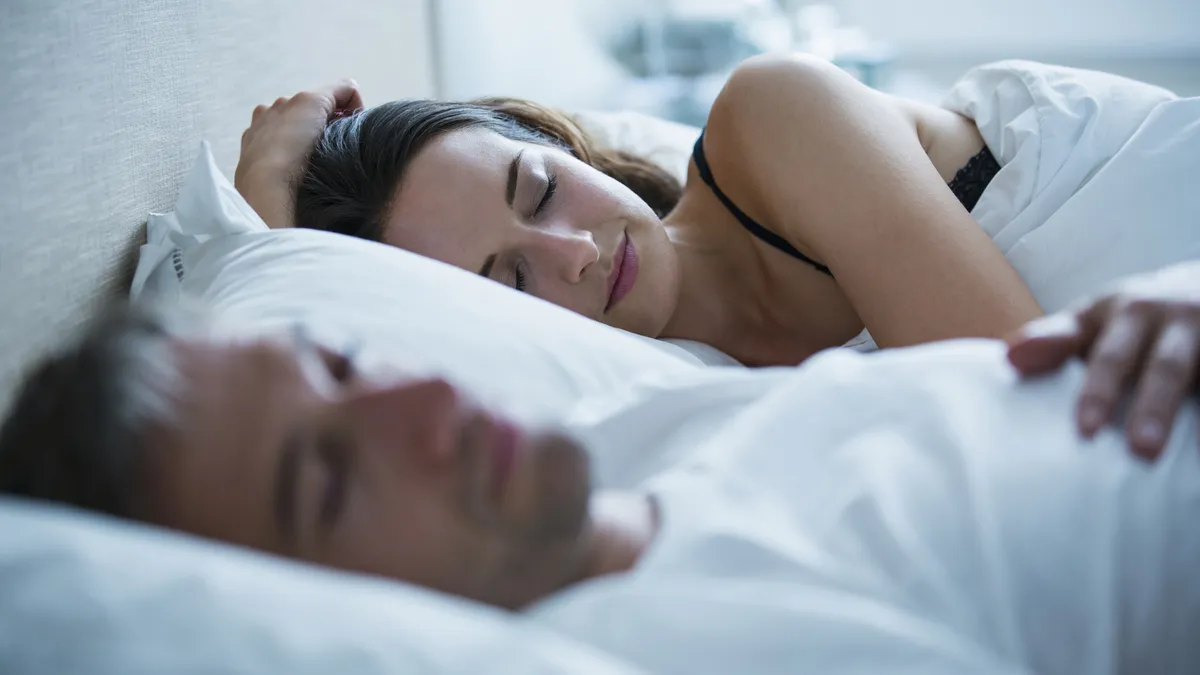
The result of this is that I fall asleep fast. And I’m talking sub 10 minutes (which isn’t always necessarily a great sleep onset — most adults should fall asleep in 10-20 minutes, less can indicate sleep deprivation.)
But I’m certainly not sleep deprived. Just incredibly comfortable and relaxed. Come morning and the only struggle is leaving my warm nest.
Scandinavian sleep method vs sleep divorce
An alternative to the Scandinavian Sleep Method for couples who find it hard to sleep next to each other is a full sleep divorce. As you might have guessed, this means completely separate beds and, often, separate rooms.
There are benefits and drawbacks to a sleep divorce — inevitably, opportunities for intimacy are reduced, and the kind of connection you get from sleeping next to someone you love can be lost.
Losing sleep amplifies mental health issues, increases irritability, decreases sex drive and leads to more dysfunction
Samantha Whiten
However, both you and your partner getting enough sleep every night can have a positive impact on your relationship.
“I'm all for sleep divorce and being flexible enough to find alternative solutions that make a couple to coexist together in as peaceful a way as possible,” says Becky Whetstone, Ph.D, a Marriage and Family Therapist.
And Samantha Whiten, a Clinical Psychologist, agrees. “Losing sleep amplifies mental health issues, increases irritability, decreases sex drive and leads to more dysfunction in the couple overall,” she says.
So really, if you’re not sleeping well next to each other, and you need more than two blankets to solve the issue (for example if one of you snores or moves a lot in their sleep), then considering a sleep divorce can be a good idea.

Follow Tom's Guide on Google News and add us as a preferred source to get our up-to-date news, analysis, and reviews in your feeds.