Baking soda is often regarded as the magic elixir in DIY cleaning solutions. Thanks to its versatility and low cost, the non-toxic ingredient is often used to clean mattresses.
However, baking soda may not be the best solution to freshening your bed. "Using baking soda to clean a mattress is a popular method, but it still has some drawbacks," reveals Petya Holevich, cleaning expert and supervisor at Fantastic Services.
Instead, Holevich tells me 3% hydrogen peroxide is the best home remedy for grubby mattresses. To find out why and how to use it safely at home, I spoke to Holevich and Barbara Stern, upholstery expert and editor-in-chief at Ottoman Textiles. Here's what they said...
Why is hydrogen peroxide good for cleaning a mattress?
To use hydrogen peroxide as a safe mattress cleaner, always use a 3% concentration of hydrogen peroxide in a solution that is equal parts hydrogen peroxide and water. Protect hands with gloves and avoid mixing with other chemicals.
Textile and bedding expert Stern says that 3% hydrogen peroxide, when diluted correctly with an equal part of water, can make an excellent (and safe) mattress cleaner.
"Hydrogen peroxided can be employed on tough stains as it has mild bleaching and disinfecting properties," says Stern.
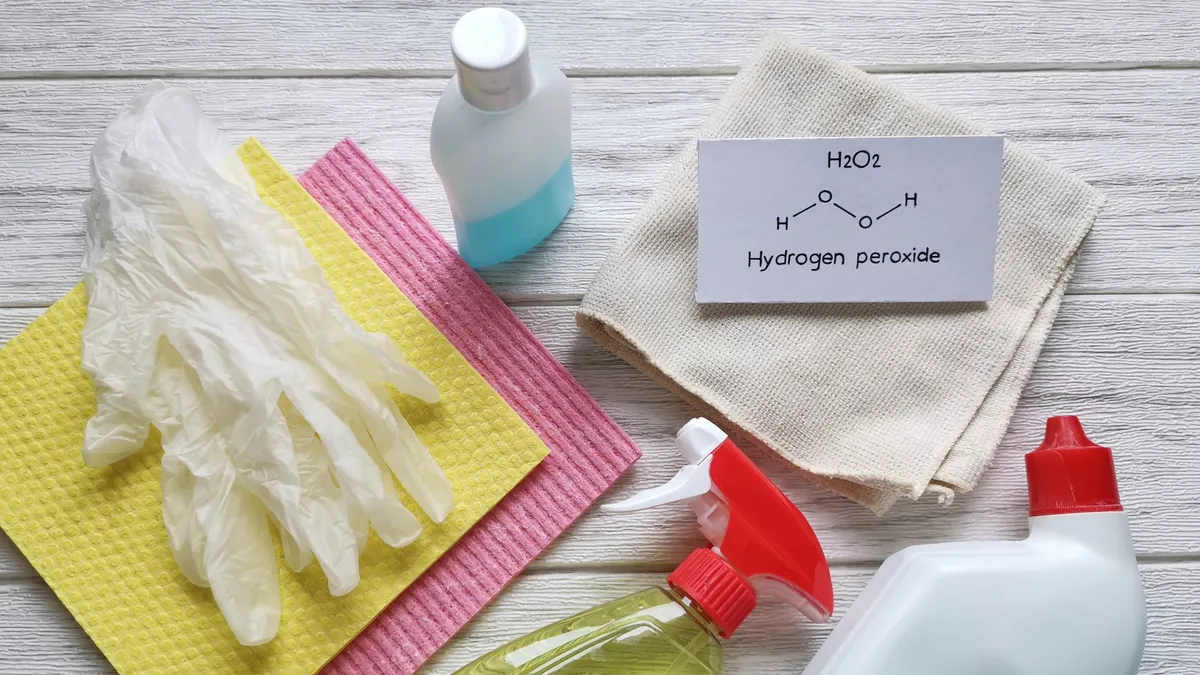
She explains that thanks to hydrogen peroxide's disinfecting properties, it doesn't just "mask" odors and allergens — it actually "eliminates" them.
Holevich also recommends 3% hydrogen peroxide for nighttime accidents.
"You can use hydrogen peroxide to remove stains from a mattress, such as blood and urine," says the house cleaning expert.
- Read more: This $4 household staple can get rid of bed bugs fast — but there's a reason I wouldn't recommend it
How to use hydrogen peroxide to clean a mattress in 3 steps
Hydrogen peroxide is particularly effective at removing stains and odors because it can be applied to the stains directly. Holevich shares how you can use hydrogen peroxide as a mattress-cleaning solution:
1. Vacuum your mattress first

"You can’t clean a mattress without a vacuum cleaner," warns Holevich.
We agree — knowing how to vacuum a mattress ensures you can remove allergens as well as dislodge any dirt, grime or sweat that might have built up during repeated usage, prepping your mattress for stain removal.
"You’ll need an upholstery attachment to remove dust mites and dead skin from the surface and seams," she advises.
2. Spray the hydrogen peroxide solution on the stain

To use hydrogen peroxide safely, Holevich recommends mixing 3% hydrogen peroxide with a an equal amount of water in a spray bottle. Once diluted, you can spray the hydrogen peroxide directly on the stains.
"Spray, let it work for five minutes, and then dry it with a clean cloth," she instructs.
3. Allow to air dry

After blotting the solution with a cloth, leave the mattress to air dry in a well-ventilated room before covering it in bedding. (Never dress a damp bed.)
For extra de-odorizing, Stern recommends giving your mattress some exposure to sunshine.
"It's important to air your mattress in the sunlight as frequently as possible in order to naturally eliminate odor-causing bacteria," advises the textile care expert.
Why you shouldn't use baking soda to clean a mattress
Baking soda is an eco-friendly and wallet-friendly cure-all, and it's a common DIY deodorizer for mattress stains. But is it bad news for your bed's materials?
"Usually, it doesn’t damage the mattress when baking soda is used properly," says Holevich. "As long as the baking soda isn't rubbed aggressively an is completely removed afterwards, the risk of damage is minimal."
However, completely removing baking soda from a mattress is notoriously difficult.

"Baking soda is a fine powder that easily penetrates deep into the soft part of the mattress, so cleaning it requires a very powerful vacuum cleaner," she notes.
If the baking soda isn't removed, Holevich warns the powder can wreak havoc on your sleep.
"It often leaves behind residue that can cause allergies or discomfort," she tells me. So even though your mattress is freshly cleaned, you still might wake yourself up sneezing.
One of the allergens that baking soda can exacerbate is mattress mold. "If the baking soda gets wet and isn’t dried completely, it can lead to mold growth inside the mattress," she warns.
That's a big plus for hydrogen peroxide, which has anti-fungal and spore-killing properties.
Stern says that baking soda can damage memory foam mattresses in particular.

"Baking soda is an abrasive and extremely absorbing agent, which means it has the ability to suck up moisture from memory foam, which might lead to clumping or degradation over time," the textile expert shares.
Plus, compared to the five-minute magic of hydrogen peroxide, the baking soda method can be time-consuming.
"The process requires the baking soda to sit on the mattress for at least a few hours, making the bed unusable for a long period," explains Holevich.
As for baking soda's effectiveness as an odor and stain remover, its mattress-cleaning results could be superficial.
"Baking soda does not disinfect, meaning it does not actually eliminate odors and allergens from mattresses, and it might only mask them temporarily," explains Stern.
3 mattress-cleaning alternatives to hydrogen peroxide
Just two weeks without washing leaves your bed sheets teeming with bacteria, so we advise a regular bed cleaning schedule.
You can buy 3% hydrogen peroxide spray for just $7.99 at Amazon, if you don't have any under the sink. However, there are some effective alternatives to hydrogen peroxide. Here are Holevich and Stern's favorites...
1. Enzyme-based cleaner
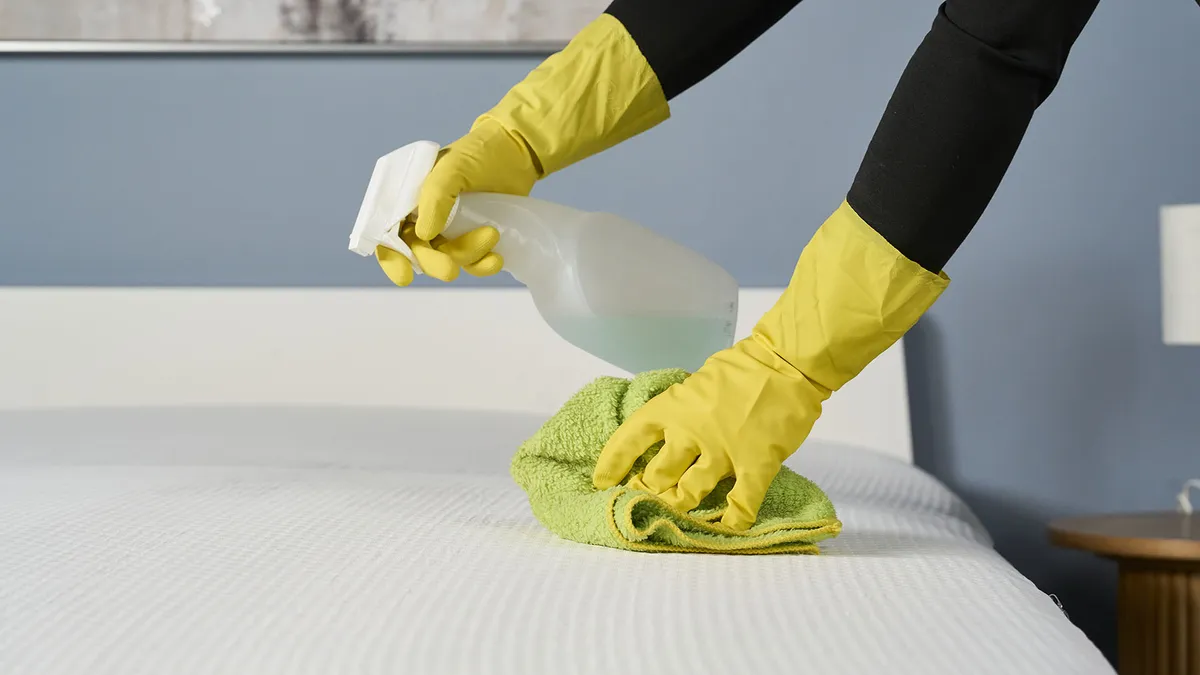
Enzyme cleaner uses enzymes and bacteria to remove odors and stains in a fabric-friendly way.
"A mild enzyme-based cleaner is specifically formulated to eliminate sweat, urine, and body oils from mattresses," says Stern
"This is different from baking soda in that it does not damage materials such as memory foam and latex," she adds.
2. Dish soap
Dish soap, a product that's already in every kitchen, mixed with water in a spray bottle can also make a cheap, accessible cleaner... when used sparingly.

"For stubborn stains, you can use a mild solution of dish soap and water,"shares Holevich.
When using a soapy solution, remember not to use too much dish soap (just a dollop) as it can be hard to get the suds out. Always blot and ensure the bed is completely dry before dressing the mattress.
3. White vinegar

Another popular DIY ingredient is white vinegar as, like hydrogen peroxide, it's a mattress sanitizer.
"White vinegar is another disinfectant that can be employed for odor elimination, but it should be used sparingly and always followed by drying," says Stern.

Follow Tom's Guide on Google News and add us as a preferred source to get our up-to-date news, analysis, and reviews in your feeds.