




Every night as we sleep, dead skin cells and sweat make it a perfect environment for dust mites and bacteria to form on our mattress — and this will have a knock-on effect on our sleep.
Dust mites are one of the biggest causes of allergies and respiratory problems, keeping us awake or waking us up in the night. Even if you've invested in the best mattress for your body, if it's dirty, it can make you become hotter or sweat as you sleep.
So, can spring cleaning your mattress help you sleep better at night? For Sleep Awareness Week 2026, I’ve spoken to a sleep doctor and allergist, while looking at the latest research on how regularly cleaning your mattress can help you sleep more soundly at night. Plus top tips on how to do it yourself.
How spring cleaning your mattress helps you sleep through the night
Just two weeks without washing leaves your bed sheets teeming with bacteria — the thought of that might be enough to keep you up at night.
From reducing allergies to regulating your body temperature, here’s how a quick vacuum and sticking your pillow in the wash can help you sleep more soundly.
Allergy reduction
If your allergies start as soon as you get into bed, then it may be time to spring clean your mattress. So, why does a dirty mattress trigger allergies in the first place?
“A dirty mattress may collect tiny parasites like dust mites, that feed on dead skin and hair cells on our body,” explains Dr Dinkar Bakshi, senior allergy consultant.
The average mattress contains between 100,000 to 10 million dust mites
In fact, the average mattress contains between 100,000 to 10 million dust mites. While we sleep, it’s a prime time for us to ingest these parasites, with the allergy expert adding that “The excrement of these parasites is inhaled and creates inflammation in the nose and airways.”
“This leads to symptoms of sneezing, runny or blocked nose, itchy eyes and coughing, especially at night,” he adds.
Dr Alanna Hare, a consultant in respiratory and sleep medicine at Royal Brompton Hospital, adds that a “proper spring clean of your bed and bedroom removes the moisture and skin particles they rely on, instantly cutting down the allergens that cause itching, congestion and broken sleep."
“By reducing hidden irritations, your body can settle more easily into deep, continuous rest.”

Help with respiratory problems
If you have asthma or other sinus issues, you may also wake up in the middle of the night feeling more wheezy. In fact, studies have shown that dirty bedding or mattresses are linked to conditions such as asthma.
So, how can cleaning your mattress help? “Having a spring refresh will help people breathe better at night because it reduces indoor allergens and irritants that build up in homes over winter,” explains Dr Bakshi.
“These particles often worsen nighttime breathing, especially for people with allergies, asthma, or sinus issues.”

Helps to regulate your temperature
Do you wake up boiling and kicking the covers off — even in winter? This could be down to a dirty mattress, too. Hare explains that a mattress that’s holding onto sweat and humidity makes it much harder for your body to stay cool.
“Overheating is one of the biggest disruptors of sleep; it pulls you out of deep, restorative stages and increases the chances of you waking up,” she explains.
“Choosing a mattress with Geltex technology — designed to regulate temperature — will maintain a cooler environment your body needs to enjoy uninterrupted sleep night-after-night.”

How to spring clean your mattress for better sleep
After spring cleaning your kitchen and wardrobe, have you ever thought about doing a deep clean of your mattress? It helps to remove the buildup of dust and other allergens that have accumulated over winter. Here’s how to clean your mattress:
Step 1: Strip your bedding and wash
You should be washing your sheets and changing them two to four times a month — this will help to keep the dust mites away from your mattress.
Some mattresses also have machine-washable covers which can be zipped off, washed and zipped back on. Try to do this at least every three months.
Guess what? Most pillows and duvets are also machine washable. But of course, check the washing labels before you pop them in your washing machine.
If you can’t wash them, use a laundry spray to make them smell fresher and hang them outside to dry more quickly.

Step 2: Vacuum thoroughly
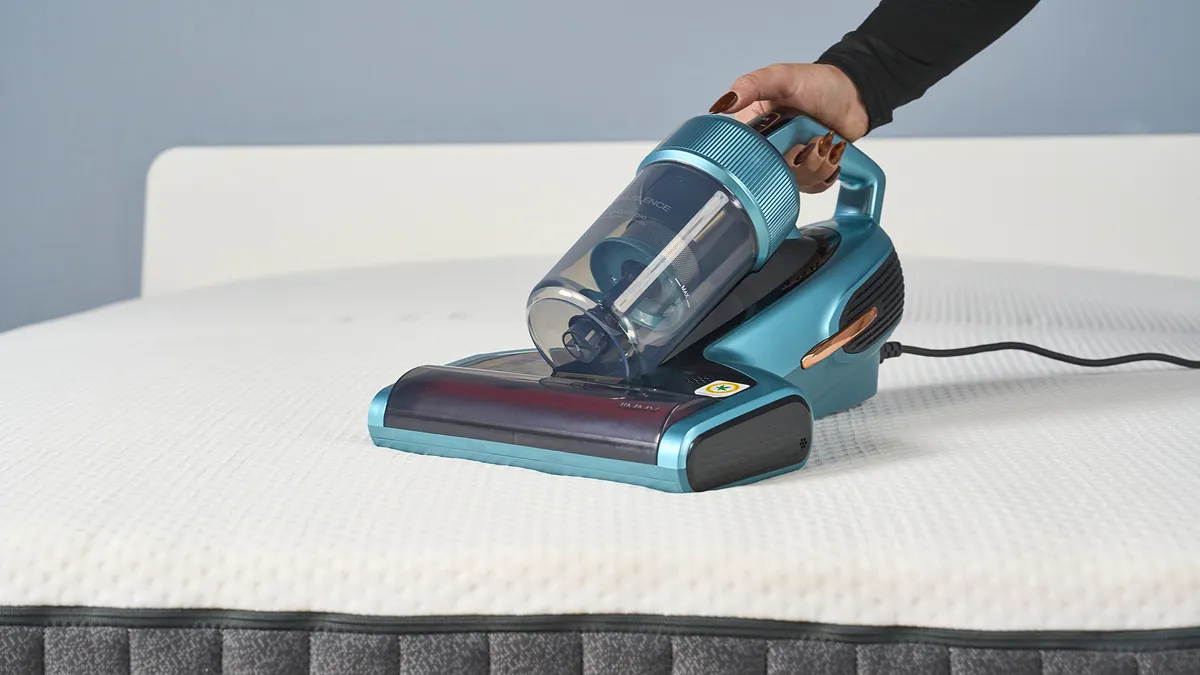
Hare explains that you should “give the mattress a thorough vacuum, paying particular attention to seams where dust collects.”
You can use a specialist mattress vacuum or your own household vacuum with an upholstery attachment, otherwise you risk tearing the cover of your mattress.
Using the smaller attachments on your vacuum and a light to highlight the dust in every nook and cranny can ensure you get your bed clean.
Step 3: Tackle any stains or odors
Once you’ve vacuumed, thoroughly inspect your bed for any signs of mattress mold, stains or damage. For stains, create a mattress cleaning mixture consisting of: Toothpaste Liquid laundry detergent Baking soda Warm water
Once you have the right consistency, as shown in our guide, soak a cloth in the mixture and either slowly work out the stain or wrap it around a warm iron. Work the iron in circular motions until the stain comes out.
Be sure you don’t saturate the mattress, though, as it won’t dry effectively and could even lead to mattress mold — especially if you’ve invested in a memory foam mattress.

Step 4: Allow to dry fully
A damp mattress could not only cause you to feel uncomfortable as you sleep, but it could also lead to mould forming.
Clean your mattress early enough in the day so it has time to dry. Ideally, pick a sunny spring day, and keep the windows open for ventilation, placing the mattress propped up against a wall in the sunlight.
How to protect your mattress and keep it cleaner for longer
Of course, you don’t have to wait for a spring clean. If you have time, try to regularly clean your bed every few months with a vacuum.
Bakshi also recommends taking a shower before bed, explaining that “Going to bed clean reduces sweat, oils, and dirt transferred to the mattress.”
Then, when you wake up, he suggests “pulling back the bedding for 30–60 minutes in the morning, as moisture builds up from sweat during sleep.
Investing in one of the best mattress protectors that is breathable and washable can make a big difference, adds Hare, “especially when you clean it regularly.”
“Also, keeping the bedroom cool reduces nighttime sweating, and choosing natural fibre bedding helps manage heat and moisture,” she adds.
Hare, who is also a sleep specialist at Sealy, goes on to add that airing the mattress, between changing your sheets, “prevents allergens and humidity from building up, helping it and your sleep stay fresher for longer.”

