




There's nothing quite like the gleam of stainless steel when it's brand new. As we use the sink every day, that shine quickly dulls, collecting limescale, watermarks, and soap scum — but who wants to spend an eternity scrubbing? Follow these steps to clean your stainless steel sink more easily to save yourself both time and effort.
All you need for cleaning your sink are a few household items. Whether the stains are mild or tough, these tips will help you achieve a like-new shine and maintain it more efficiently. And you probably already have everything you need sitting in your pantry.
1. Clear and pre-clean your sink

Remove any dishes and food residue from the plug, then rinse the sink to remove any light stains. Put on your dishwashing gloves to protect your hands, then use a few drops of dishwashing liquid and a non-abrasive sponge to scrub the plug, basin, sides, and faucet.
You'll be surprised how quickly mild stains come away with just a little effort. Rinse the sink free from any soapy residue.
2. Sprinkle with baking soda

Your sink should now be clear and still wet from the last step. Sprinkle baking soda lightly over all surfaces.
The baking soda's alkaline nature absorbs acidic stains, and its abrasiveness works to enhance your scrubbing power without causing any damage to the steel. Whether or not you like to bake, baking soda is a good all-around cleaning helper to keep in your cupboard.
3. Scrub in the baking soda

Using a non-abrasive sponge, scrub in the direction of the grain — if you're having trouble seeing it, try feeling for it with your fingertips. The baking soda will mix with the lingering water to create a paste. Add a little more baking soda or water as needed until you've achieved the right consistency.
4. Spray with vinegar

Using a spray bottle, spray distilled white vinegar over the entire surface. The vinegar reacts with the baking soda to release carbon dioxide and produce carbonic acid, which eats away at limescale and watermarks. You'll want to ventilate the room if possible. Once the fizzing stops, rinse the sink thoroughly.
If any stains persist, consider applying a paste of baking soda and distilled white vinegar directly to the affected areas. Let the paste sit for 15–20 minutes to break down residue before scrubbing.
5. Buff to shine
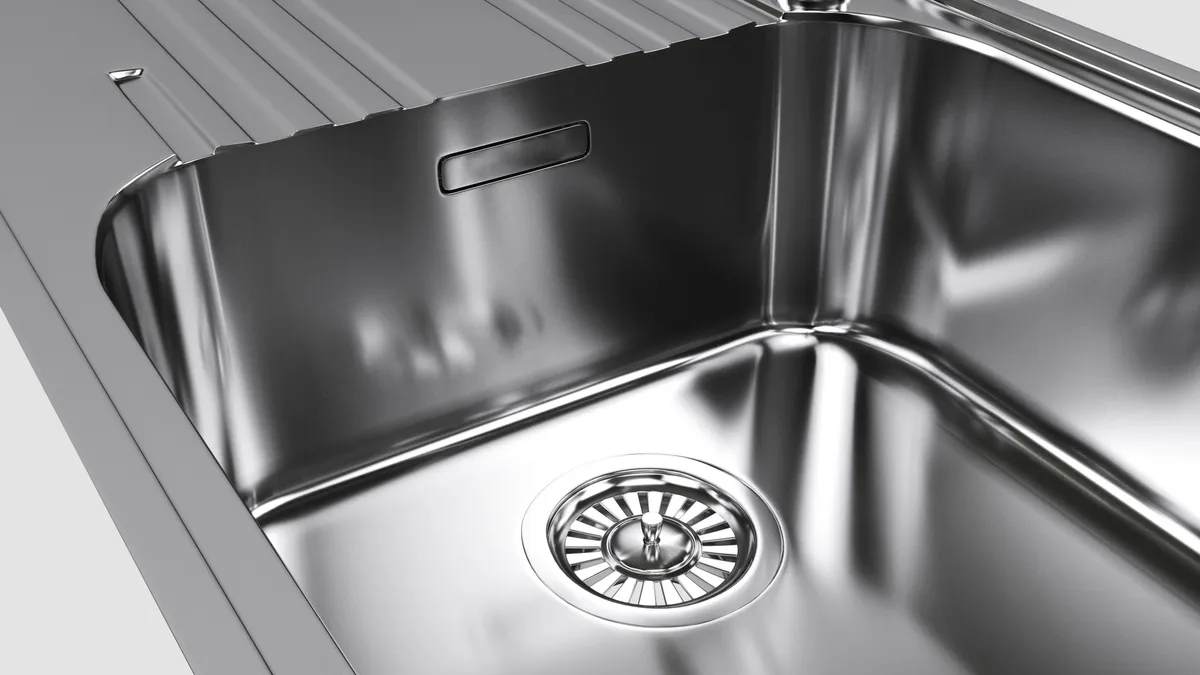
Dry the sink with a microfiber cloth to absorb any lingering moisture and prevent new watermarks.
Then sprinkle a couple of drops of olive oil onto a clean microfiber cloth and, moving in the direction of the grain, buff the surface to a shine. Your sink should now look as gleaming as the day it was installed.
Tips for keeping your stainless steel sink gleaming
Stay on top of residue and watermarks. The longer you leave stains, the harder they are to clean, so make a habit of removing food residue when you see it and wiping the sink down. A little light care more regularly will save you time and effort in the long run.
Remove standing water when you see it. Water at the faucet's base can over time create limescale and watermarks, so cleaning up any water when you see it can help prevent residue from building up.
Dry your sink after every use. One of the simplest habits you can adopt is drying your sink every time you use it. It takes just a few seconds but goes a long way toward preventing watermarks and keeping the steel looking its best.
Make it part of your regular cleaning routine. The more regularly you clean your sink, the less effort it will take to get it looking new again. Keeping on top of it is the best way to reduce the overall time and effort you put in — and if you put on some of your favourite music while you're at it, you might even enjoy it.

Follow Tom's Guide on Google News and add us as a preferred source to get our up-to-date news, analysis, and reviews in your feeds. Make sure to click the Follow button!
