Last night, I finally watched the “San Junipero” episode of “Black Mirror” with my fiancée. I’ll admit, I was in a flood of tears for the final 15 minutes — the “Heaven is a Place on Earth” montage providing a beautifully rare moment of optimism in showing a story of how love transcends the physical.
I saw this firsthand when my Grandma, who had been the pillar of care for my Grandad for years, passed away. He followed her only weeks later. It was as if, without her physical presence, the narrative of his life had reached its natural conclusion.
There is a biological rhythm to how we say goodbye — one that feels violently interrupted by the idea of a Meta-branded ghost pinging a phone from the cloud. Minutes after the credits rolled, I picked up my phone and saw the headline. Zuck & Co. has been granted a patent for an AI system designed to simulate “deceased or inactive” users.
Reading the details of the patent itself terrified me. The idyllic user-centric digital afterlife of “San Junipero” and shows like “Upload” came crashing down with the realization that in our world, this afterlife is being built by the company that already treats your living self as a data point.
The patent and the 'empty promise'

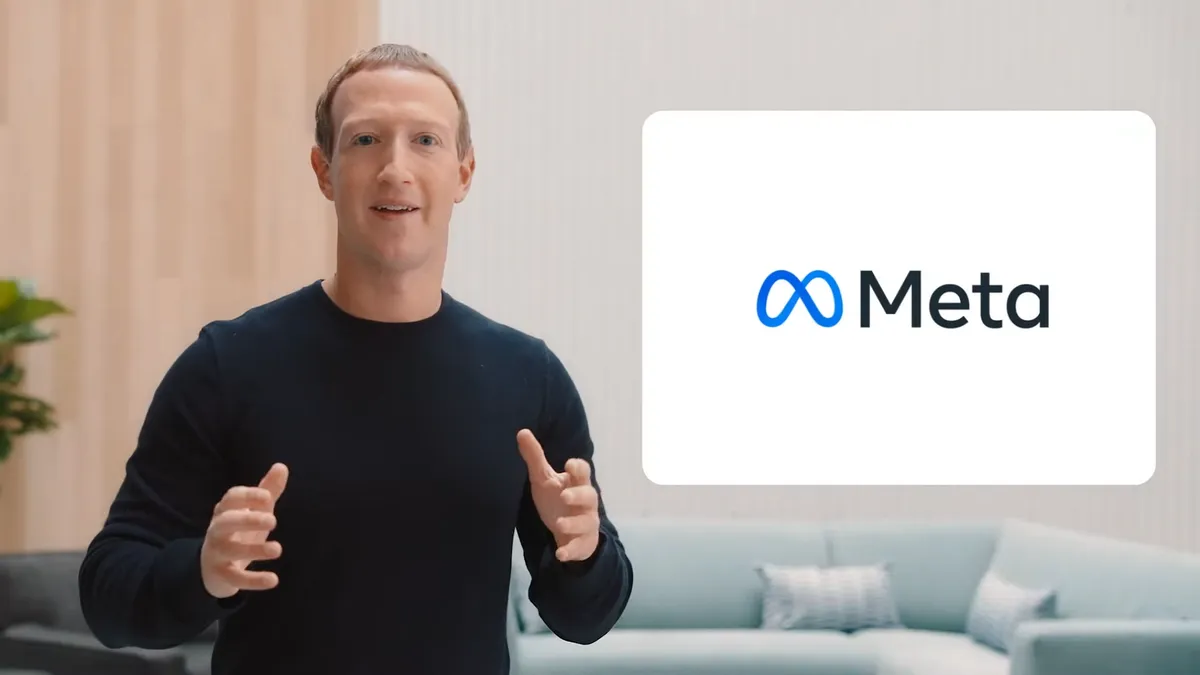
The patent was originally filed in 2023 by Meta’s CTO, Andrew Bosworth, and approved in late December of last year. He’s been the one talking up a storm about Meta’s future in Quest VR. It describes an LLM (Large Language Model) trained on your likes, comments, and posts to simulate you when you’re absent from a social network.
The two examples it brings up are “when the user takes a long break or if the user is deceased.” But wait, it gets worse! Simulating you means being able to respond to DMs, comment on photos, and even generate audio/video calls in your likeness. Just imagine getting that notification on your Instagram or that WhatsApp call.
Now to balance this, a Meta spokesperson did reach out to Business Insider and said that the company has “no plans to move forward with this example.” But I’d like to test that with a couple of examples.

- Tesla’s patent pledge: Elon Musk once famously said that Tesla “will not initiate patent lawsuits against anyone who, in good faith, wants to use our technology.” A noble act on first sight, but one look at the fine print shows that the pledge is so restrictive, it’s more of a PR move than actual open-sourcing.
- “Don’t be Evil”: Tech giants like Google (who has this mantra) have promised to keep user data separate or use technology only for specific “altruistic” purposes. When Google bought DoubleClick’s digital marketing tech around 2007, it promised to not merge them — only to quietly change that policy in 2016.
- Even Meta itself: There’s too many to count. The promise that WhatsApp data would never be merged when Meta bought it in 2014, only to see a 2021 privacy update that shares data. Or most recently, Meta shutting down its facial recognition tech in 2021, only to see it being reintroduced this year as “Name Tag” for the Ray-Ban Meta Smart Glasses.
I’ll take Meta at its word on this, but a patent is an asset. Companies don’t spend millions securing technology or the legal right to it, just to let it sit in a drawer. History has shown that they are “claiming the territory” for when the public becomes desensitized enough to accept it.
You are the product
This is one of the biggest lessons I learned, and one of the driving forces to me moving from digital marketing/advertising to becoming a tech journalist. Meta’s products are “free” to you, but the price is the extraction of your behavior to sell to advertisers (like me in a past life).
Researchers say that the digital immortality market could be worth $61 billion by 2030.
Usually, that relationship ends when you die. Your privacy agreement is severed because there’s no-one on the other end. But with this patent, Meta’s found a way to extend that user lifecycle indefinitely.
Because you see, contrary to the harrowingly beautiful plot of “San Junipero,” Meta’s not building a digital heaven for you, they could build a “ghost worker” to keep your friends and family seeing/clicking on ads.
Grief is monetized — given Meta’s not new to running emotion experiments on its platforms and through my years of eye-opening experience on just how I’ve been able target people with ads in the past, it’s grim how unsurprised I am by this realization.
'Digital afterlife' is not a new trend

Now it’s worth me saying that this whole idea of digital reanimation isn’t a new one. Meta’s not alone in this.
Microsoft filed a patent for a similar chatbot back in 2021 that would use “images, voice data, social media posts, electronic messages [and] written letters” to build a profile you can talk to. By the way, Microsoft leadership did then go on to say that this idea was “disturbing.”
Companies like StoryFile, HereAfter AI and Afterlife AI allow people to record data to create interactive versions of themselves for when they pass away. In fact, researchers say that the digital immortality market could be worth $61 billion by 2030.
That is a giant pie that Meta has essentially positioned itself to take a slice of — the main difference being that while the above services are opt-in and focused on legacy, this patent suggests an automated simulation based on a lifetime of social media data you never intended for this purpose.
Wasn’t Black Mirror supposed to be a cautionary tale?

Now, I know that the first thing to do here is think of “Black Mirror” as a dystopian warning about the future of tech. But in creator Charlie Brooker’s own words, it’s a little deeper than that.
“Well the show isn't saying tech is bad, the show is saying people are f***ed up,” Brooker told GamesRadar. The point of the show is that the tech is neutral, but it’s how the people use it that creates the real tension.
I came out of watching “San Junipero” with an unexpected sense of warmth and happiness — seeing a digital dimension created for love that transcends our physical beings, but there are plenty of harrowing warnings dotted throughout this episode (and in others too).
Companies like Meta seem to treat “Black Mirror” as a product roadmap rather than a warning. The soul of the technology in this episode is ignored, while the patent focuses on the “monetizable simulation.” That scares me, and after all I’ve seen in my tech reporting career, it takes a lot to scare me.

Follow Tom's Guide on Google News and add us as a preferred source to get our up-to-date news, analysis, and reviews in your feeds.
More from Tom's Guide
- I made a digital twin of myself in ChatGPT — and it changed how I work every day
- 'I’m 72 and in the best shape of my life: Here’s the 5 simple isometric bodyweight exercises I prioritize to counter age-related muscle loss'
- I wear an Apple Watch every day, and this simple trick to organize apps made my life a lot easier