If you’re a gamer like me, then you no doubt have a visceral reaction whenever you hear the words “integrated graphics.” And that’s not without reason; for years, laptops featuring integrated graphics couldn’t do much more than edit a spreadsheet or stream Netflix. If you wanted to play anything more demanding than Stardew Valley on a laptop, you were out of luck.
However, as we head into 2026, the dream of 1080p AAA gaming on an ultraportable is finally becoming a reality.
So, why am I making such a bold claim? It’s because things have rapidly changed since 2021, especially as handhelds like the Steam Deck OLED and Asus ROG Ally forced AMD and (eventually Intel) to make silicon that was powerful enough to play AAA games but battery-efficient enough to last for a decent amount of time.
This shift in focus has trickled down to the best laptops, first with battery life — such as with machines packing Qualcomm Snapdragon X chips — and now with gaming performance, as we’ve seen with Panther Lake.
Thanks to AMD’s Strix Halo and Intel’s Panther Lake architectures, I think we’re on the verge of a revolution. High-speed LPDDR5X RAM and AI-driven upscaling like AMD’s FSR 4 and Intel’s XeSS 3 will also play a part in delivering 1080p gaming in graphically demanding games like Cyberpunk 2077. This year, your new “work” laptop could secretly be a gaming powerhouse. That’s pretty exciting stuff!
Here’s why I think integrated graphics are the future of gaming laptops.
A quick history
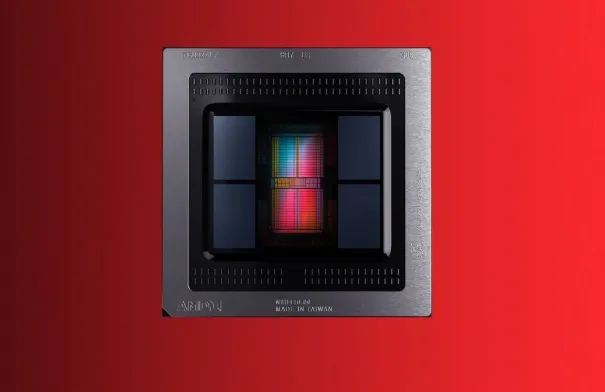
Before diving into the meat of this article, I want to provide a brief overview of how we got here. Back in 2021, Intel Iris Xe was the effective king of integrated graphics. However, playing games meant dropping the resolution to 720p (or lower, if possible) and using Low graphical settings. If you tried to play something like Cyberpunk 2077, you’d be treated to a slideshow. For actual gaming, you needed one of the best gaming laptops.
Things changed in 2023 thanks to AMD’s Radeon 780M. This was the chip that powered high-end handhelds like the original ROG Ally. It proved that the RDNA architecture could be scaled down and deliver satisfying performance with integrated graphics. In 2024, Intel responded with its Arc-powered Meteor Lake chip, which was a fine effort but left a lot to be desired in terms of performance and battery life.
Now in 2026, with the likes of Strix Halo and Panther Lake, we’re getting chips powerful enough to run games at 1080p resolution and 60 frames per second. If you had told me this would happen five years ago, I wouldn’t have believed you — but here we are. What a difference five years can make!
Intel Panther Lake

I was on the floor at CES 2026 when Intel demoed Panther Lake (Core Ultra Series 3), and it changed my outlook on integrated graphics. Built on the Intel 18A process, these chips promise a monumental leap in efficiency and performance.
In live benchmarks, I saw the flagship Core Ultra X9 388H deliver a massive performance uplift over the previous generation. The secret sauce is the AI. By using the onboard NPU 5 (Neural Processing Unit) to power XeSS 3, Intel has tripled frame rates in Cyberpunk 2077 without cranking the fans to 100%.
By offloading the heavy lifting of AI upscaling and frame generation to the NPU, the GPU can focus entirely on graphics. In turn, this promises to deliver better battery life than you’d get from standard gaming laptops that often run out of juice in less than two hours.
I’m going off Intel’s claims and our own hands-on experience, but right now, I expect to see impressive results when we get Panther Lake laptops into our testing lab.
The end of "budget" gaming laptops

This next bit could be controversial, but given the developments we’ve seen with integrated graphics, I can see a future where “budget” gaming laptops with dedicated GPUs are no longer a thing. Processors like AMD’s Ryzen AI Max 300 (Strix Halo) could make that happen.
One of the things that makes Strix Halo different is its memory architecture. Traditionally, iGPUs were throttled by a 128-bit memory bus shared with the CPU. Strix Halo solves this problem by featuring a huge 256-bit memory bus, which provides up to 500 GB/s of bandwidth — matching high-end dedicated cards.
Based on early performance data and our own testing, Strix Halo-powered AMD Ryzen chips match or beat mobile GPUs like the RTX 4050 and even the RTX 4060.
Feature |
Intel Panther Lake (Xe3) |
AMD Ryzen AI Max (Strix Halo) |
Nvidia RTX 4050 (Mobile) |
Architecture |
Xe3 "Celestial" |
RDNA 3.5+ |
Ada Lovelace |
Memory Path |
LPDDR5X-8533 (Shared) |
256-bit Wide Bus (Shared) |
6GB GDDR6 (Dedicated) |
Peak Bandwidth |
~136 GB/s |
Up to 500+ GB/s |
~192 GB/s |
Target Performance |
1080p High (60+) |
1440p Medium/High |
1080p High |
Typical TDP |
15W - 45W |
55W - 120W |
35W - 115W (+ CPU) |
Our Asus ROG Flow Z13 review really nails the point home. In our testing, we found that Asus’ 2-in-1 laptop is the epitome of balance. As our own Jason England said in that review, it’s hard to recommend a heavy plastic brick when a sleek professional machine like this can deliver the same frames per second and last twice as long.
Gaming handhelds

I’ve spent hundreds of hours playing and testing the best handheld gaming consoles for the last three years, and they’re the ultimate proof that iGPUs can deliver fantastic gaming experiences. Devices like the Lenovo Legion Go 2 (with its gorgeous 8.8-inch OLED), Asus ROG Ally X, and MSI Claw A8 that run on the AMD Ryzen Z2 Extreme chip are a testament to that.
Thanks to "Dynamic TDP" managed by the NPU, these machines are hitting a level of consistency that I couldn’t imagine back in 2022. While these systems can be as pricey as a gaming laptop—thanks to “RAMageddon,” or the skyrocketing cost of the high-speed LPDDR5X these chips require—their performance can be top-notch with the right settings.
If a 7-inch device can run Starfield at 1080p on High settings, the argument for a dedicated entry-level GPU in a 15-inch laptop starts to fall apart.
Outlook

Panther Lake and Strix Halo chips heavily rely on frame generation to deliver better performance and sharper graphics, which I know can be a sore spot for some gamers. While I understand the sentiment, it’s not a stance I take. The way I see it, as long as I can get consistently smooth frame rates and sharp visuals, I don’t care how I get there.
2026 could be the year when the line between gaming and work laptops effectively gets erased. As someone who appreciates thin and light laptops but also wants the power to run AAA games, not having to decide between design and performance is a huge game-changer.
Dedicated GPUs aren’t going anywhere, but they might just be for hardcore enthusiasts. The rest of us can play our games on sleek laptops with powerful iGPUs instead.

Follow Tom's Guide on Google News and add us as a preferred source to get our up-to-date news, analysis, and reviews in your feeds.
More from Tom's Guide