It’s that time of the year when the festivities are done, the weather is cold and the days are short. So, it's no surprise the internet has branded today (the 19th January) 'Blue Monday'.
It's supposedly the 'most depressing day of the year', although there is a lot of debate online about whether it's simply a myth or a self fulfilling prophecy (we think it's going to be depressing, so it is).
What isn't up for debate is the toll January takes on our sleep. Been finding it difficult to drift off? Us too, and it's no coincidence. Dark mornings, less time spent outdoors and fluctuating temperatures can wreak havoc on our rest.
So here, we're diving deeper and talking to sleep experts and psychologists about how Blue Monday can impact your sleep, mood and energy levels, plus the top 5 tips to rest well tonight.
What is Blue Monday and when is it?
Blue Monday is typically observed as the gloomiest day of the year, when you're likely to feel the most depressed and lethargic. It falls every year on the third Monday of the first month — which is January 19 in 2026.
But is there any evidence that people find it the most depressing day?
"There’s no credible scientific formula behind Blue Monday, but in my work as a health psychologist, I see every January how powerful the label itself can be," says Dr Neesha Patel, chartered heath psychologist and founder of Evoking Health.

The term 'Blue Monday' was reportedly originally coined by a British psychologist called Cliff Arnall in 2005, in response to a request made by a travel agency in the UK to urge people to go on holidays.
It is said that this day was the result of a pseudo-scientific formula he created, based on factors such as the weather, debt, time spent on social interaction and the like.
However, according to Dr Patel, the damage maybe real. "When people are told a certain day will be the most depressing of the year, expectations shift and those expectations can genuinely lower mood, energy and resilience," she explains.
"Across both NHS and private practice, January is one of the busiest times I see for fatigue, low motivation and disrupted sleep," the doctor adds.
How Blue Monday can wreck your sleep
1. Low mood and anxiety

No one feels like venturing into the great outdoors in January, but the longer we spend inside, the more likely we are to spend more time on our phones.
When sleep is disrupted, the brain becomes more reactive to stress, more negative in its thinking, and less able to regulate emotions
"A growing theme I’m seeing in practice is doomscrolling. People are spending longer on their phones at night, absorbing negative or emotionally charged content, which keeps the brain in a state of alertness," says Dr Patel.
This in turn, delays sleep latency (time taken to fall asleep), fragments rest and increases anxiety, particularly in January when energy is already low.
The expert also underlines that this works in both ways, since poor sleep doesn’t just make people feel tired— it lowers psychological resilience.
"When sleep is disrupted, the brain becomes more reactive to stress, more negative in its thinking, and less able to regulate emotions," she explains.
2. Lack of daylight
There are various studies which point to the fact that reduced exposure to daylight can affect our circadian rhythms — the body's internal sleep and wake cycle.
Daylight triggers the release of cortisol, which is responsible for keeping us active and alert, while darkness promotes the production of melatonin, the sleepy hormone.
"In January, the mornings are darker, so our bodies don’t get the sunlight signal that it’s time to wake up," says Dr Sanam Hafeez, founder and director of Comprehend the Mind, a New York-based psychological consultation clinic.
"Without enough light in the morning, our internal sleep and wake clock can get out of sync, making us feel tired and slow," she adds.
Sunlight also lowers melatonin — so less light during winter tends to make us feel drowsy and low on energy throughout the day.

3. Decrease in dopamine
Mid-January is also the time people tend to feel tired and at their worst, since your body is still recalibrating after weeks of disrupted sleep and a change in routine (think late bedtimes, more alcohol and lots of socializing over Christmas).
“'Blue Monday' often falls right in the middle of this adjustment period, which can make the day feel even harder," says Dr Hafeez. "
'Blue Monday' often falls right in the middle of this adjustment period, which can make the day feel even harder
"In many cases, the low mood is more about catching up on rest and getting back on track than anything inherently depressing about the day itself."
"There’s also a sharp dopamine contrast after December that many people underestimate," Dr Patel says.
"During the festive period there is more social connection, novelty and reward. When that stimulation drops suddenly in January, it often shows up as lethargy, emotional flatness and reduced motivation rather than obvious low mood."
This also leads to increased nighttime ruminations, which can keep you up for longer than you think. In fact, a recent survey shows that 56% of US adults spent their time overthinking, losing roughly 26 minutes in a day.

5 ways to beat Blue Monday and sleep well all winter
Don't panic. There are ways to get your sleep back on track. Here are our top five tips.
1. Journaling
Putting pen to paper is a scientifically-proven distraction from all the internal and external noise, helping you to leave the stresses of the day behind.
Worried about all the things you didn't get done? List them out. Mel Robbins, best-selling author and motivational speaker, talked about the 'backwards bedtime trick' in her podcast recently. It's a simple trick of writing a quick to-do list for the next day before bed.
Getting Sunday night right can make “Blue Monday” feel a lot more manageable
This works as a 'cognitive offloading' which can induce a sense of calm and help you fall asleep faster— tested and approved by our sleep tech writer, Eve Davies. "I've found I'm falling asleep faster and getting better sleep scores than I was at the turn of the year," she reports.
You'll be surprised to hear but Dr Hafeez points out that even just one good night of sleep can boost your mood, focus, and energy for the week ahead.
"Avoid staying up late scrolling on your phone or watching TV, and try to have a calm, relaxing bedtime routine instead. Getting Sunday night right can make “Blue Monday” feel a lot more manageable," she says.

2. Get outdoors
"When the body struggles to wake properly, people can experience reduced concentration, heightened anxiety, or a dip in resilience to everyday stressors," explains Joseph Conway, a mental health trainer at Vita Health Group.
"The darkness can also reinforce patterns of withdrawal, which further deprives the brain of the light cues it needs to reset," the BACP registered psychotherapist adds.

The solution? Getting enough exposure to sunlight during the day, which can regulate your sleep and wake cycle. Combining the benefits of daylight with exercise can work magic for increasing your serotonin levels (the happy hormone), in addition to stabilising your circadian rhythms.
Exercising outdoors can also reduce stress, instilling peace and relaxation. Think you have to match a marathon athlete's routine? Not really. A simple walk outside can do the trick.
3. Use a sunrise alarm clock
Struggling to wake up in winter? The best sunrise alarm clocks are just what you need. Unlike your regular alarm clocks and startling phone beeps, with these gadgets you can wake up gradually to a glowing simulation of sunlight.
While these aren't necessarily bright enough to suppress melatonin, you will definitely find the darker mornings less daunting.
It's also heaven for those looking for a low-maintenance multi-tasking sleep product. Most sunrise alarm clocks can work as a night light while also giving you plenty of ambient sound options to wake up to.
4. Try a SAD lamp
While stepping outside will always be our number one advice to reset and regulate your sleep cycle during winter, using a SAD lamp is simply the next best option. These are light boxes designed to help you beat the symptoms of seasonal affective disorder.
It delivers around 10,000 lux of light, which is enough for your body and brain to feel as if you're basking in natural summer sun.
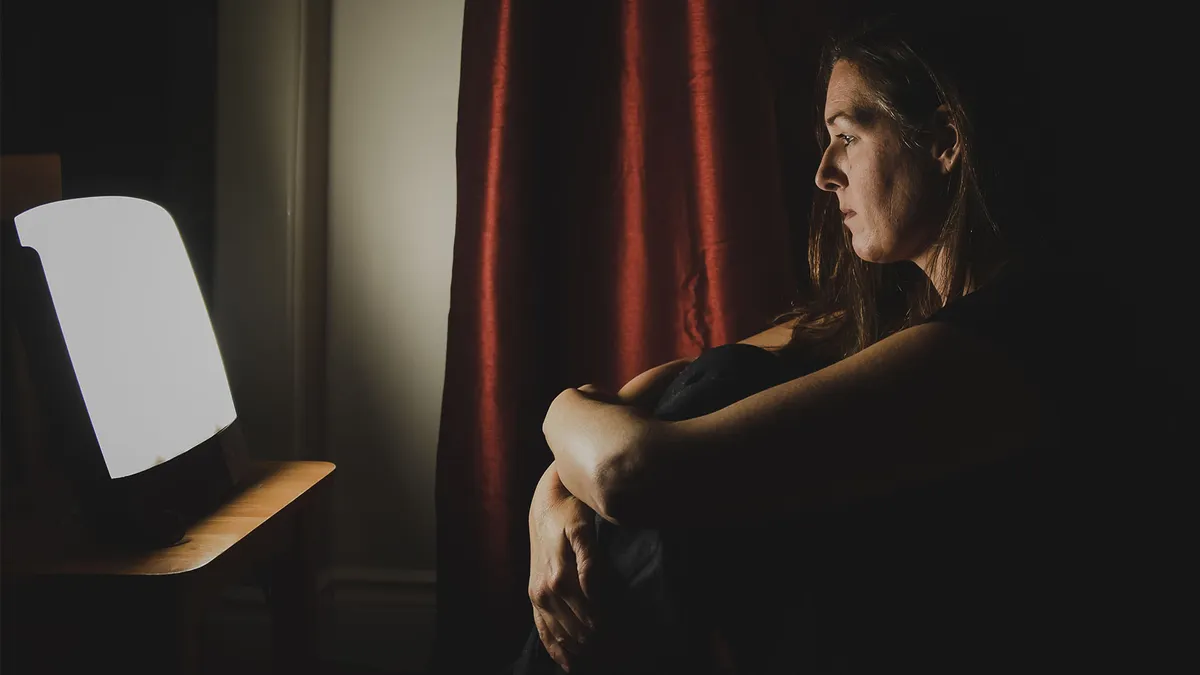
Remote worker struggling to sleep? Having a SAD lamp next to you during the day can help battle seasonal depression and signal your body to remain alert and active.
"For me, it’s an instant energy and mood booster, telling my body that the daytime is when we should be awake and nighttime is when we should sleep," says our Features Editor, Lauren Jeffries.
5. Ask for help
As we heard from the experts, this time of the year is truly tricky to manage and it can be really overwhelming for some.
If you have tried and tested various methods and still seem to struggle getting the recommended hours of sleep, seeking professional advice can help.
This can ease the stress levels and anxiety, induce a sense of calm and relaxation— while also giving you the satisfaction of taking the first step towards prioritizing your mental health this year.