Tom's Guide Verdict
The Polestar 4 blends tech-forward features with a sporty feel, making this EV enjoyable to drive on so many levels. However, it forces you to adapt to its windowless rear design by relying entirely on a digital rearview mirror.
Pros
- +
Sleek, futuristic design
- +
Intuitive software
- +
Sharp cameras everywhere
- +
Scandinavian minimalism interior
- +
Outstanding adaptive cruise control
Cons
- -
Dim rearview mirror at night
- -
Efficiency could be better
Why you can trust Tom's Guide Our writers and editors spend hours analyzing and reviewing products, services, and apps to help find what's best for you. Find out more about how we test, analyze, and rate.
When I first came across it a couple of years back at the 2024 New York Auto Show, I didn’t know what to think of the Polestar 4. That’s because this all-electric luxury crossover lacks a traditional glass rear window. Instead, the rear is completely blacked out, with a rear-mounted camera that feeds a live video stream directly to the digital rearview mirror inside.
Honestly, it’s unlike any other EV I’ve tested to date. In fact, Polestar calls it an “SUV coupe” due to its ultra-sleek design. And you know what? I absolutely agree. While the base trim starts at $56,400, the Long Range Dual Motor model I drove for a week pushes the price to $80,800 — but it included upgrades that pack in some seriously impressive tech that make it a serious best electric car contender.
If there’s one thing I can tell you about driving the Polestar 4, it’s this: it is going to change the way you drive. Here’s why.


2026 Polestar 4: Specifications
| Row 0 - Cell 0 | 2026 Polestar 4 Long range Single motor |
2026 Polestar 4 Long range Dual motor |
Battery |
100 kWh |
100 kWh |
Motor |
One 220 kW permanent magnetic motor Liquid cooling (RWD) |
Two 180 kW permanent magnetic motors Liquid cooling (AWD) |
0 to 60 mph |
6.9 seconds |
3.7 seconds |
Range |
310 miles |
280 miles |
Horsepower |
272 hp |
544 hp |
Wheels |
20-inches |
22-inches |
MSRP |
$56,400 |
$62,900 |
Price Tested |
N/A |
$80,800 |
2026 Polestar 4: Testing summary

I drove a total of 202.9 miles with the 2026 Polestar 4, averaging an efficiency of 2.55 mi/kWh. While that falls short of the 3 mi/kWh mark I generally look for, the performance was likely impacted by the cold winter weather and the incredibly powerful dual motors, which produce 544 hp.
The Polestar 4 truly drives like a coupe, with swift acceleration and tight, responsive steering — but its efficiency lags behind other luxury crossovers I’ve tested. Both the Cadillac Lyriq-V and the Audi Q6 e-tron Prestige delivered better efficiency.
This discrepancy is significant because if I take the 2.55 mi/kWh average and the EV's 100 kWh battery, the real-world range calculates to just 255 miles — which is notably lower than its 280-mile EPA rating. It’s puzzling because the Polestar 4’s sleek, aerodynamic lines suggest it should be a leader in efficiency, yet my testing suggests otherwise.
Additionally, Level 1 charging at home through a standard 120V outlet is frustratingly slow. Its 1.99 mi/hr charging rate is quite low, especially compared to the Lyriq-V, which consistently added over 3 miles of range per hour.
| Row 0 - Cell 0 | 2026 Polestar 4 Long range Dual motor |
2026 Cadillac Lyriq-V Premium |
2025 Audi Q6 e-tron Prestige quattro |
Price tested |
$80,800 |
$87,110 |
$76,790 |
Total miles driven |
202.9 miles |
217 miles |
214.7 miles |
Average Efficiency |
2.55 mi/kWh |
2.6 mi/kWh |
3.2 mi/kWh |
Best long distance driving efficiency |
2.65 mi/kWh |
3 mi/kWh |
3.3 mi/kWh |
Best short distance driving efficiency |
2.79 mi/kWh |
3 mi/kWh |
4.1 mi/kWh |
Level 1 charging rate |
1.99 mi/hr |
3.65 mi/hr |
2.84 mi/hr |
2026 Polestar 4: What I Like
Stunning design, neat headlights
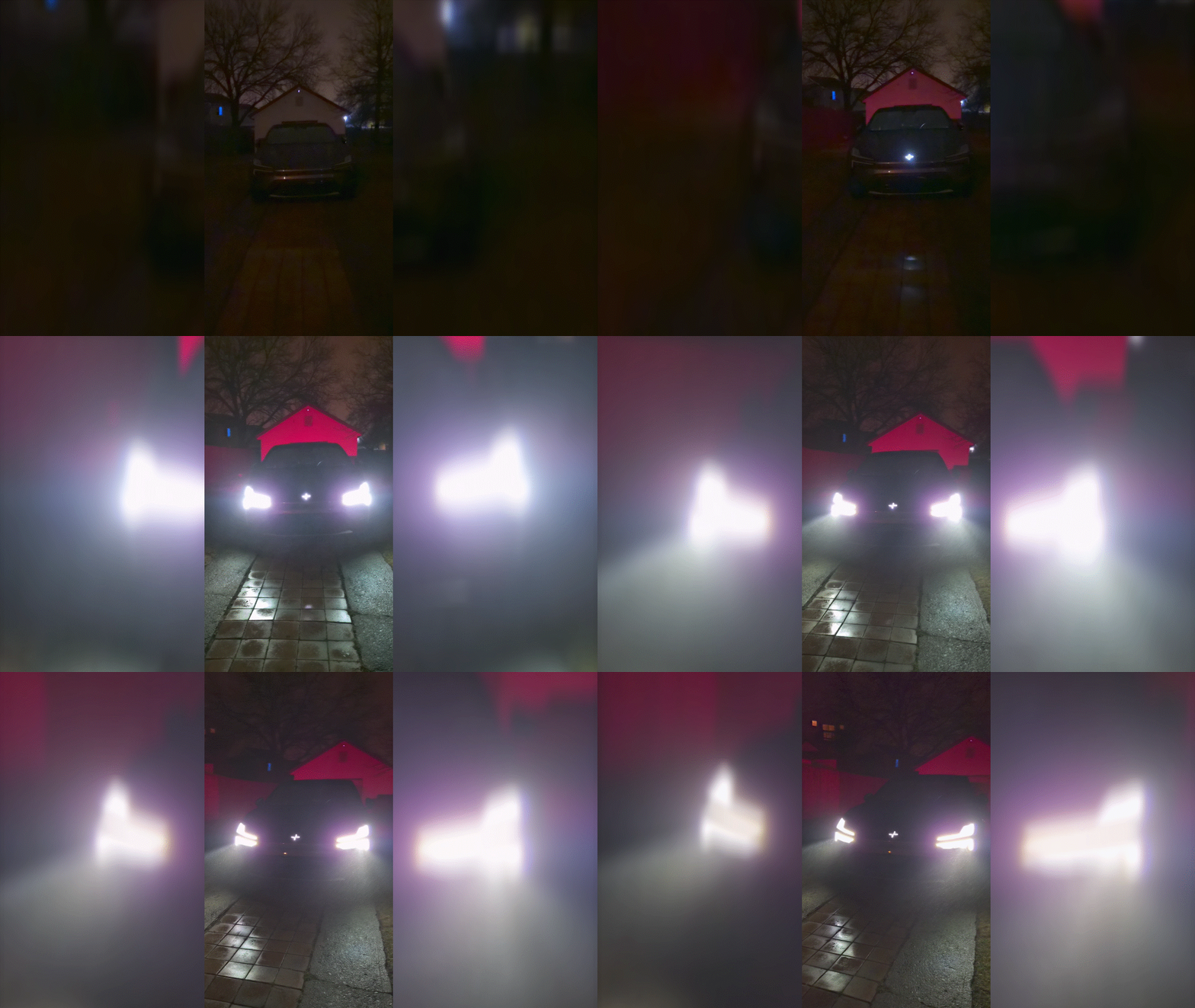
Carrying over the same futuristic meets aerodynamic aesthetic of the Polestar 3, I can’t tell you enough how amazing the Polestar 4 looks. Polestar’s description of it being an SUV coupe is accurate. Its lower roofline, slick front end, and rounded back give off major Porsche Taycan vibes.
Similar to the 'Thor’s Hammer' headlights seen on many Volvo EVs, like the EX30 and EX40, the Polestar 4 features a dual blade design that splits the headlights into top and bottom sections. Since the Polestar 4 I tested is equipped with the optional Plus Pack, the unlocking sequence includes an illuminated logo on the hood.
Sharp cameras
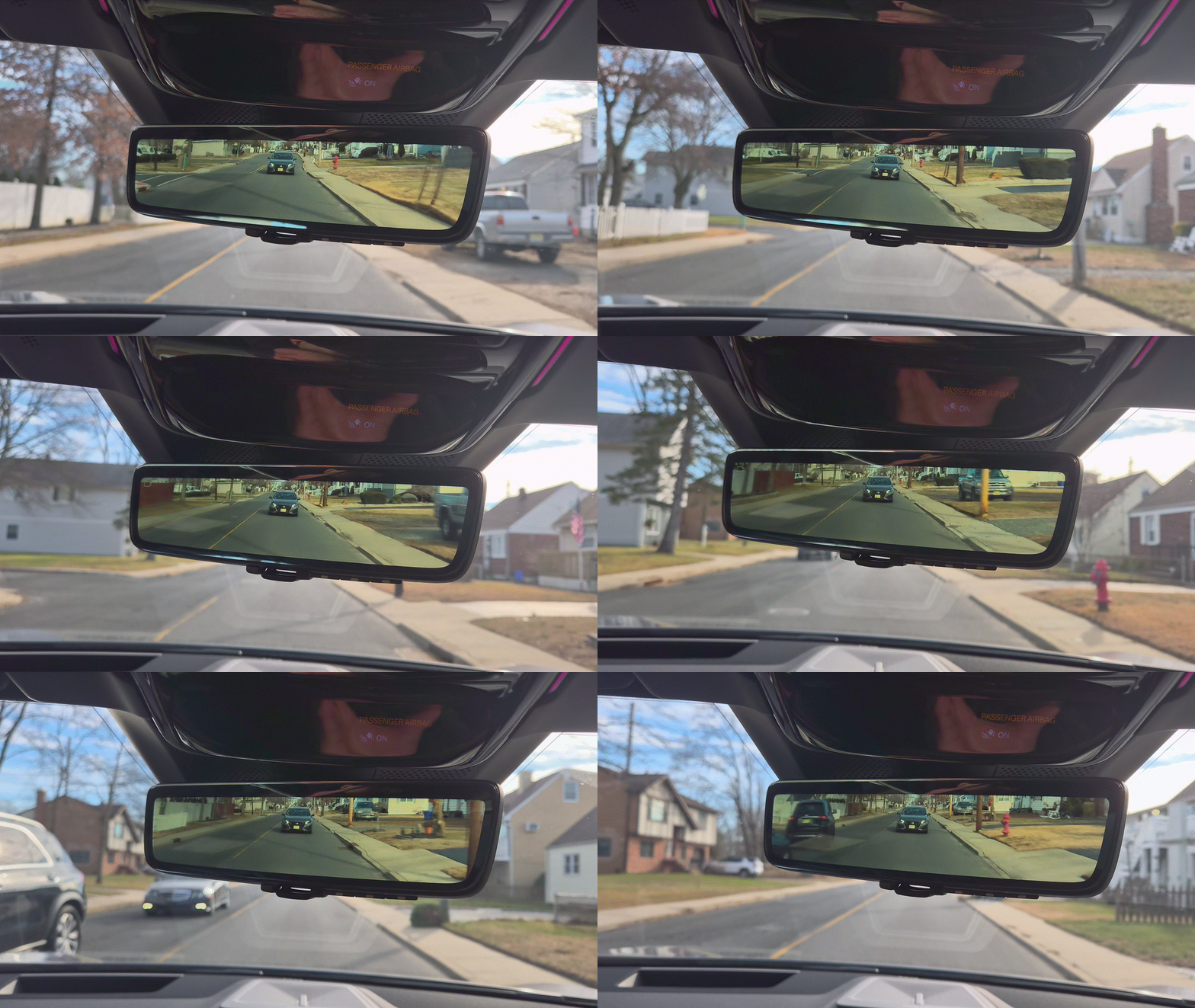
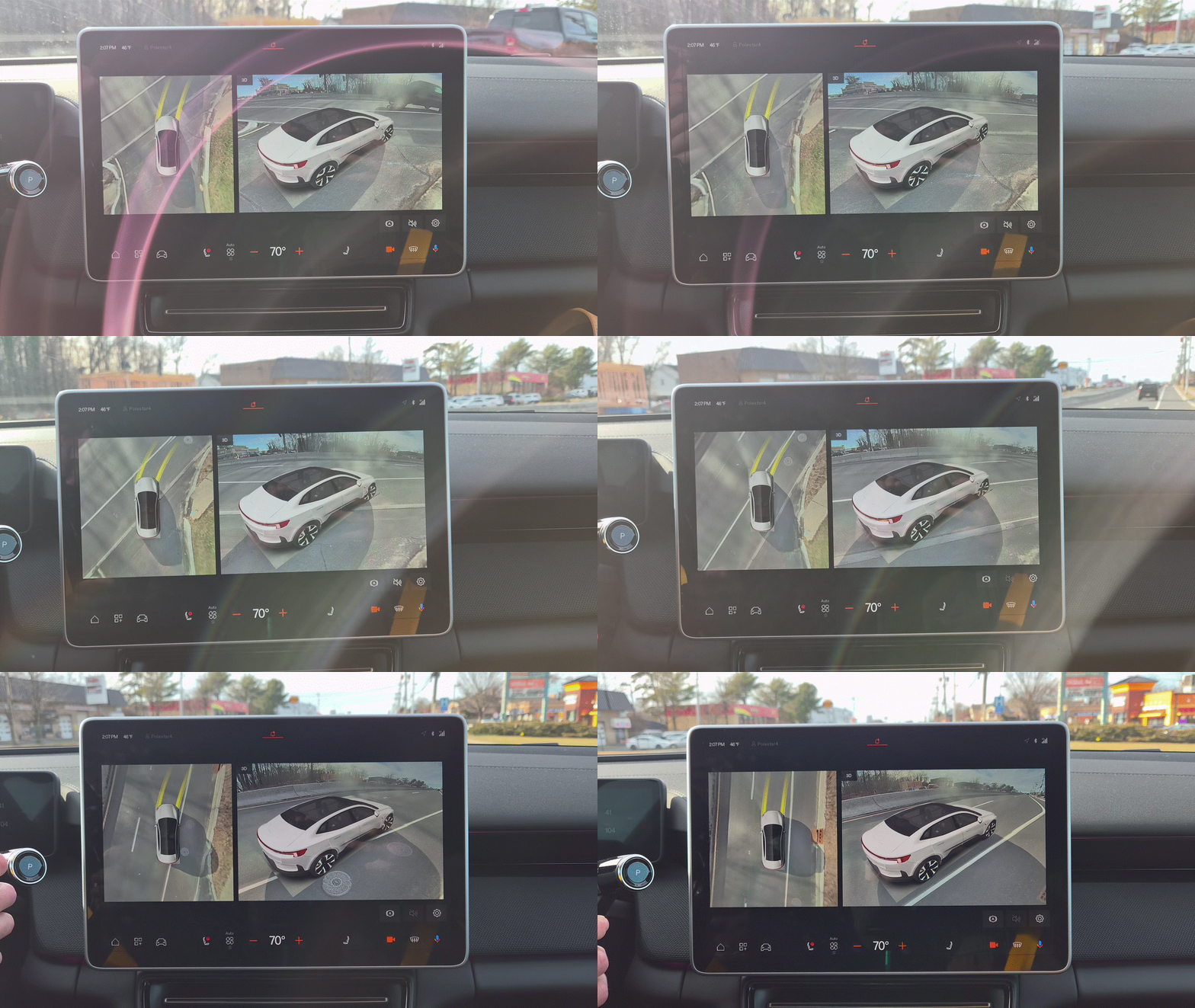
Since there isn’t a rear windshield to look out of, my visibility depends entirely on the quality of the camera system. Luckily, it doesn’t disappoint. There are actually two distinct cameras at the back: one tucked into the roof-mounted shark fin spoiler to replace the rear window, and another positioned lower near the license plate to handle traditional backup duties.
Through the digital rearview mirror, the video feed is crisp and impressively detailed. What makes it even more valuable, in my opinion, is the wider field of view — it's so expansive that I can actually make out my blind spots.
Intuitive software

One of the underappreciated areas of most EVs is the software — and the Polestar 4 doesn’t disappoint. I’m often annoyed by the antiquated look and unresponsiveness of other EV interfaces, but the Polestar 4 proves how software can directly impact the overall driving experience.
Not only is the interface laid out logically on the 15.4-inch display, but small touches like the solar system-themed ambient lighting modes set the tone of the interior by matching the accent lights to their corresponding planets. What makes the software feel truly intuitive is how fluid the touch gestures are. You also get CarPlay support, but Android Auto is noticeably absent. Instead, you can log into your Google account through the Android Automotive infotainment system.
Electrochromic glass roof
Another hallmark feature of the Polestar 4 is its panoramic glass roof, which offers sprawling views of the sky. I’d say it’s one of the most expansive I’ve seen in any EV, extending much further back thanks to the lack of a traditional rear windshield.
With the Plus Pack upgrade, the roof features electrochromic smart glass that can shift from transparent to opaque. The animation is a sweet touch, but it also helps to better shade the interior — providing an extra layer of privacy for whatever I’m carrying inside.
Fun drive, outstanding ADAS
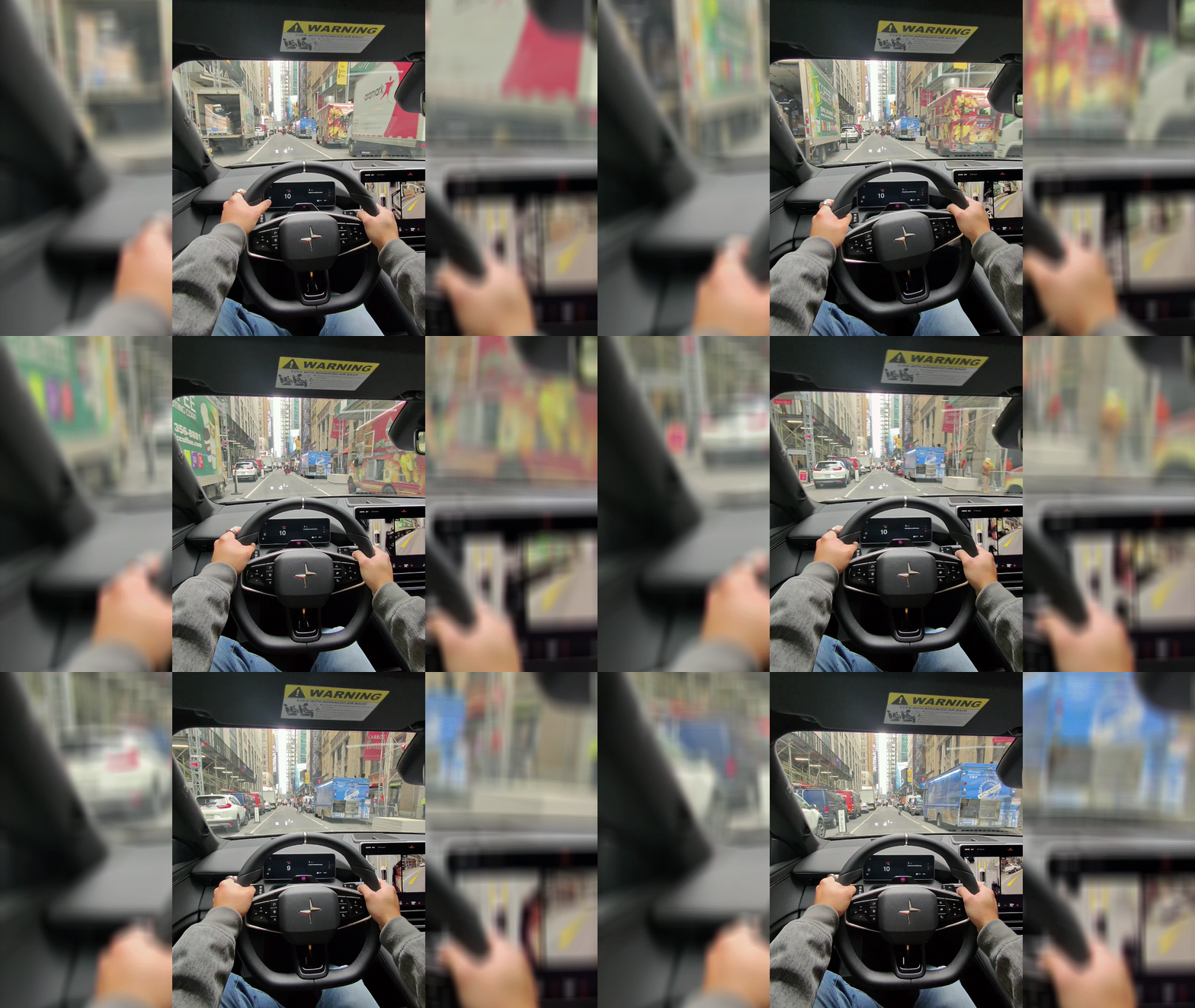
In true sports car fashion, the dual-motor AWD powertrain of the Polestar 4 makes for a fun and exciting drive, complete with zippy acceleration and tight steering. I personally prefer driving with the regenerative braking enabled, but it’s nice that Polestar lets you customize the level so that you can get a better feel for it.
On the highway, I find the adaptive cruise control responsive to changing traffic conditions. With Pilot Assist activated, it practically drives for me by keeping the vehicle centered in the lane and responding to cars moving in and out of my path. During one particular drive, a vehicle abruptly pulled in front of me, and the ADAS (Advanced Driver-Assistance System) seamlessly applied the brakes to maintain a safe gap.
2026 Polestar 4: What I Don't Like
Digital rearview mirror takes some getting used to
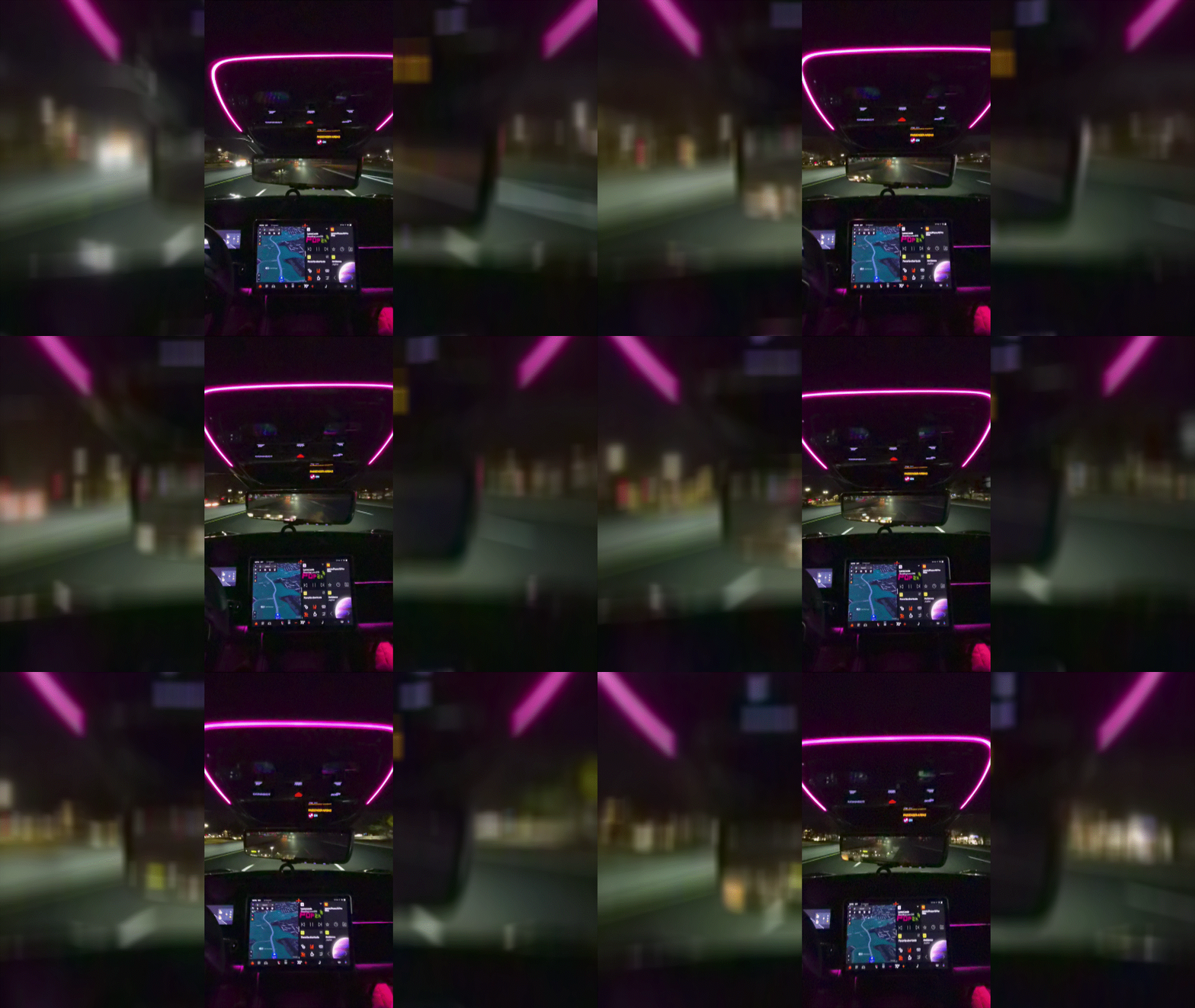
After the first day, I felt fairly confident driving the Polestar 4, but I still found myself challenged at times. One of the biggest hurdles is getting my eyes adjusted to the digital rearview mirror. My eyes have a tougher time switching focus from the road ahead to the digital screen just inches away. That sudden distance shift may be too straining for my eyes, so much so that it takes a couple of seconds for me to adjust.
At the same time, the display's brightness isn't quite as high as I’d like. Even at the maximum setting, I find it a bit dim in certain lighting conditions, which makes that focus shift even more noticeable.
Could be more efficient

While not dismal, the 2.55 mi/kWh average efficiency I recorded with the 2026 Polestar 4 trails its rivals. You could chalk it up to the weather and its sporty performance, but I tend to be conservative with my driving. Given its size, I also expected it to be more efficient than the larger Polestar 3 — which, surprisingly, averaged 3.13 mi/kWh in my testing.
2026 Polestar 4: Bottom Line

The Polestar 4 is a truly remarkable EV that blends the utility of a crossover SUV with the speed of a sports sedan. As much of a thrill as it was driving it for a week, I still come back to how it fundamentally changes the driving experience — specifically by requiring total reliance on a digital rearview mirror.
However, there are other areas where the Polestar 4 truly makes its presence known, ranging from the minimalist aesthetic of its Scandinavian-inspired interior to the software’s intuitive interface.
For the $80,800 as-tested price, the additional features are impressive. Perks like the electrochromic glass roof and exceptional ADAS give the Polestar 4 significant standing against other luxury EVs. You could pay less for better efficiency with the Audi Q6 e-tron, or more for the traditional luxury look of the Cadillac Lyriq-V, but the 2026 Polestar 4 offers a unique and compelling balance.

Follow Tom's Guide on Google News and add us as a preferred source to get our up-to-date news, analysis, and reviews in your feeds.
More from Tom's Guide
- I'm not anxious that it's getting darker earlier with this thermal camera for my car — here's why
- I just test drove the new Nissan Leaf — and it's irresistible at under $30,000
- CrabWalking with the GMC Sierra EV is the weirdest thing I’ve ever done with a car — and it’s actually pretty useful