When I started reviewing TVs over 12 years ago, OLED TVs were incredibly expensive and arrived with some considerable caveats relating to brightness and longevity. These days, many of the best OLED TVs are relatively affordable, and the technology is lightyears ahead of what I saw at the start of my career.
As a result, it gets tougher each year to narrow down my most-anticipated OLED TVs. With spring upon us, many of the best OLED TV-makers are in the process of releasing their latest lineups, including sets that are destined to wind up on our year-end list of the best TVs money can buy.
It wasn't easy, but I've whittled my list of the most-exciting OLEDs of the year down to just three picks. They're the sets I'm most eager to get my hands on, and the very OLED TVs I expect to win over the most hearts and minds in 2026.
LG G6

LG's latest flagship-level OLED is a wonderous sight to behold. It's the newest, upgraded version of the LG G5, one of the best TVs I've ever seen, so to say I have high expectations for it is an understatement.
First, let's get one thing out of the way: The G6 will hit shelves as one of the priciest TVs on the market. Yes, that's a massive bummer, but if it follows the same price trajectory of its predecessor, you can expect to see huge discounts on the G6 deep into the year.
In fact, right now, an argument can be made that the year-old, heavily discounted LG G5 is one of the better deals you can get after you factor in its price-to-performance ratio.
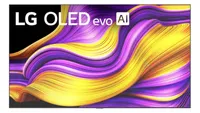
The G6 leverages the newest version of LG Display's RGB Tandem OLED display. Last year, the first iteration of this panel proved hugely successful, as the G5 remains one of the brightest OLEDs we've ever tested.
The RGB Tandem 2.0 display is equipped with a feature LG has dubbed Hyper Radiant Color Technology. From what I've seen from a couple of hands-on demonstrations, it's brighter and more colorful than its predecessor — something I genuinely have a hard time wrapping my head around.
But the biggest improvement involves color banding, otherwise known as posterization. You've probably seen this visual artifact before, even if you don't recognize it by name. It happens where a display struggles to blend soft, subtle transitions in color or brightness, resulting in what looks like a series of stripes where a gradient ought to be.
Based on a demo I received at LG headquarters, it would appear as though LG's engineers have cleaned up the G Series' occasional color banding significantly year over year. With this issue ironed out, rival OLED-makers might have lost a step compared to the G6.
Samsung S95H

The S95H and its upgraded QD-OLED panel will go head to head with the LG G6 this year.
The Samsung S95H is the newest flagship OLED from Samsung and a direct follow-up to the Samsung S95F, one of the best TVs we tested in 2025. Like its predecessor, the S95H is built around quantum dot-OLED technology, which typically allows for brighter, purer color than what we usually see on OLED TVs that leverage standard OLED panels.
The S95H and its upgraded QD-OLED panel will go head to head with the LG G6 this year. From what I've seen, this showdown will be a close one.
I recently spent an entire afternoon with the S95H and I couldn't stop watching "Star Wars: The Rise of Skywalker." (It's a testament to how good the S95H looks that I was able to stomach more than ten minutes of that dreadful movie.)
We haven't formally tested the S95H, but I can confirm that it's brighter than last-year's S95F, particularly when it comes to HDR highlight brightness. I anticipate that the S95H's QD-OLED panel will edge out the G6 when it comes to overall color volume, but in terms of sheer brightness, it's anyone's game.
During my visit to Samsung headquarters, the S95H was wall-mounted in order to draw attention to its newest feature: a brushed-metal frame that surrounds the screen. The display itself sits above the frame, which helped the picture pop in a well-lit setting.
The S95H is the third Samsung flagship OLED in a row to feature the brand's glare-free screen. Its matte-style finish all but eliminates direct glare, but in dim or well-lit rooms, it could have the added effect of raising the TV's perceived black levels. (In other words, the matte versus glossy screen debate will continue in 2026.)
Unsurprisingly, the S95H won't come cheap. It starts at $2,499 for a 55-inch model, and if trends continue this year, I don't see it dropping in price quite as steeply as LG's models the closer we get to the holiday shopping season.
LG W6 Wallpaper TV

The LG W6 (also known as the LG Wallpaper TV) is, without a doubt, the best-looking lifestyle TV I've ever seen. So-called lifestyle TVs are a relatively new class of TV that are built to harmonize with the viewer’s life and living space, both aesthetically and functionally. The majority of lifestyle TVs resemble framed, wall-mounted portraits, and when it comes to picture quality, most of them aren't quite as impressive as high-end TVs.
The LG W6 flips the script. It taps one of LG Display's top OLED panels (RGB Tandem 2.0) and places it within an ultra-thin, wall-mounted design that sits perfectly flush against the wall. This means you're getting a brilliant combination of cutting-edge design and all of the power of an LG-engineered, OLED-driven picture.
I'm willing to bet that it'll be one of the brightest OLEDs money can buy in 2026.
LG claims that the W6 can get up to 3.9 times brighter than "conventional OLEDs." Considering the high-water mark set by last-year's LG G5 (which used an older version of LG's RGB Tandem display), I'm willing to bet that it'll be one of the brightest OLEDs money can buy in 2026.
The W6 is also wireless, so you can enjoy its elegant design without having to see your pesky cables peeking out from behind the panel. It comes with LG's Zero Connect Box, which transmits the signal of your connected devices from up to 10 meters away.
Having seen this TV in action, I'm convinced that it will be wildly popular among a certain crowd that yearns for a top-shelf picture with a posh touch. It won't come cheap, but it'll certainly turn heads in any room.

Follow Tom's Guide on Google News and add us as a preferred source to get our up-to-date news, analysis, and reviews in your feeds. Subscribe to Tom's Guide on YouTube and follow us on TikTok.
More from Tom's Guide