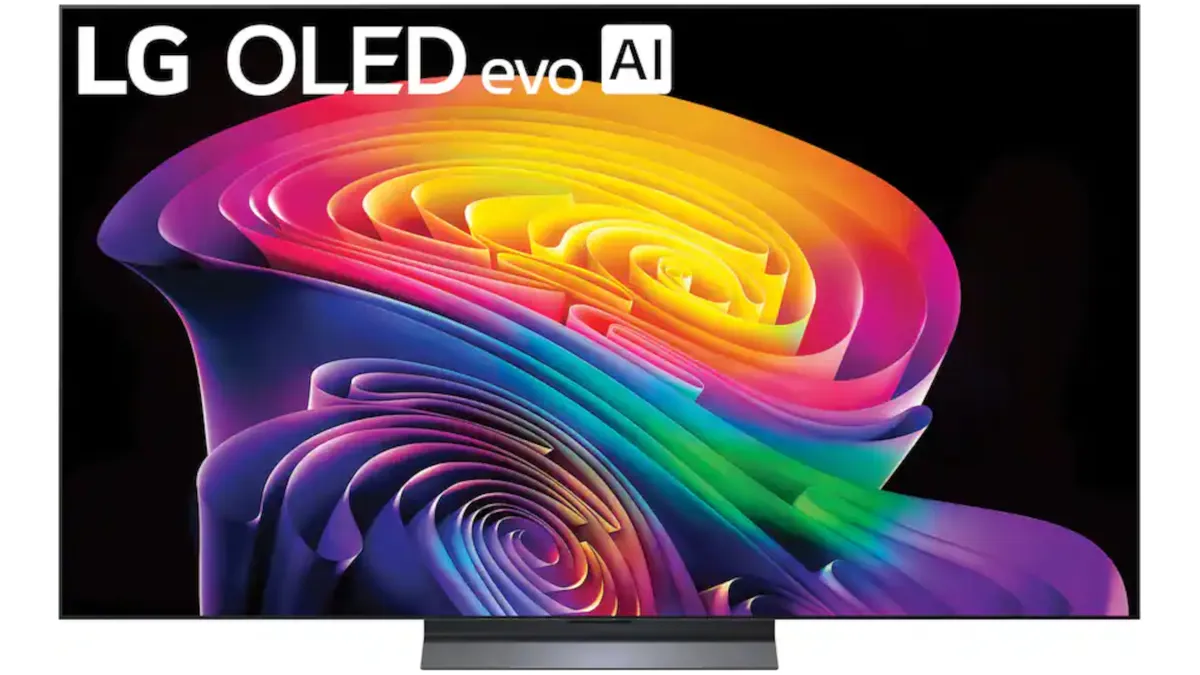
As the brand's newest mid-range OLED TV, the LG C6 delivers an excellent blend of performance and value, but it's an incremental upgrade and it performs similarly to the Samsung S90F. As a 2026 model, it's much pricier than the S90F.
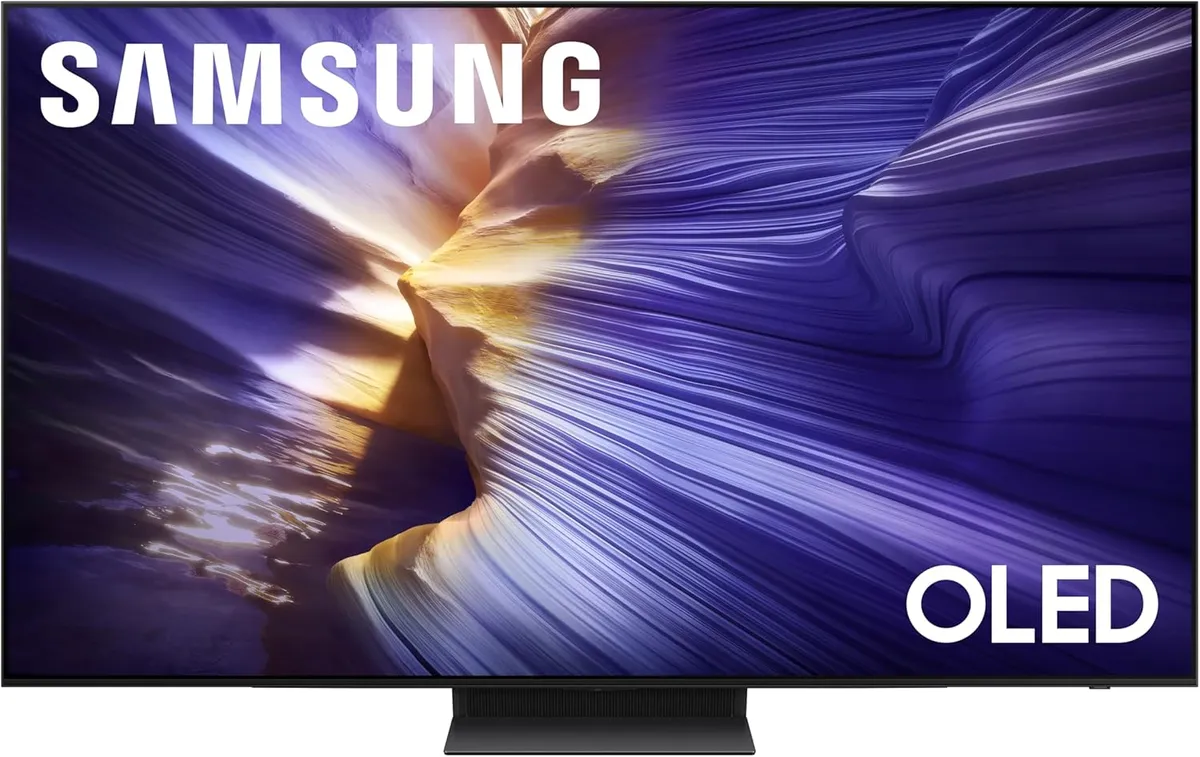
The Samsung S90F delivers sensational, mid-range OLED performance thanks to bright highlights and excellent color volume. It's also packed with gaming features. It's much more affordable than the 2026 C6.
When new TVs are released, old TVs go on sale. At the time of publishing, the brands behind some of the best OLED TVs are launching all-new OLEDs to replace last year's models. This means that you can get last year's stuff at a huge discount, and in many cases, those year-old sets are almost as good as their replacement models.
The C6 OLED is LG's newest, mid-range OLED for 2026. The S90F OLED is Samsung's mid-range model from 2025. They're direct competitors — at least, they would be if there wasn't a year separating them.
Nevertheless, they occupy the same shelf space right now, which means you've got a choice between the two. Here's how these OLEDs stack up and what you should know before shopping.
LG C6 vs Samsung S90F: specs compared
| Header Cell - Column 0 | LG C6 |
Samsung S90F |
|---|---|---|
Sizes |
42", 48", 55", 65" |
42", 48", 55", 65", 77", 83" |
Ports |
4x HDMI 2.1 |
4x HDMI 2.1 |
Resolution |
3,840 x 2,160p |
3,840 x 2,160p |
Refresh rate |
165Hz |
144Hz |
HDR |
Dolby Vision, HDR10, HLG |
HDR10+, HDR10, HLG |
Smart TV software |
webOS 26 |
Tizen |
ATSC 3.0 support? |
No |
No |
Processor |
a11 AI Processor 4K Gen3 |
NQ4 AI Gen3 Processor |
Let's start with the available size options. The C6 is available in 77- and 83-inch versions just as the S90F is, but these sizes are classified as an altogether different model: the LG C6H. If you want a 77- or 83-inch C6, you'll technically have to buy the C6H.
We haven't tested the C6H yet, but LG promises better performance on these sets as they're equipped with LG Display's newest RGB Tandem OLED. The 42- to 65-inch versions of the C6, on the other hand, leverage a standard WOLED display.
One of the biggest differences between these sets lies in HDR support. Like all LG OLEDs, the C6 supports Dolby Vision, a proprietary version of enhanced HDR. No Samsung TV currently supports Dolby Vision.
Instead, Samsung offers HDR10+ across all of its HDR-enabled TVs. HDR10+ is a royalty-free version of Dolby Vision that similarly leverages metadata to adjust the picture on a frame-by-frame basis.
You'll still be able to watch Dolby Vision-mastered content on the S90F, but the picture will fall back to standard HDR10. It'll certainly look great, but technically speaking, the S90F won't be taking advantage of Dolby Vision's efforts to replicate the creator's intent. (To learn more about Dolby Vision, check out our guide to whether or not you need Dolby Vision at all.)
Neither offers ATSC 3.0 support, which allows over-the-air broadcasts to be piped-in at native 4K resolution. These sorts of broadcasts are still few and far between, but for folks who really lean on the terrestrial airwaves, ATSC 3.0's absence is a disappointment.
The good news is that both sets serve up four HDMI 2.1-compatible inputs and support 4K gaming at 120Hz. With a PC linked up to either OLED, 4K games can be pushed up to 165Hz on the C6 and 144Hz on the S90F.
LG C6 vs Samsung S90F: design
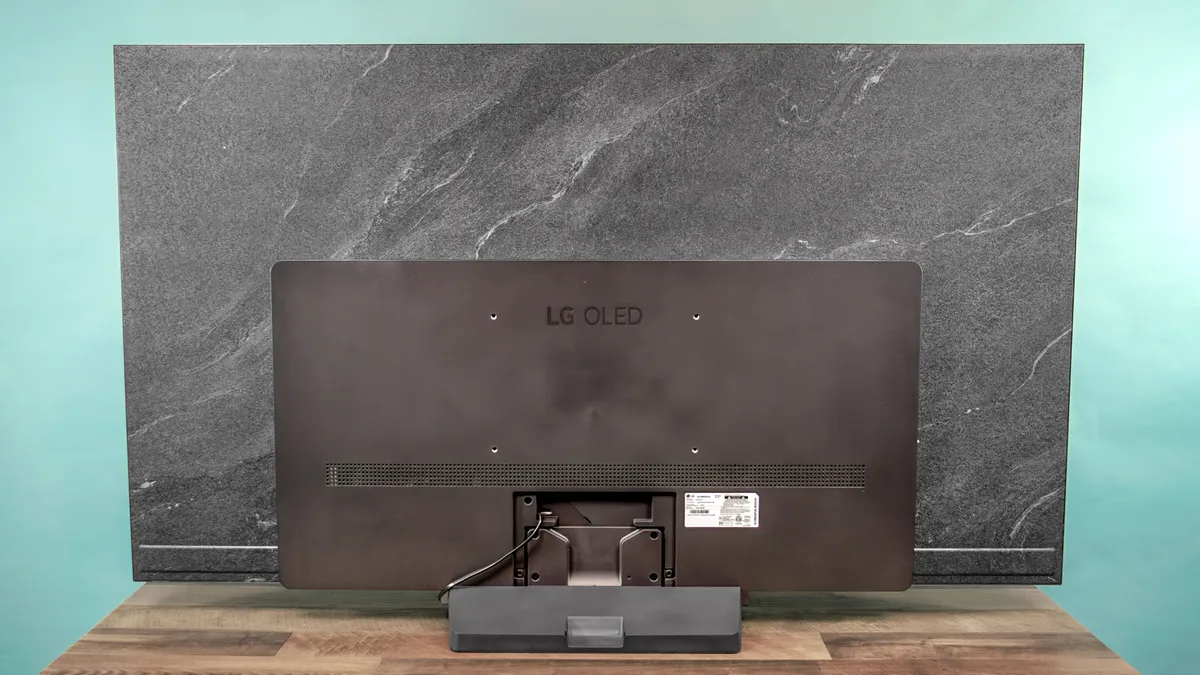
The C6 (seen above) follows the design approach of its predecessor, the LG C5. Its downward-slanting, wedge-shaped stand attaches itself to the TV's chassis, and the shape of the stand keeps the C6's screen relatively close to its surface. All told, it's a sleek look. And, while you'll almost never see this design flourish, I appreciate the marble-like finish on the back of the panel.
The C6 arrives with the newest version of LG's Magic Remote. Like its motion-activated forerunners, this clicker can be used to point and click at the screen (though it also comes with a traditional directional pad, too).
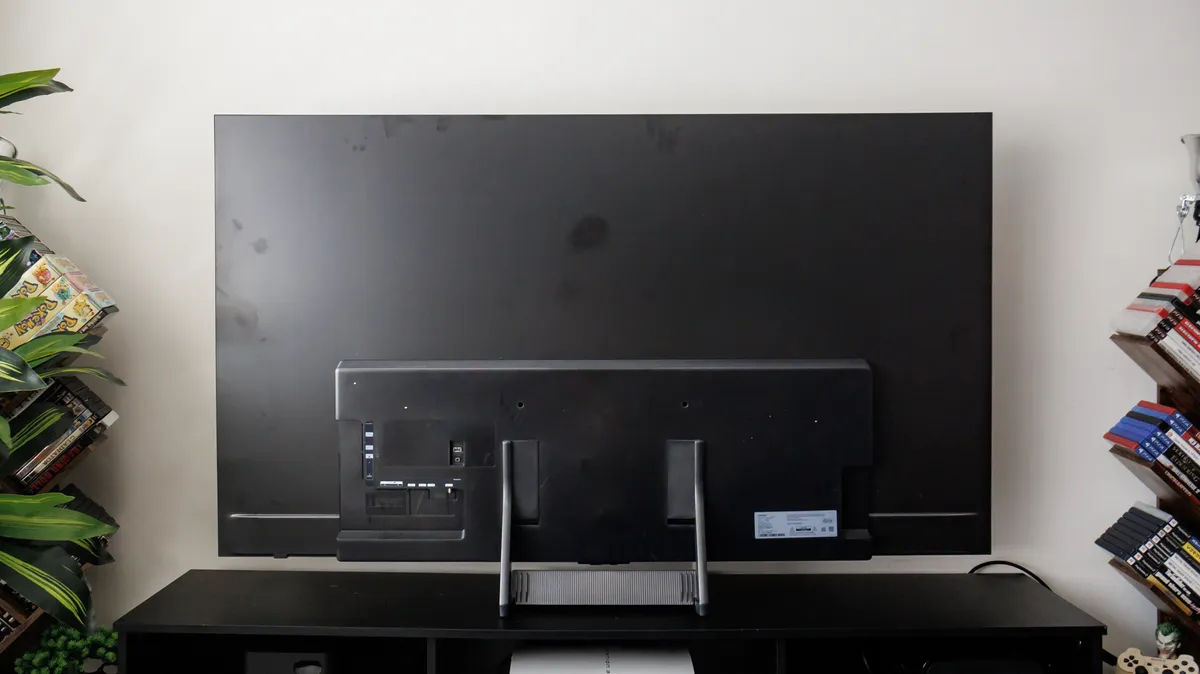
Like the C6, the S90F (pictured above) also uses a pedestal-style stand, but the S90F lifts the panel further up from its surface. The clearance might be nice if you own a particularly bulky soundbar.
As is the case with LG's OLED, most of the S90F's internal hardware is relegated to a rectangular-shaped chassis that bulges out from the bottom half of the panel. Your mileage may vary, but I find the overall look of the C6's panel to be a bit more posh.
But perhaps the S90F's best feature is the included Samsung Solar Cell remote. It's a slim, narrow clicker with a minimal amount of buttons. Frustratingly, it doesn't include a dedicated input button. Refreshingly, it's powered by a rechargeable lithium-ion battery, which powers itself up with natural and artificial light.
While the C6 features a more thoughtful-looking design, the S90F offers better soundbar clearance and a rechargeable remote. This one's too close to call.
Winner: Draw
LG C6 vs Samsung S90F: performance
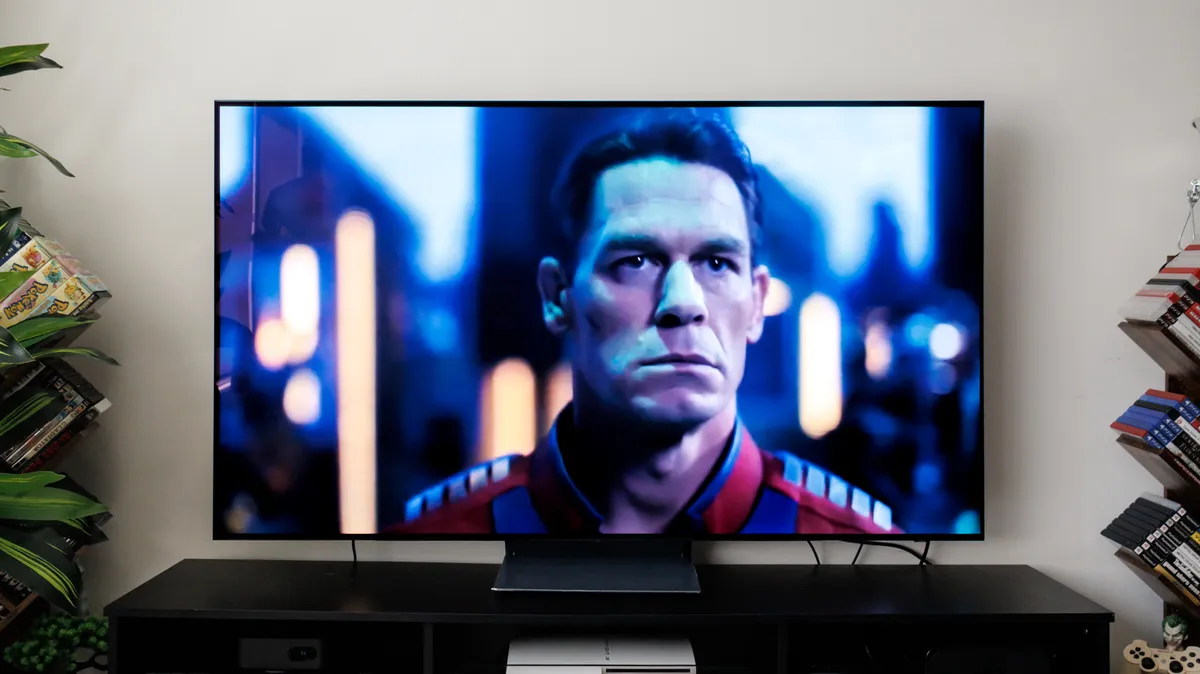
Before we dive into which of these TVs is the better performer, let's compare their test results. (Both TVs were in their respective Filmmaker picture mode when these tests were taken.)
| Header Cell - Column 0 | LG C6 |
Samsung S90F |
|---|---|---|
SDR Brightness (10%, in nits) |
355 |
520 |
Delta-E (lower is better) |
1.5 |
1.1 |
HDR Brightness (10%, in nits) |
1,355 |
1,155 |
UHDA-P3 Gamut Coverage |
99.77% |
99.99% |
Rec.2020 Gamut Coverage |
75.92% |
89.03% |
Input latency (milliseconds) |
9.1 |
9.1 |
Both of these sets are capable of delivering the key features that OLED TVs are known for: perfect black levels with pixel-level contrast control. Thanks to the rich, high-contrast quality of OLED, pretty much everything looks fantastic on the C6 and S90F, especially 4K, HDR content.
That said, their presentations differ slightly, and to understand why, you've got to look under the hood. The C6 leverages LG Display's standard WOLED display, while the S90F taps Samsung Display's quantum dot-enhanced OLED display.
By and large, QD-OLEDs tend to offer brighter, purer color than garden-variety WOLED panels, and we can see that in our test results. The S90F covers 89% of the BT.2020 (Rec.2020) color gamut, while the C6 tops out at around 76%. You'd likely notice these color-based advantages during content, too.
If you watch a lot of cable TV, YouTube or over-the-air broadcasts, the S90F provides a punchier presentation overall.
According to our tests, the S90F doesn't quite match the C6's white highlight brightness in HDR, but its average picture brightness (that is, the luminance of the entire screen) is brighter than the C6 during average, run-of-the-mill SDR content. In other words, if you watch a lot of cable TV, YouTube or over-the-air broadcasts, the S90F provides a punchier presentation overall.
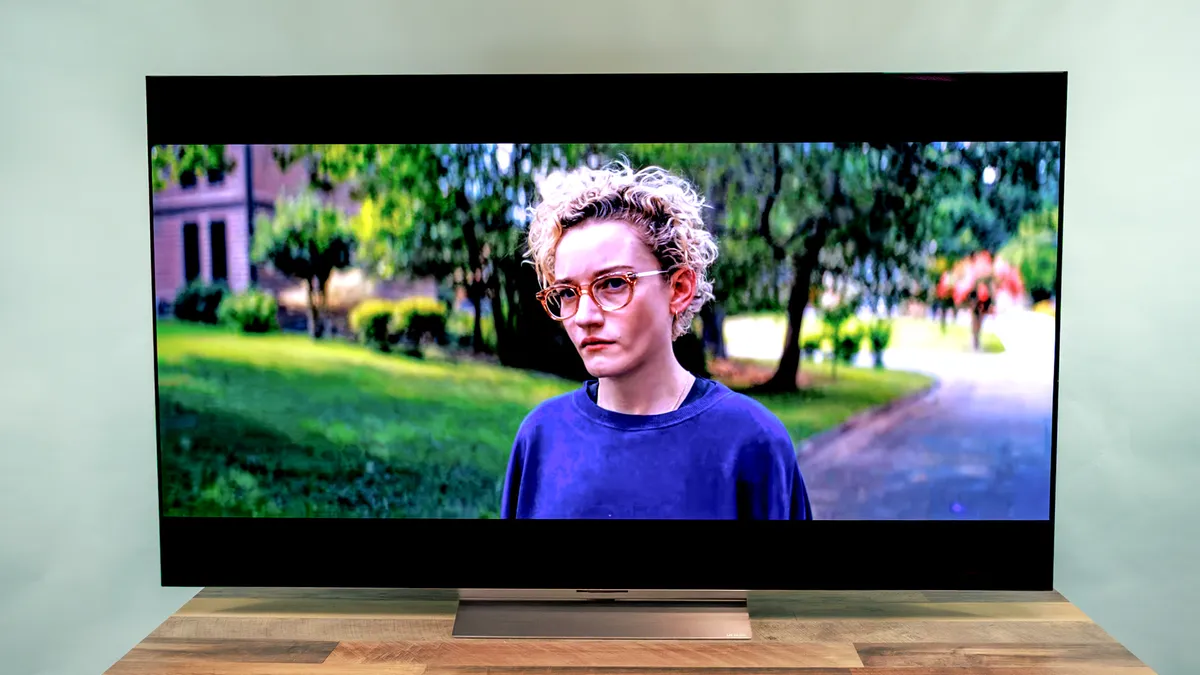
But the C6 isn't a slouch. As mentioned, its HDR highlight brightness is, pound for pound, higher than highlights on the S90F (though it's not a significant difference). Colors are well-saturated, too, even if the C6 can't cover as much of the expanded color gamut.
Most importantly, color is accurately dialed-in on both of these TVs when using their most-accurate picture mode (Filmmaker). And, from what I've seen, both the C6 and S90F are quite good at upscaling sub-4K content without introducing a pesky amount of artifacting.
They're remarkably close in performance, but the S90F's added color and higher average picture brightness during SDR content gives it a bit of an edge. I'm happy to see the C6's standard WOLED panel pumping out close to 1,400 nits in HDR, but the reality is that most people would be hard-pressed to tell the difference between highlight brightness on the C6 compared to the S90F.
Winner: Samsung S90F
LG C6 vs Samsung S90F: smart platform and features
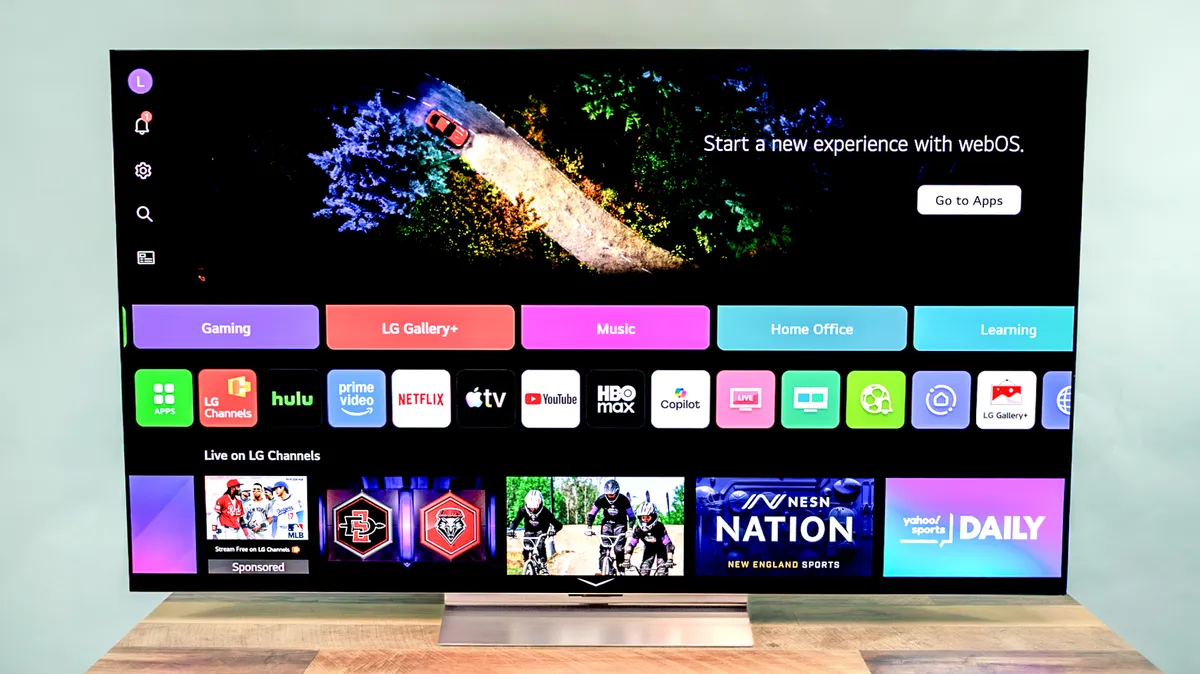
Since both of these OLEDs deliver similarly impressive picture quality, perhaps the software experience and supported features will be the deciding factor for certain shoppers.
The C6 arrives with the newest version of LG's webOS. It's a similar experience to last-year's iteration, but LG has also added some new, AI-based features. Unfortunately, my colleague Dylan Haas referred to them as "meaningless" if you don't already incorporate AI into your daily life, and I'm inclined to agree.
As far as smart platform software goes, LG's webOS isn't one of my first choices. I find its interface to be visually confusing and navigation to be sluggish at times. However, it's easy enough to pick up and use, and I suspect that a majority of users will see no problem using it as their daily driver.
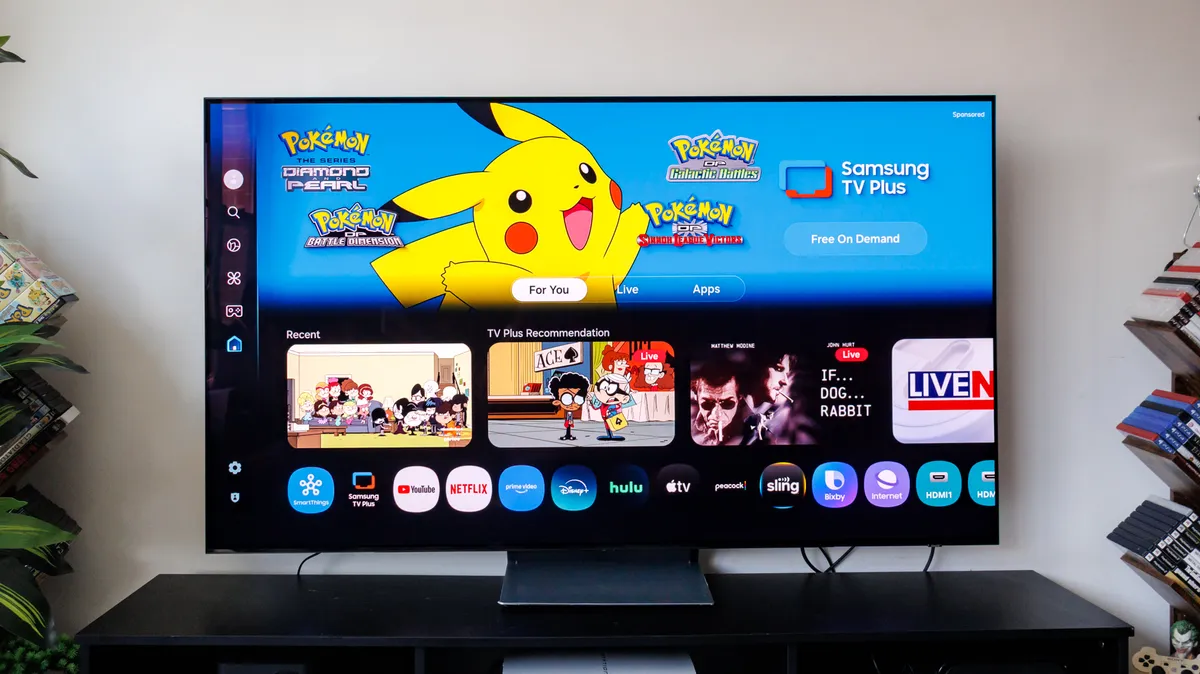
The S90F is built around the 2025 version of Samsung's Smart Hub (powered by Tizen), which isn't my preferred choice, either. That said, if you'd rather not splurge on a dedicated streaming device, Smart Hub will get the job done just as well as webOS.
I find Smart Hub's layout to be visually cluttered. It's often frustrating, too, how basic navigational tasks are three or four steps too long. (Please, Samsung, just put a dedicated input button on your remote.)
As far as gaming features go, the C6 and S90F are almost identical. As mentioned, ach offers HDMI 2.1-compatibility across all four inputs, which means you don't have to spend time thinking about which port any given device should be plugged into.
The C6 and S90F can make the most out of 4K titles on current-generation consoles, as they each support 4K gaming at 120Hz. Both OLEDs also arrive with Variable Refresh Rate (VRR), Auto Low Latency Mode (ALLM) and a version of AMD FreeSync Premium for smooth, tear-free gameplay.
There's no way around it, though: Not having Dolby Vision support on the S90F will be a deal-breaker for a certain type of home theater enthusiast.
Winner: LG C6
LG C6 vs Samsung S90F: outlook
| Header Cell - Column 0 | LG C6 |
Samsung S90F |
|---|---|---|
Specs (25) |
24 |
23 |
Design (25) |
23 |
23 |
Performance (25) |
23 |
24 |
Features (25) |
24 |
23 |
Total Score (100) |
94 |
93 |
Regardless of which set you settle on, you're setting yourself up for a sensational viewing experience. So, let's go through a short list of what could be deciding factors.
If you want Dolby Vision HDR support, the answer is simple: Buy the C6. If you're looking for a brighter, more colorful presentation, I recommend the S90F, but they're close enough in performance that I'm hesitant to overemphasize the S90F's slight edge here.
This leads us to the most important remaining factor: price. The S90F is cheaper than the C6 right now, simply because it's been available to buy for a year. Today, you can spring for a 65-inch C6 for $2,699 on Amazon. The 55-inch LG C6 can be had for $1,999.
Samsung's mid-range OLED, meanwhile, is massively on sale. Right now, you can get the 65-inch Samsung S90F for just $1,399 at Best Buy. The 55-inch S90F is $1,197 at Amazon.
The LG C6 will follow a similar trajectory, seeing slow-but-steady discounts throughout the year. For the time being, though, it's nearly twice as pricey as the S90F — and in no way is it twice as good.

Follow Tom's Guide on Google News and add us as a preferred source to get our up-to-date news, analysis, and reviews in your feeds. Subscribe to Tom's Guide on YouTube and follow us on TikTok.
More from Tom's Guide