







If you have hardwood or tiled floors in your home, it can often be a challenge to keep them clean and stain-free. This is especially the case if you’re dealing with daily foot traffic or messy spills from children or pets. And if you’ve upped the frequency of mopping to achieve spotless floors, it can be disheartening to see dirty streaks afterwards.
According to cleaning experts, you could be making one of these common mopping mistakes. And learning the right steps on how to mop your floors properly can make all the difference to your floors. So before you get out your mop and bucket, avoid these three mistakes that are actually making your floors dirtier.
1. Not vacuuming first

The first mistake we often make is not vacuuming floors thoroughly before mopping. since sweeping isn't enough to capture the fine dirt and dust.
Dragging the mop head will not only spread hidden dirt and debris but could also scratch the floor if small stones are pulled along. For that reason, you should always go over the space with one of the best vacuum cleaners.
“One major misconception I see is that sweeping is enough to prep for mopping,” states Savannah Setzer, owner of Mop&Bucket. “Fine debris and dirt remain, leaving that gritty feeling under your feet when the floors dry. A hard-floor vacuum or dust mop is the only way to lift what a broom leaves behind.”
Additionally, lower the bristles or felt pads when vacuuming your hard floors to prevent the cleaner from ruining your floor. Plus, be sure to avoid these vacuuming mistakes you’re probably making.
2. Using the wrong tool
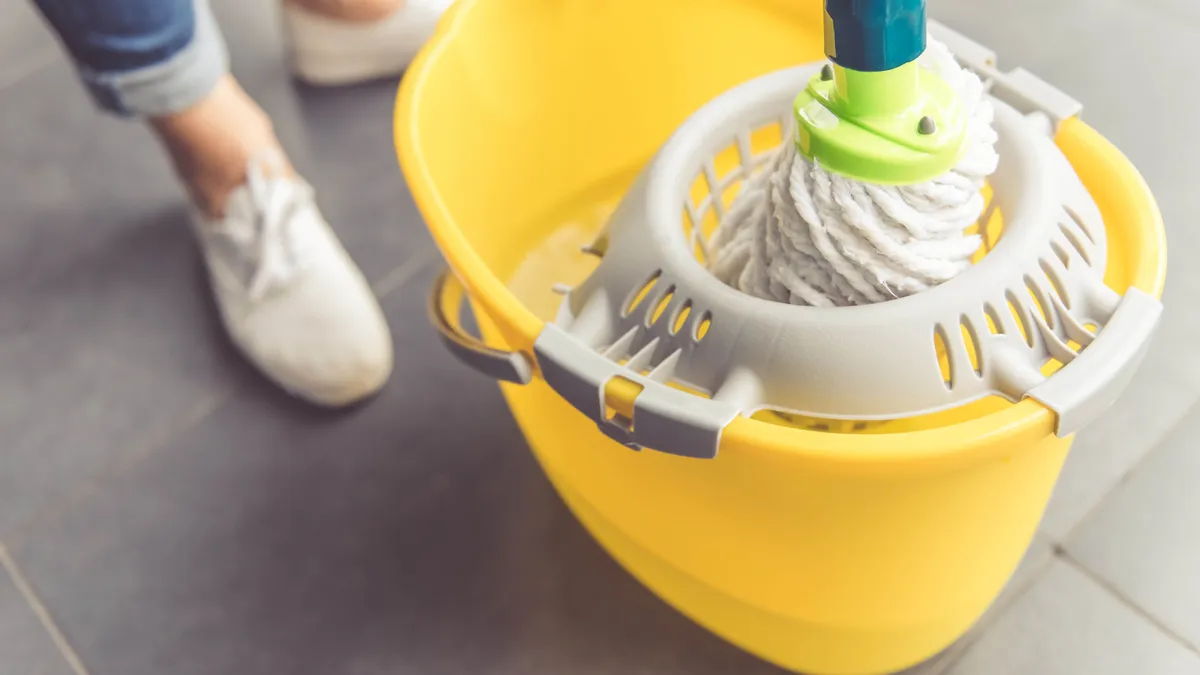
Another common mopping mistake is using the wrong tool — and even worse if it’s dirty.
“If you find your floor still looks dirty after mopping, you are most likely using the wrong tool,” states Leah Howell, Cleaning and Flooring Expert at Bona. “A common tool that may cause harm to your floors is a traditional string mop.
“These mop heads are known to trap dirt and bacteria when not cleaned properly (and regularly), which then leads the particles to be pushed around on your floor, leaving a “dirty” or streaky appearance even after mopping.
Microfiber mops are much better at lifting stubborn dirt and grime and are much easier to wash and reuse. Since many come with detachable pads, they can be thrown in the washing machine.”
In addition, always check that the mop head isn’t dirty or worn out. Microfibers on the mop head tend to stop cleaning well when full of debris, grease, or lint. Plus, once the microfiber material naturally wears out over time, it won't soak up liquid like it used to.
3. Using too little water

Getting the water level right when you're filling up mop buckets is essential for clean floors. “To clean a dirty floor, you need more water,” states Derek Christian, Chief Cleaning Officer of All Star Cleaning.
“Dirt dissolves in the water. However, water leaves streaks. Your floor has this in common with a mirror in your bathroom. You want to use just a slightly damp mop whenever possible, and if you need more water, you will need to mop a second time with an almost dry cloth to buff out the streaks.”
Similarly, always use a suitable cleaning solution for your specific floor types, and avoid using excessive amounts. “One of the most common mopping mistakes is using too much cleaning solution, which can result in a build-up of cleaner over time and leave floors looking hazy,” agrees Howell.
“When it comes to mopping your floors, the 'less is more' rule applies. Oversaturating your floors can also damage grout floors (i.e., tile) and result in mold or mildew growth over time. Water and hardwood also don’t mix well as excess moisture can damage the wood’s finish, causing it to appear dull, and can even lead to swelling, warping, or cracking.”
If you want to avoid dirty mop water, I would strongly recommend a spin mop and dual bucket system. Essentially, this a two-bucket system for clean and dirty water, with a rotating spin mop to wring out the water for you. Plus, this is more hygienic, as it lowers the risk of spreading germs around using the same dirty water.
For more top cleaning tips, check out how to clean hardwood floors without damaging them.

Follow Tom's Guide on Google News and add us as a preferred source to get our up-to-date news, analysis, and reviews in your feeds.
More from Tom's Guide
- No more dirty mop water — this simple cleaning tool is a game-changer
- Things in your kitchen you can add to mop water for fresh-smelling floors
- Best robot mops

