There are plenty of viral gardening hacks that are tempting to follow, but it’s not always easy to know whether to invest time in trying them out. And when it comes to gardening, progress is usually slow, so if you get it wrong, you may not have time to start from scratch before it’s too late in the season.
This is the case with a viral seed hack that uses a slow cooker to speed up germination. I’m tempted to try it, as now we're in February, I'm about to start sowing vegetable seeds, but I decided to call on gardening experts to share their thoughts before I potentially waste both my seeds and time.
Can you germinate seeds in a slow cooker?

“Trying to germinate seeds in a slow cooker sounds like a good idea, but it simply doesn’t work,” says Elise Harlock, brand manager at Prestige Flowers. “Seeds don’t just need warmth to germinate, they need the right balance of temperature, moisture, oxygen and light.”
For these reasons, a slow cooker doesn’t provide the right conditions for germination. “A slow cooker creates an environment that’s far too hot, too enclosed and too humid, which can quickly cook the seeds or cause them to rot before they ever get the chance to sprout. Even on a low setting, the heat is uncontrolled and the humidity intense, which is the opposite of what delicate seedlings need,” she explains.
A slow cooker creates an environment that’s far too hot, too enclosed and too humid
Elise Harlock, brand manager at Prestige Flowers
There’s another reason it’s not a good idea. “Not all seeds want that extra heat either, even in winter, especially with normal indoor temperatures,” says Lindsey Chastain, homesteader and writer at Waddle and Cluck.
“Cold season crops like lettuce and spinach won’t do as well with extra heat. But tomatoes, peppers, and some herbs will love it,” and she advises, “Check to see what your seeds prefer before adding extra heat.”
What's the correct temperature for seed germination

It appears I won’t be using my slow cooker to germinate my seeds — it’s simply too hot for the seeds to handle. “Most seeds germinate best at 65°F–77°F (18–25°C), while slow cookers, even on ‘warm’, can hit 104°F–160°F (40–70°C), resulting in dead seeds,” explains Michael Clarke, landscape architect, horticulturalist and founder of Yardwork.
Instead, if you want to experiment with this germination method, rather than placing the seeds directly in the cooker, he says, “Place them on a rack or inverted dish surrounded by a thick layer of towels inside. Use a thermometer to monitor the temperature constantly, unplugging it frequently to prevent overheating.”
Constantly monitoring the seeds and checking the temperature sounds like hard work to me, but he says this method of seed germination has one advantage: it can be used when your house is cold. “Other than that,” he says, “It’s not ideal because it’s easy to overheat the seeds, there is poor temperature stability, and it requires constant supervision.”
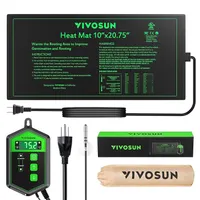
A better way to germinate seeds

Rather than using a slow cooker to germinate seeds, both Clarke and Chastain agree that there are better ways to give them a boost.
“Heat mats are designed specifically for seedlings and hold the soil at a steady temperature,” explains Clarke.
Chastain also adds that, unlike slow cookers, heat mats are designed for use over weeks rather than hours, and you can easily attach a thermostat to monitor the temperature of your seeds.
Apart from using a heat mat to germinate seeds, Clarke suggests other simple ways to keep them warm, such as placing them on top of a refrigerator or above a water heater, wherever there’s a gentle heat source.

Follow Tom's Guide on Google News and add us as a preferred source to get our up-to-date news, analysis, and reviews in your feeds.
More from Tom's Guide