Bulbs are a great way to get spring flowers, since they already contain all of the nutrients that the plant needs to grow and bloom. This means that as soon as the weather begins to warm up, they can spring into action and offer a first wave of color. Many favorite spring blooms, such as daffodils and tulips, grow from bulbs.
Since bulbs need several weeks to root down into the soil before they’re ready to grow upwards, many gardeners begin planting their spring bulbs in the September through November period. This gives them enough time to get established and then go into a period of dormancy during the coldest months of the year. Fortunately, this isn’t the only way to plant spring bulbs successfully.
If you realize you never did get around to planting yours in the fall — or you were using the space for other plants at the time — then you can still get spring value out of those bulbs. Planting in January means you may have to wait a little longer to see your plants flower, but you should still be able to enjoy the fruits of your labor within the next few months. The key is to pick the right flowers and adapt your planting slightly to better suit the time of year.
Choosing the right flowers

In order to successfully see your January bulbs flowering this same year, it’s important to pick plants that will be able to survive the cold temperatures and grow quickly and strongly. While many different plants grow from bulbs, not all of them are spring flowerers and so it’s important to choose correctly.
You also want to avoid the very earliest flowering plants, such as snowdrops, as they won’t have time to mature before their blooming window closes. If you really want to plant them, it’s safer to wait until the fall crops have emerged, buy them as mature plants and then transplant the greenery into fresh soil.
Popular spring flowers that have bulbs suitable for January planting include:
1. Crocuses

These brightly colored flowers emerge in early and mid spring, growing close to the ground in vibrant clusters. Crocuses are an easy way to introduce color to a dreary winter landscape, with slender foliage allowing the blooms themselves to really shine.
They can also last well into spring, which allows them to survive a later planting.
2. Daffodils

With their distinctive cheerful yellow petals and vivid orange centers, daffodils are synonymous with the arrival of spring.
You can also find dwarf varieties and white and pink varieties, as well as ones with different shaped flowers, so there’s a type for every garden aesthetic. They are also known for being easy to grow.
3. Tulips
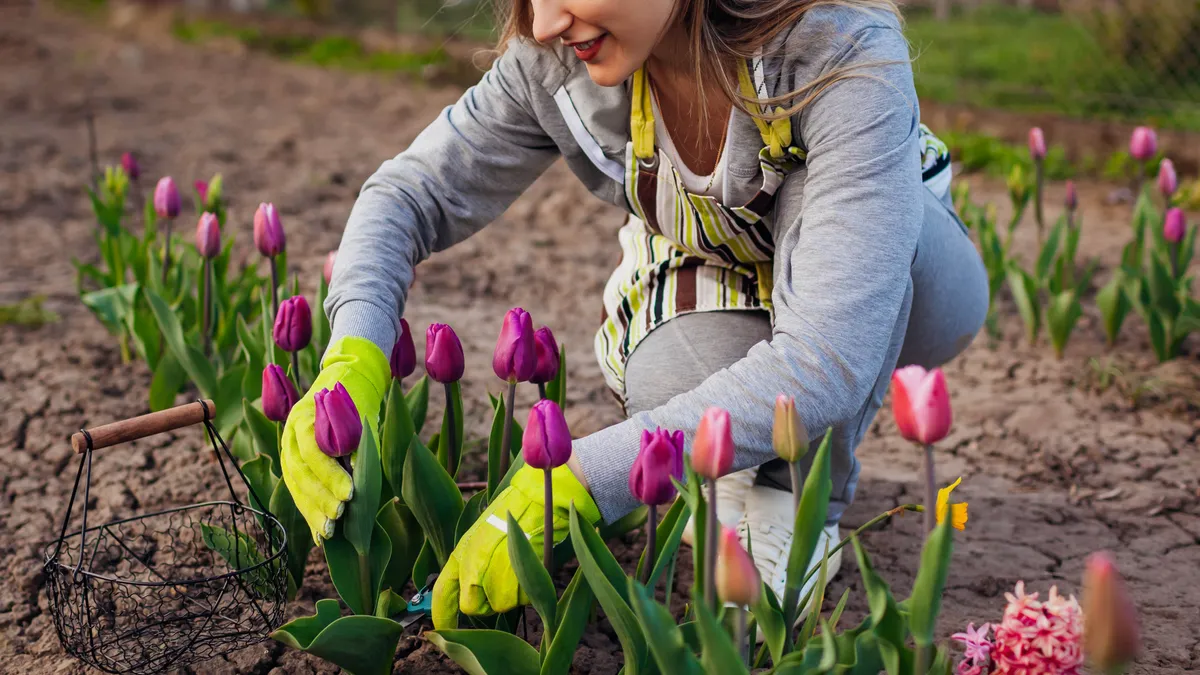
Another famous flower, the tulip has a distinctive furled shape that slowly blooms outward. Available in an assortment of different colors and two-toned shades, with elegant long leaves, tulips offer striking sprays of color throughout the spring.
Since their closed blooms are just as pretty as their full expression, you get weeks of visual delight.
Since many garden centers or plant stores expect to sell the majority of their spring bulbs in the autumn, you may even get discounts when buying in January. Look out for end of season sales or bulk deals to maximize your savings.
How to plant bulbs in January

Since January is a little later than these bulbs are usually planted, it’s important to take a little extra care to ensure that the plants mature and flower successfully. As long as the following steps are taken, you should be rewarded with happy blooms come mid- or late spring.
Inspect the quality of the bulbs

If you bought the bulbs with the expectation or plan to plant them in the autumn, then it is important to inspect them in January to see their present condition. Some bulbs might have molded in the time since purchase or begun to grow soft; these bulbs won’t produce healthy flowers, so they should be discarded at this stage.
If there is only a small amount of visible mold and the bulb is otherwise firm and healthy-seeming, you can remove the mold with a bristle brush. If you are buying bulbs in January, make sure to assess the health of the bulbs before purchase for similar reasons.
Check the condition of the soil

One challenge of planting in January is that the ground may be too cold or wet to support planting. Frigid temperatures may have frozen the ground so that it is too hard to work, while heavy rains can leave the soil sodden and cause bulbs to develop root rot before they’ve matured. If your soil meets either of these conditions, that doesn’t mean you can’t plant the bulbs at all — it just means you won’t be able to plant them directly into the ground.
Instead, consider planting the bulbs in large containers or planters, either alone or in clumps. You may eventually transplant the developed plants into the ground once the weather warms up, or choose to leave them in their containers where they can still make an attractive statement. Adding grit to the soil can also improve drainage during rainy weather.
Plant as normal

Once you have your healthy bulbs and soil, it’s time to plant. Choose a spot away from tall trees as those can cast too much shade for good growth to occur. Make sure that bulbs are buried several inches below the surface of the soil; aim for a depth of about two to three times the size of the bulb, with the pointed side of the bulb facing upwards.
You can scatter bulbs randomly for a natural effect, or combine several varieties together.
Add some weather protection

Although these bulbs are used to surviving through the winter months, those planted in the autumn will already have rooted down and gained some extra strength and stability.
Therefore, if you’re planting in January then it’s a good idea to offer the bulbs a little bit of extra protection from the elements. This might look like covering beds of soil with mulch or straw or wrapping containers with burlap or frost cloths to provide extra insulation.


Follow Tom's Guide on Google News and add us as a preferred source to get our up-to-date news, analysis, and reviews in your feeds.
More from Tom's Guide