To say that 2025 was a busy year for the best handheld gaming consoles would be an understatement. Lenovo dropped two new systems with the Legion Go S and Legion Go 2, while MSI released the updated MSI Claw A8 (in markets outside North America). Of course, there was also the Asus ROG Xbox Ally and Asus ROG Xbox Ally X. Even if we don’t factor in the Nintendo Switch 2, there were plenty of new handhelds for folks to choose from.
Most of 2025’s handhelds offered substantial updates over their respective predecessors. The most notable upgrade was the inclusion of the new AMD Ryzen Z2 and Z2 Extreme chip, which delivered increased performance and battery life for the systems that utilized the processor. There were also minor and major redesigns, such as the Legion Go S and its unibody chassis, the Legion Go 2’s OLED panel, and the ROG Xbox Ally’s controller-like hand grips.
Gaming handhelds are here to stay, and 2026 should be another big year for these devices. Even if we don’t get as many of them as in 2025, the latest processors from AMD and Intel could provide meaningful spec bumps for existing products. And that’s in addition to operating systems specifically design for handhelds. There’s a lot to look forward to in 2026, so let’s break down what we can (and shouldn’t) expect in 2026.
SteamOS and lean Windows on more handhelds

SteamOS is the main reason I’ve preferred using a Steam Deck OLED over more powerful rivals running Windows 11. Why? Valve’s operating system was specifically designed for the handheld form factor, whereas Windows isn’t.
I’ve longed to see SteamOS on a non-Valve handheld, and that finally happened this year with the SteamOS version of Legion Go S. Thanks to the user-friendly interface and easy access to my Steam library (not to mention its ergonomic form factor and strong performance), the Legion Go S is my favorite gaming handheld of 2025. With SteamOS no longer tied to Valve’s ecosystem, I expect to see other handhelds utilize this operating system in 2026.
I also have to mention the Xbox Full Screen (XFS) experience on the Asus ROG Xbox Ally. This Xbox UI is easy to navigate and legitimately gives SteamOS a run for its money. Best of all, the Windows desktop doesn’t run while XFS is open, which allows the system to deliver better performance and battery life. I also expect other Windows handhelds to adopt the XFS in 2026.
More AMD Ryzen Z2 machines (and maybe Panther Lake?)

2025 saw the debut of the AMD Ryzen Z2 and Z2 Extreme chips, along with the first gaming handhelds that utilized AMD’s processors. The chip’s main advantage is better performance and power efficiency. Though you’ll need to tweak system and in-game settings to get optimal performance, we’re impressed by what we’ve seen from Ryzen Z2 Extreme-powered handhelds like the Legion Go 2 and ROG Xbox Ally X.
AMD’s Ryzen Z2 chip doesn’t deliver massive performance gains over its predecessor, but the difference is still noticeable. In 2026, I expect it will become the de facto processor for most handhelds.
That said, it’s also possible that the Intel Core Ultra Series 3 “Panther Lake” chip could be a game-changer for handhelds. Now, this is speculative on my part since no Panther Lake handhelds have officially been announced. But given that the MSI Claw ran on previous versions of Intel’s Core Ultra chips, I wouldn’t be surprised if a company makes a handheld that runs on Panther Lake. If Intel’s chip is as powerful and energy efficient as we hope, we could see a true competitor for AMD on the handheld front.
No Steam Deck 2
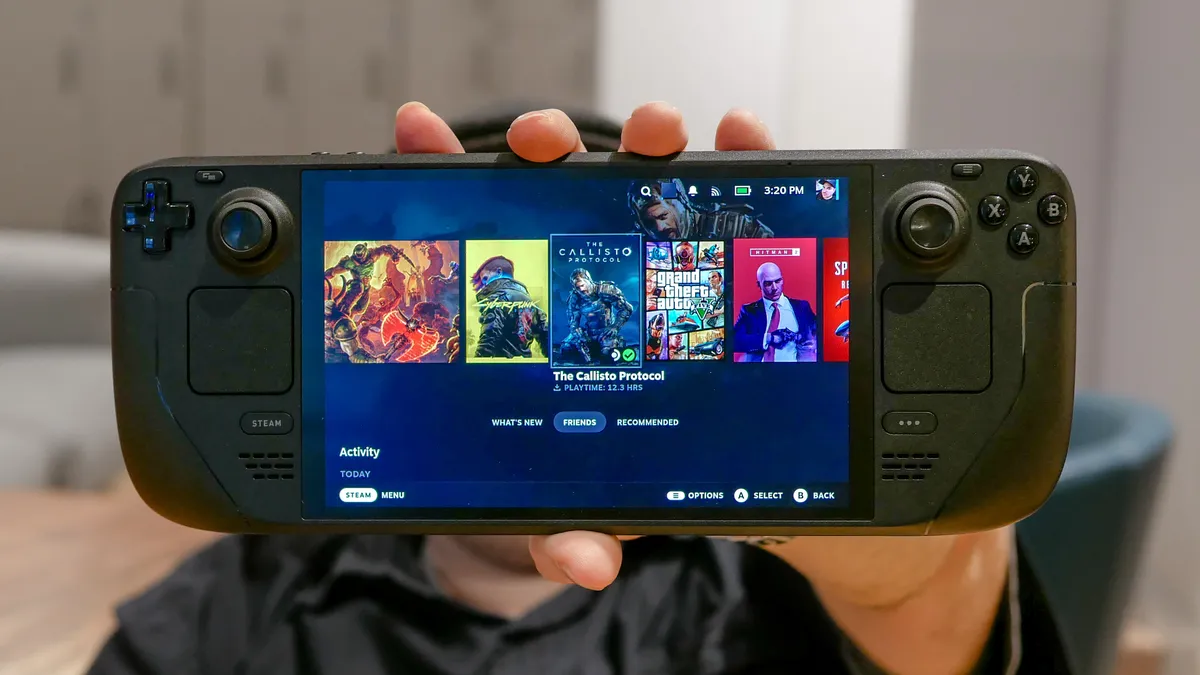
This one is a bit of a cheat since it’s something I don’t expect. Based on sales numbers, the Steam Deck is the most popular PC gaming handheld currently available. You would have expected a successor by now, especially as competitors like Asus, MSI, and Lenovo have released multiple iterations of their respective handhelds. However, there is no Steam Deck 2, and I don’t think we’ll see it in 2026.
When we interviewed Valve’s SteamOS designer, Pierre-Loup Griffais, about the Steam Deck 2 during CES 2025, he said there will not be a Steam Deck 2 with Ryzen Z2. The reason is that Valve wants to see bigger performance and power efficiency improvements in an 8-15 watt power envelope. “We don’t want to be looking at 20-30% improvement or anything like that, because we don’t think that’s meaningful enough for developers and for users,” said Griffais.
Given Griffais’ comments, and that Valve will be plenty busy next year with the debut of the Steam Machine and Steam Frame, the Steam Deck 2 is a long shot for 2026.
Outlook
Even without a Steam Deck 2, I expect gaming handhelds will continue being successful in 2026. Fast processors like Ryzen Z2 and user-friendly operating systems like SteamOS lay a solid foundation for whichever new systems we see next year.
As someone who reviews and enjoys playing on gaming handhelds, I’m eager to see what 2026 has in store. Even if it’s not as monumental a year, I still expect great things for folks who love gaming on the go.

Follow Tom's Guide on Google News and add us as a preferred source to get our up-to-date news, analysis, and reviews in your feeds.
More from Tom's Guide
- These are the 3 gaming handhelds I would buy with my own money
- 5 tips for buying a gaming handheld
- These are the brutal truths about gaming handhelds no one wants to admit