The Samsung Galaxy Watch 9 was unveiled at the Galaxy Unpacked event alongside the Galaxy Watch Ultra 2.
To read the full lowdown on what you can do with the latest Galaxy Watch model, my wearables expert colleague Dan Bracaglia discusses the 5 things you need to know about the Galaxy Watch 9 in more detail. However, as a trainer and fitness editor, I'm more concerned about whether it's the type of watch I want strapped to my wrist during workouts.
Recently, I attended BXR to get first-hand experience with the watch on behalf of Samsung; we hit the treadmills, did some strength training and even stretched it out in a 20-minute yoga class. But for me, that wasn't enough. Thankfully, I got to spend more time with the model, training at home, in the gym and in my yoga classes, to really see what it's about.
Here are three things I like so far, and three that I'm really not a fan of if you're looking to purchase one of the best smartwatches in 2026.
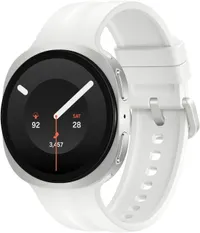
Like 1: Aesthetics

Retailing at $379 for 40mm (no LTE, which is $50 extra) or $409 for 44mm (no LTE) compared to $349 for the Galaxy Watch 8, the 9 is no doubt a good-looking smartwatch-fitness tracker with a premium price tag.
I like how easy it is to set up and pair with the Samsung Galaxy Z Flip 8, and the sleek sports strap and screen design are right up my alley; I don't like having garish fitness trackers or fussy smartwatches on my wrist, especially when lifting weights. 40mm is available in Cream or Graphite; 44mm comes in Graphite or Silver.
We'll get on to size (one of my dislikes) below, but in terms of design, you get pretty much the same aesthetics, screen brightness and size options as the 8. However, the 9 boasts a faster processor and up to 20% better battery life. You can also customize your sports bands with various color options, too.
I highly recommend leaving the always-on option enabled so you can glance during workouts. I didn't do this at first and it caused me some very high cortisol levels and extra faff.
But let's focus on the real MVP: new health and fitness tracking tools.
Like 2: Swipeable health features upgraded

Samsung Health offers a wealth of fitness and health tracking and insights, without locking it all behind a paywall. There are plenty of sports and activities to choose from, and an array of sensors means you can pick up pretty detailed data.
Some of the latest upgrades include a Vitals dashboard with metrics for heart rate, HRV, sp02, body temperature, breathing, and Heart Health Score. Alongside this, you get fitness features such as Cardio Load and Fitness Index (a score out of 100 based on activity levels, VO2 max, recovery time and more).
The idea is to be preventative, which means more of a holistic focus on wellbeing and useful insights. The Vitals dashboard features one easy-to-view panel with information on heart rate, blood pressure and ECG. It's handy to swipe left and right to catch a quick glance while on the go. You can also swipe to use quick features such as Running Coach, Body Composition and Sleep.
By swiping twice to my left, I could quickly access the Fitness section, where I could select from a list of activities or add my own via my Samsung Galaxy phone or on the watch itself. You can set up your watch to suit your preferences, but note that you'll need to sleep with it on to access some of the longer-term trends and vitals, particularly sleep, of course.

I’ve worn the Coros Pace 4 alongside the Samsung Galaxy Watch 9 on several occasions. Not because it's a totally fair comparison, but if I'm exploring what I like and don't like about a watch during exercise, I'm doing it with my favorite one on my wrist, too.
The Coros Pace 4 has proved reliable for workouts for me and my colleague Nick Harris-Fry, who runs regularly wearing it alongside other wearables because of dual-band GPS tracking and top sports features.
Throughout testing, the Galaxy Watch 9 has been fairly consistent with my trusty Coros Pace 4, though the Watch 9 tends to track more time spent in heart rate zones 1, 2, and 3 during my running efforts than the Pace 4. The Watch 9 also tends to overestimate calorie burn, but I don't pay too much attention to calorie burn on fitness trackers anyway, as so many variables impact how many active calories you can burn.
That aside, distances and paces have been around the same, and the Galaxy Watch 9 is intuitive at picking up workouts through auto-detection. And it's useful to remember that the Pace 4 is a sports watch, after all, not a smart one, so those who are most likely to purchase this smartwatch-come-fitness tracker will be looking at a lot more than just workouts.
Like 3: Auto activity detection

The Samsung Galaxy Watch 9 can automatically track exercises, including walking, running, cycling, swimming, rowing, and elliptical, using its BioActive Sensor and accelerometer. That means you don't need to rely on manually starting some activities, which I found really handy.
The watch automatically picked up when I walked and paused when it detected I was stationary. I found this to be pretty accurate for time and distance, and it's good to know that this data feeds into my overall activity levels, trends and insights. I'd like this feature to roll out across more activities, but it's great that the basics are there.
I could view duration, pace, distance and time of day at a glance, and I found the watch particularly good for tracking running data. That said, if you take your running seriously, you'd be looking more at the best running watch anyway.
Dislike 1: Hard to use on the go
I recently became emotionally dependent on my Coros Pace 4 sports watch, which is easy to wear, tight-fitting, rugged, very easy to use on the go and tracks everything I need during exercise. It also has excellent battery life without overwhelming me.
While this is not a head-to-head comparison, using both watches has given me a strong sense of what works and doesn't work for me personally during exercise.
I've worn both watches for yoga, Pilates, strength training and running, and I find the Galaxy Watch 9 "faffy" to use. The screen is extremely sensitive (but yes, it is fast), and I find it hard to navigate the tiles and swipe left-to-right quickly while running and walking.
I'm a button girlie, and while the swipeable screen is handy, I will always prefer navigating settings primarily with buttons. There are two on the watch on the right side, but I couldn't use them as much as I wanted to.
I'm also not a fan of overcomplicated screens and having to swipe this way and that to see a handful of the metrics I find most important. I recommend spending some time setting up your Galaxy Watch 9 by configuring the layout and features you need most, plus choosing a clean watch face via the Galaxy Wearable app, if you're a bit like me with tech overwhelm.
You'll also need to go into the Samsung Health app to enable various health and fitness tracking features, which aren't automatically set up; be warned, there are many, and it takes a little time.
Dislike 2: Sizing

As a female with small wrists, I have this issue with sports and smartwatches all the time. It's one of the areas where my colleague Jane McGuire says fitness trackers still fall short for women.
I don't need bulk on my wrists when I lift weights or run; it is distracting and creates more weight and fuss when I'm trying to position weights along my forearms for exercises like front rack squats or cleans.
For me, the Galaxy Watch 9 feels heavy, even with the aluminum casing, which is supposed to help make the watch lightweight. I was given a M/L wrist strap, so I highly recommend picking a S/M strap if you have small wrists like mine, as the watch slid around even on the tightest strap setting.
For those who get sweaty during workouts, I'd also consider the fabric band instead of the sports band that came with my watch.
While I do like how the watch looks and I enjoy the understated design, I'm not a fan of the sizing overall, even for the smaller 40mm model. I still think brands need to think more about their female customers when designing smartwatches and sports watches in general.
For that reason, I wouldn't want to wear this watch to bed. But that said, I generally don't like having anything on my wrist at night and rely on my Oura Ring 5 to track sleep instead. If this is a problem for you, note that some features rely on you sleeping in your watch.
Dislike 3: Battery life
Both the 40mm and 44mm Samsung Galaxy Watch 9 models feature modest battery capacity increases. For the smaller model, that's a jump from 325 mAh for the Galaxy Watch 8 to 390 mAh for the Galaxy Watch 9. For the bigger model, the capacity has increased from 435 mAh on the Galaxy Watch 8 to 445 mAh for the Galaxy Watch 9.
This, coupled with up to 15% more efficient processing, should mean that the Galaxy Watch 9 lasts longer than the average of roughly 30 hours per charge (for the 8) with the always-on enabled.
I'd say I'm very active, and mine has lasted roughly 24 hours on a charge. Compare that with watches like the Pixel Watch 5, which should last around two days, and the Coros Pace 4, which I usually wear and can last me about a week, and the battery life could be better.
I'm a little disappointed, as battery life is one of the features most celebrated with the Galaxy Watch 9. if I were taking it away on a trip, I'd need to charge it every day, though it does charge quickly when you do juice it up.
Verdict
For me, the Samsung Galaxy Watch 9 looks great, is fast, offers a wealth of health and fitness features and pretty accurate tracking across the activities I tested, but would I switch out other trusty watches in favor of it for exercise alone? No, I wouldn't.
That said, I will be spending some more time wearing it, and I plan to update you here with more long-term feedback.

Follow Tom's Guide on Google News and add us as a preferred source to get our up-to-date news, analysis, and reviews in your feeds. Alternatively, you can read our content on the Tom's Guide app available now for iOS and Android. Subscribe to Tom's Guide on YouTube and follow us on TikTok. Finally, you can visit our dedicated Tom's Guide Savings Squad hub for expert help on getting the best products for less.
More from Tom's Guide
- Exclusive: Garmin Cirqa PM says ‘it just felt like we had all of the pieces in place’ to launch a screen-free fitness tracker
- An ‘iPhone moment’ for your eyes — why Xpanceo is betting big on smart contact lenses as the future of AR
- Exclusive: Google design director says Fitbit Air reception proves they 'made the right decision' going screen-free