I’ve been writing about fitness trackers before any of them could track a period. It was Fitbit that first added female health tracking to its app in 2018, launching alongside the Fitbit Versa.
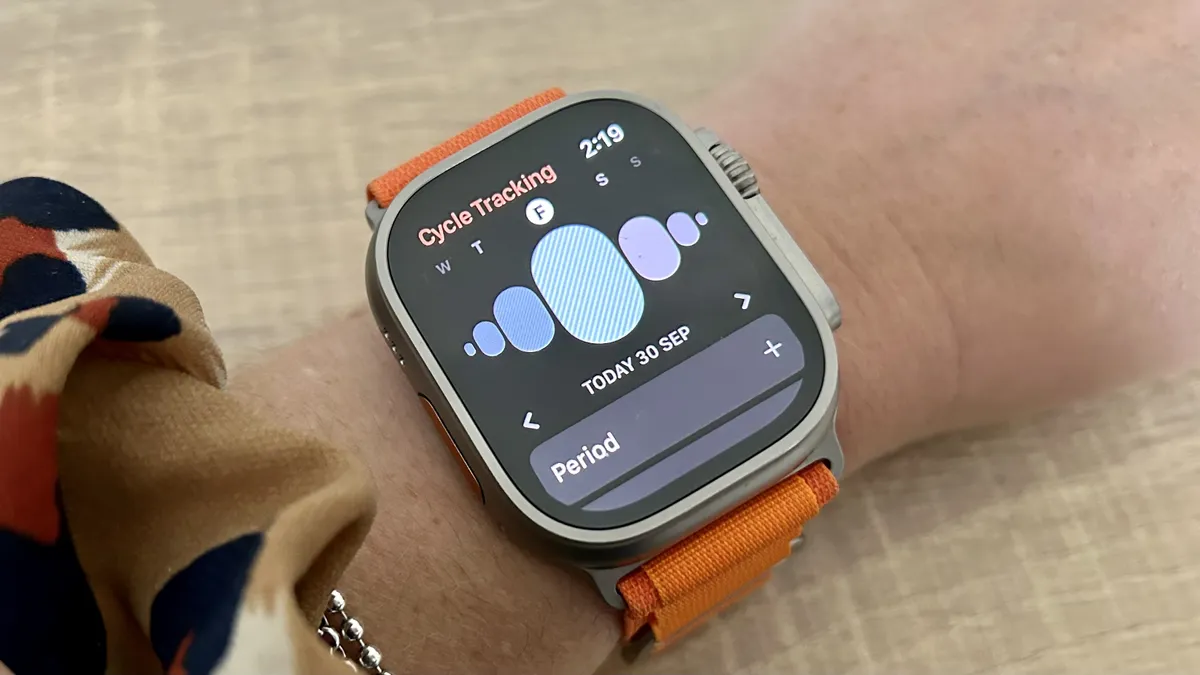
Other major players followed suit, with Apple adding native Cycle Tracking to the Apple Watch Series 5 in 2019, and Garmin adding Menstrual Cycle Tracking to its Connect platform soon after. In 2022, wearables shifted from manual logging to sensor-driven predictions based on skin temperature, largely down to the rise in popularity of fitness trackers like the Oura Ring.
Yet eight years later, there’s still a lot of room for improvement. I’ve trusted all the major devices with tracking my periods, and some do it better than others. My Oura Ring knew I was pregnant before I did back in 2023, but at the time the wearable didn’t have any means of tracking the physical and hormonal changes occurring during pregnancy. That has since changed.
Here’s the work that still needs to be done.
Core metrics of most fitness trackers are still based on male physiology
Before joining Tom’s Guide, I worked for Runner’s World, where I’d frequently hear that shoes were designed for men and then tweaked for women, even though women have a physiologically different body shape and stride.
The same applies to fitness trackers. Core metrics, including Heart Rate Variability (HRV), VO2 max, and “Readiness” scores, have historically been benchmarked on male physiological data.
It’s easy to see why: a man’s hormone fluctuation is far simpler than a woman’s. Men primarily operate on a 24-hour rhythm, with testosterone peaking early in the morning, then steadily declining throughout the day.
Women, on the other hand, have a 28-35-day hormonal cycle, with estrogen and progesterone levels shifting throughout that window, causing fluctuations in resting heart rate, skin temperature, and sleep architecture.
Fitness trackers are getting smarter, but often cycle tracking stops at predicting your day of ovulation, rather than how hard you should be pushing yourself or how much you should be prioritizing recovery based on where you are in your cycle. That said, not everyone feels they need to adjust training, as we all feel different during our cycle, but it's still handy to know.
Period tracking often doesn’t integrate with broader metrics
This brings me nicely to my next point: many trackers don’t seem to integrate women’s health into broader health tracking, with Oura as an exception.
I asked Apple if, when a user reports nightly hot flashes, this would sync to her sleep score. The answer? Not yet.
While the Apple Watch now predicts your date of ovulation pretty accurately in my experience, when the new Perimenopause and Menopause features were announced earlier this month, I asked Apple if, when a user reports nightly hot flashes, this would sync to her sleep score. The answer? Not yet.
It often feels like menstrual tracking is a bolt-on feature, not something fully integrated into the targets or recovery advice on the watch itself.

When I was pregnant in 2023, all the pregnancy mode on my Garmin did was tell me what vegetable my baby looked like each week. Sure, that’s cute, but what about giving me actionable advice on how I should be tweaking my workouts to accommodate the drastic blood volume and weight changes I experienced during pregnancy?
Plus, don’t get me started on how none of the wearable devices at my disposal allowed me to tell them that no, I wasn’t purposefully waking up every two hours for fun. I had a newborn and I was breastfeeding.
Smartwatches are still bulky

I’ve said it before, and I’ll say it again — the watches with the best safety features are always the biggest and the most expensive. If you want advanced sensors and the ability to run with an SOS siren on your wrist, should you need it, you’ll have to sacrifice comfort.
Plus, if a watch isn’t sat flush against your wrist, the chances are the optical sensors aren’t as accurate. This is because ambient light leaks into the optical sensors, giving you inaccurate heart rate or SpO2 readings.
This isn’t something that can be solved overnight or in one update. And it’s not a criticism directed at one brand in particular. It's worth highlighting Apple's Women's Health Study — a long-term initiative advancing the scientific understanding of menstrual cycles and reproductive health, a chronically under-researched area of medicine.
Hopefully, if I’m still writing about fitness trackers in July 2036, I’ll be talking about devices that identify early perimenopausal patterns, like Oura is starting to do, or help new mothers understand the dramatic hormonal changes that occur post-birth.
I also hope that brands will have developed special tracking parameters for conditions like endometriosis, and when you tell the device your gender when you first set it up, the recovery, readiness, and sleep scores will be different based on that.

Follow Tom's Guide on Google News and add us as a preferred source to get our up-to-date news, analysis, and reviews in your feeds. Alternatively, you can read our content on the Tom's Guide app available now for iOS and Android. Subscribe to Tom's Guide on YouTube and follow us on TikTok. Finally, you can visit our dedicated Tom's Guide Savings Squad hub for expert help on getting the best products for less.
- Apple Watch Ultra 4: All the design, health, and battery life rumors so far
- I walked 4,500 steps with the Fitbit Air vs Apple Watch SE 3 — and I'm surprised by the winner
- Exclusive: Can an Apple Watch actually spot perimenopause? I sat down with Apple to find out more about its new Women’s Health features