Just last night I was lying next to my husband thinking “how does he drop off so quickly?”
And after speaking to female friends and family, they’ve often wondered the same thing about their male partners — shocked to feel them twitching in their sleep when just a few minutes before they were chatting away.
What really rubs salt in the wound is that we’re left staring at the ceiling, waiting for sleep to come.
So, do men really fall asleep faster than women, or is it just coincidence that many of us have observed the same thing?
I spoke to Dr William Lu, a practicing physician and Medical Director for Dreem Health digital sleep clinic, and Dr Joseph Mercola, a Board-Certified Family Physician and Author of Your Guide to Cellular Health, to find out more.
Key takeaways
- On average, men do tend to fall asleep more quickly than women
- But there is often only a small difference in sleep latency
- Stress, hormone changes and the gender sleep gap make it more difficult for women to fall asleep fast
Is it true that men fall asleep faster than women?
“Yes, on average, men do tend to fall asleep a little faster than women,” Dr Mercola says, but he does note that the gap is small and varies widely from person to person.
Yes, on average, men do tend to fall asleep a little faster than women
Dr Mercola
“You might notice that your partner knocks out before you, but that doesn’t mean it’s true across the board.”
Although Dr William Lu does note that “there are distinct differentiating factors that affect sleep latency such as hormonal changes and insomnia, which have a higher prevalence among women.”
“What’s more important is understanding your own sleep latency,” Dr Mercola explains. “It’s not just biology. Lifestyle, stress, and habits play a bigger role than gender alone.”

Why does it take women longer to fall asleep?
So our suspicions are true — men really are falling asleep faster. But why? Dr Mercola says that it’s a mix of biology and behavior.
Many women I know are juggling so much mental load in the evening that their nervous systems just don’t get the “power down” signal as easily
Dr Mercola
“Men tend to report fewer sleep disruptions and less insomnia, which naturally helps them fall asleep faster,” he explains.
And then there's hormones. “Women’s sleep can get thrown off more easily by menstrual cycles, pregnancy, or menopause,” says Dr Mercola.
Dr William Lu says these hormone changes can also lead to “higher rates of insomnia and conditions such as restless leg syndrome, making it more difficult for [women] to wind down.”
“Conversely, men are more frequently affected by sleep conditions that result in increased sleepiness, such as sleep apnea,” he adds.
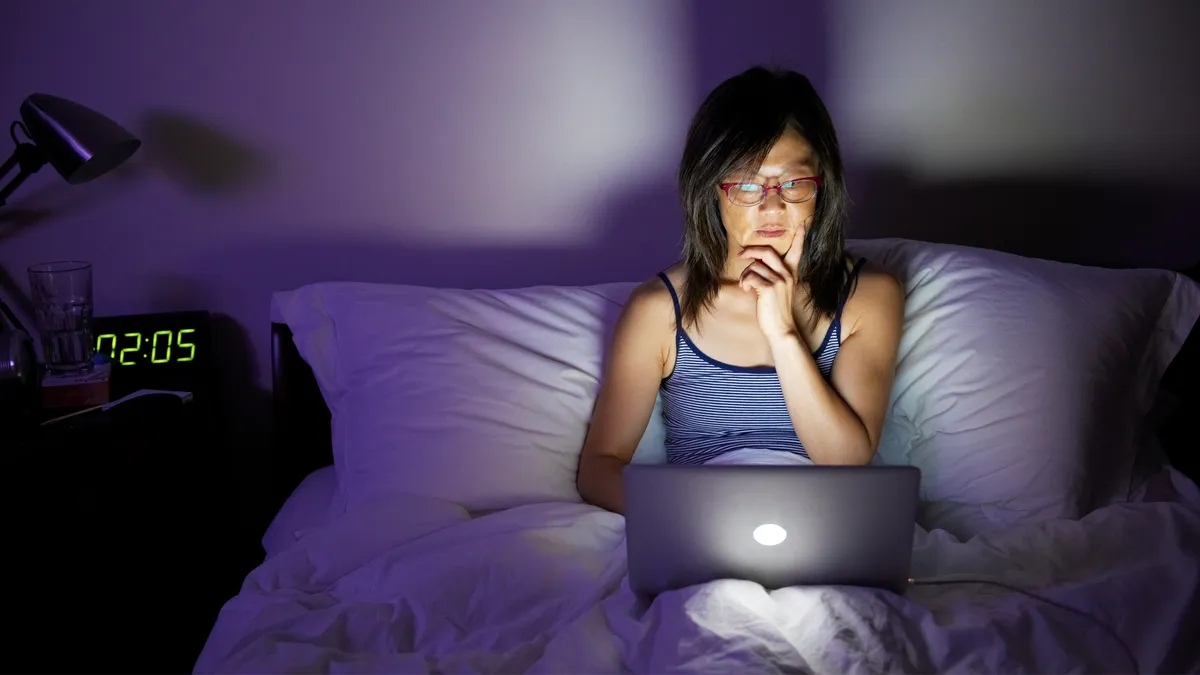
This is commonly referred to as the gender sleep gap, where women are less likely to get enough quality sleep than men. The gap is often attributed to women taking on more of the domestic work of the household as well as professional work, on top of the primary caregiving role.
The increased workload at home means women have less time to wind down before bed, resulting in fewer hours of sleep and often high stress levels disrupting the sleep they do get.
“If your stress levels are high or your brain doesn’t shut off at night, that adds to the delay. Many women I know are juggling so much mental load in the evening that their nervous systems just don’t get the 'power down' signal as easily,” explains Dr Mercola.
How long should it take to fall asleep?
Average sleep latency — the term used to describe how long it takes you to fall asleep — ranges between 10-20 minutes for a healthy adult. However, this depends on factors such as lifestyle, diet and age.
In general, if you frequently take under 20 minutes to fall asleep, it could indicate that you’re sleep deprived or overly tired. Over 20 minutes and there could be a reason for your wakefulness, be it a sleep disorder, hormones, diet or stress.
Tips to help you fall asleep fast
Create a wind down routine
"First, rethink your wind-down routine,” says Dr Mercola. “Set a consistent bedtime and dim your lights at least an hour before.”
“Your body follows cues—light tells your brain it’s still go-time, which spikes cortisol and delays melatonin,” he explains.
Melatonin is the hormone that makes you feel sleepy and is produced naturally in the evenings. Cortisol, on the other hand, is the hormone released in the mornings to wake you up — and it’s commonly associated with stress.
“Put your phone away, grab a book, and try a 4-7-8 breath before bed: inhale for four, hold for seven, exhale for eight. That shift to slow, rhythmic breathing calms your nervous system fast,” Dr Mercola advises.

Keep a consistent bedtime
When we feel sleepy and when we feel energized throughout the day is determined by our circadian rhythm (often referred to as our body clock).
For healthy sleep, we need this clock to be regulated and consistent. An easy way to do this is to fall asleep and wake up at the same time every day.
“Consistent sleep and wake routines help your brain switch gears,” explains Dr William Lu.
Consider your diet
Our diet can wreak havoc on our sleep if we don’t get it right. “If you skip carbs or drink coffee on an empty stomach, you might be jacking up your cortisol—a primary stress hormone—without realizing it,” Dr Mercola warns.
“Eat a balanced dinner with protein and healthy carbs, like white rice or root veggies. This will help stabilize blood sugar and brings cortisol down naturally.”
For those experiencing perimenopause or menopause, “natural progesterone can make a noticeable difference. It works like a cortisol brake pedal and can support deeper, more restorative sleep,” the doctor adds.

Speak with a health professional
Ultimately, if you’ve been struggling to fall asleep for a while and it’s impacting your day-to-day life, you should speak with a health professional.
They’ll be able to monitor your health and sleep to rule our underlying sleep disorders and conditions.
Dr Lu says this is specifically important if you are experiencing perimenopause or menopause, as “treating these conditions through your PCP or OBGYn can help improve sleep.”

Follow Tom's Guide on Google News and add us as a preferred source to get our up-to-date news, analysis, and reviews in your feeds.