Should you buy a new 2026 TV or save money on a 2025 model? Here's how to shop for a screen like an expert
As we speak, the biggest TV-makers in the game are shipping their latest (and in some cases greatest) models to retailers and customers all over the world. But if you take a scroll through the listings of major retailers, you’re bound to notice a mix of both new TVs and models released last year.
To make matters more complicated, the year-old sets are almost always cheaper than the models replacing them. In some cases, sets from two years ago linger long into the calendar year.
With so many options at varying price points, it’s easy to feel overwhelmed. Having been covering this industry for over a decade, I’m here to help.
Last-year’s TVs offer a similar experience for a much lower price
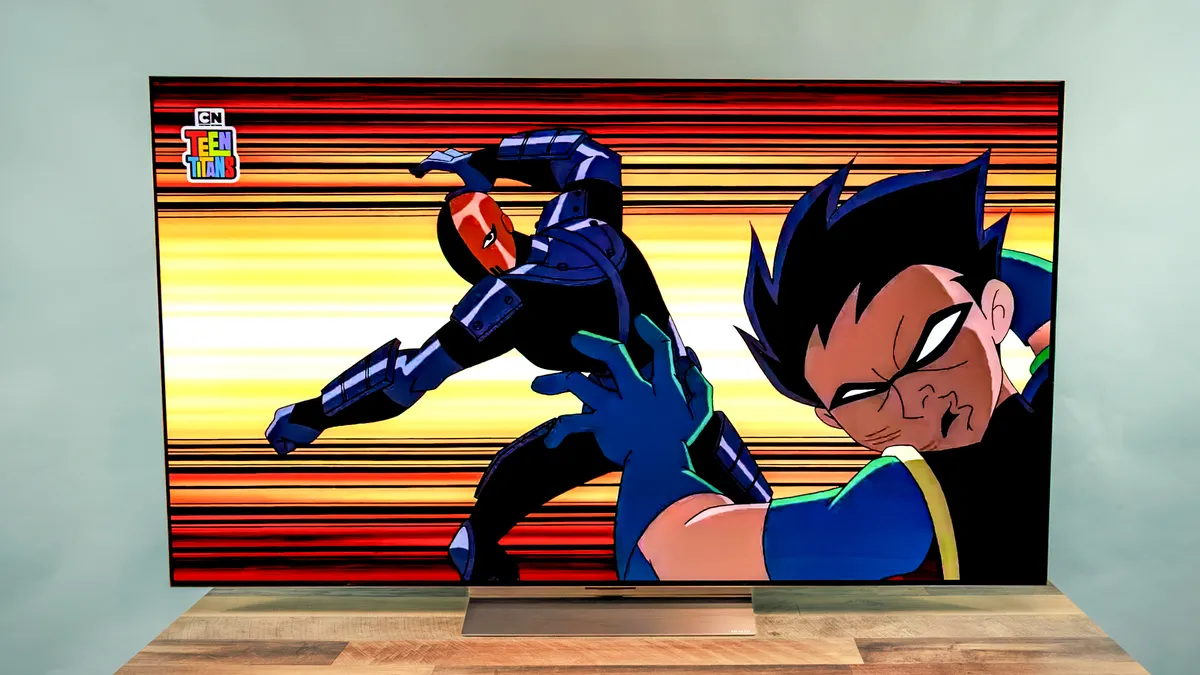
To keep things simple, let’s compare two TV series separated by a year: the LG C5 and C6 OLED.
Year after year, LG’s mid-range, C Series OLEDs are massively popular due to their excellent picture quality, ample features and lower price compared to higher-end OLEDs. The C6 made its debut about a month ago while the C5 has been on shelves for a year. Here’s how their performance stacks up.
| Header Cell - Column 0 | LG C6 (2026) |
LG C5 (2025) |
|---|---|---|
SDR Brightness (10%, in nits) |
355 |
335 |
Delta-E (lower is better) |
1.5 |
1.3 |
HDR Brightness (10%, in nits) |
1,355 |
1,165 |
UHDA-P3 Gamut Coverage |
99.77% |
99.45% |
Rec.2020 Gamut Coverage |
75.92% |
76.18% |
Input latency (milliseconds) |
9.1 |
9.1 |
These are very similar TVs. The C6 offers a slightly brighter picture (particularly as it relates to HDR highlights), but most folks would be hard pressed to notice the difference outside of a careful, side-by-side comparison.
You might be wondering about their features. These, too, are almost identical year over year. The C6 supports 4K gaming at up to 165Hz while the C5 tops out at 144Hz, but this spec is rather niche in that it only pertains to people who plan on plugging in a gaming PC.
In fact, the biggest difference between the 2025 C5 and the 2026 C6 is that the 77- and 83-inch variants of the latter are dubbed the C6H and come with an altogether different type of OLED display.
To the average person, they’re nearly the same TV.
However, let’s assume that you’re not in the market for a 77- or 83-inch screen. In this scenario, the C5 and C6 offer a mighty similar experience.
Now, LG wouldn’t necessarily agree with this; there are software-based nuances to account for, and the C6 offers some new features here and there that, if we’re being technical about it, differentiates the C6 from the C5.
But I’ve seen both of these TVs up close, and I’m here to tell you that, to the average person, they’re nearly the same. Having been on shelves for a year longer, the C5 is about half the price as the C6 at the 65-inch size point. (You can buy a 65-inch LG C5 for $1,399 at Amazon, but a 65-inch LG C6 is on sale for $2,699 at Best Buy.)
For these reasons, I’ve been practically shouting from the rooftops at people to buy the C5 over the C6.
This has been the nature of the industry for as long as I’ve been covering it — new TVs are released, last-year’s models assume the role of The Better Deal.
Sometimes a set will come along that represents a significant leap ahead of its predecessor, but even in these cases, the newer model is rarely worth the higher cost upon release.
How old is too old for a discounted TV?
The math starts to get fuzzier when looking at TVs from two years prior. You should approach these discounted models differently, as they’re already relatively deep into their software-update timeline.
Look at it this way: If you buy a 2025 TV, the first software update you install will almost certainly fix some performance-related problems that were present when it first hit the market. From there, it’s reasonable to expect several additional years of support, depending on the maker.
LG has promised five years of webOS updates for its smart TVs, so LG TV-owners will receive major software updates well into the TV's lifespan.
According to Samsung's website, in addition to basic bug fixes, most of its TVs will receive major updates for "about two years."
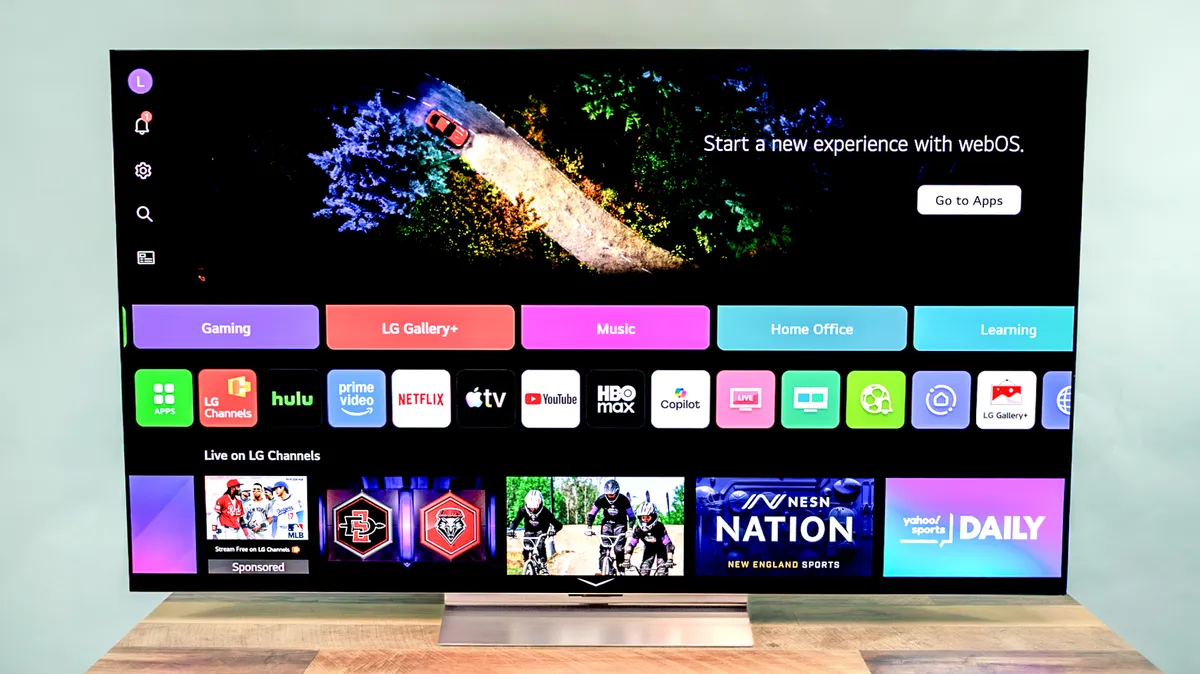
If you choose a 2024 TV, you're potentially costing yourself a couple years of additional software support. This might not be an issue if you foresee yourself replacing this model relatively soon, but if your goal is to wring as much time out of your next TV as you can, you're better off going for the 2025 set.
Besides, TV prices don’t drop forever. It’s harder to find new, unopened 2024 TVs than it is to find 2025 models, and in most cases, the money you’re saving isn’t as substantial. Released in 2024, the LG C4 was (and still is) a terrific TV, but at the time of publishing, the 65-inch LG C4 is $1,192 at Amazon and there are only four left in stock. Unless $200 in savings matters more to you than an extra year of software updates, I recommend the C5.
2026 TVs: outlook

Come next spring, the LG C6 will be a much more sensible choice than whatever mid-range OLED replaces it.
Time comes for all TVs, though; today’s full-priced set is tomorrow’s bargain. Come next spring, the LG C6 will be a much more sensible choice than whatever mid-range OLED replaces it. TVs that recently made their debut (like the C6) will be much cheaper during the holiday-shopping season later this year, and at that point, you might decide that the price gap between the C5 and C6 is narrow enough not to matter anymore.
Not all TVs can fit so squarely in this box, either. Ultra-affordable TV prices don’t shed several hundreds of dollars over the course of a year because they cost much less to begin with. (If you're looking for the best budget TVs, we've got you covered.)
2026 is also the inaugural year for RGB LEDs — an entirely new type of TV that was more or less inaccessible to the average consumer in 2025. If you’re intrigued by this technology, you’ll have to shell out for a Hisense UR9, a Samsung R95H or any number of RGB LED TVs launching throughout the year. Such is the way of being an early adopter.

Follow Tom's Guide on Google News and add us as a preferred source to get our up-to-date news, analysis, and reviews in your feeds. Subscribe to Tom's Guide on YouTube and follow us on TikTok.
More from Tom's Guide