Much has been said about silicon‑carbon as the future of smartphone battery technology over the past year, especially with its growing adoption by Chinese smartphone manufacturers like Honor, OnePlus, Oppo and Xiaomi.
Most of this chatter is centered around its absence from the latest flagship phones by major brands like Apple, Samsung and Google. Despite being some of the biggest smartphone makers in the world, they’re still using the same lithium-ion batteries that have been the norm since the original iPhone debuted in 2007.
Lithium-ion batteries have certainly served us well over the past two decades, but flagship battery capacities have hovered around 5,000mAh for years, and we’re simply not seeing meaningful gains anymore.
Silicon‑carbon phones, meanwhile, are breaking through that plateau. By swapping the traditional graphite anode for a silicon‑carbon composite, these batteries can pack far more lithium into the same space. The result is a density boost of around 20-40%.
Several recent models, like the OnePlus 15 and the Oppo Find X9 Pro, have sprinted past the 7,000mAh threshold without turning into brick-sized monsters, signaling a real shift in what’s achievable. And now that this next‑gen battery tech has finally started trickling into devices released here in Australia, I can properly test whether the hype matches reality.
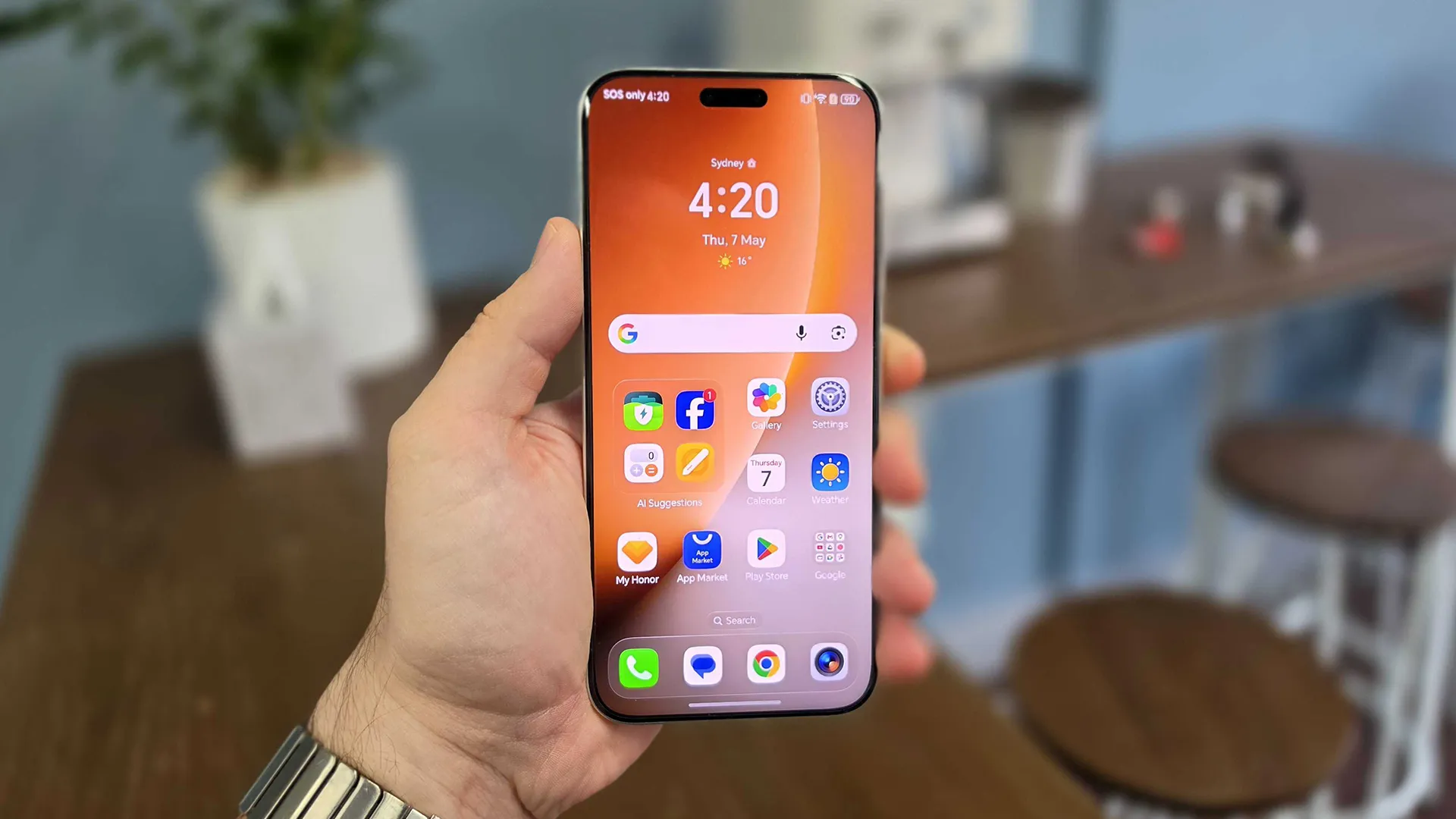
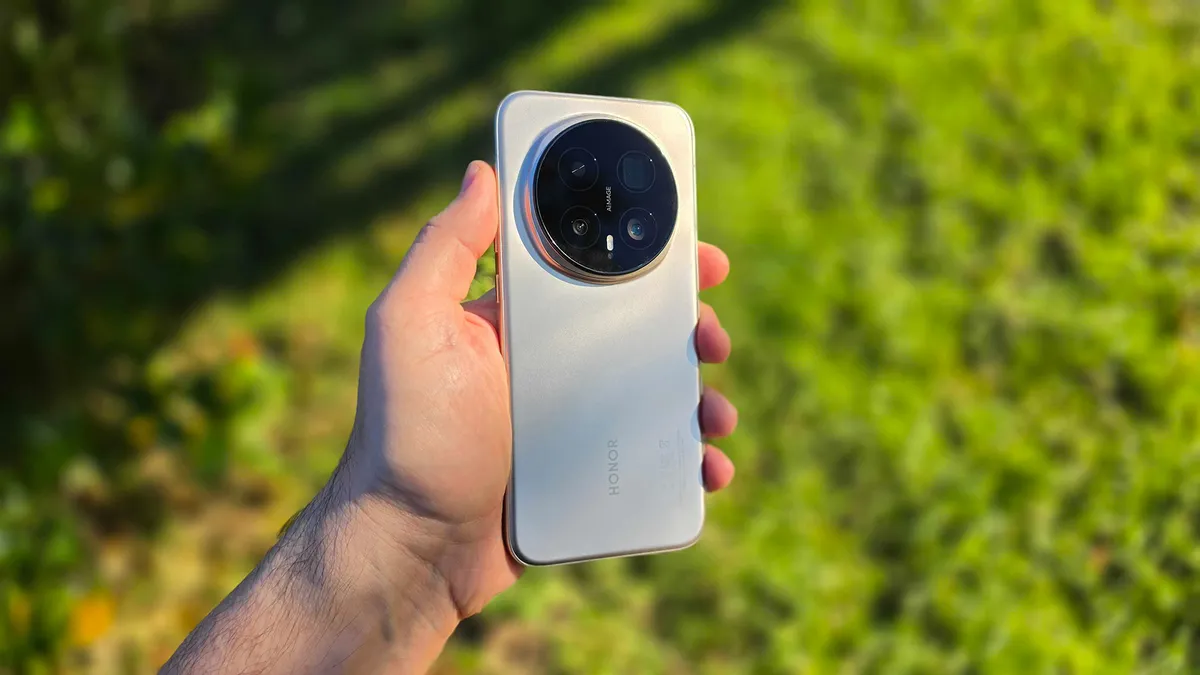
Which brings me to the Honor Magic8 Pro. The global/Australian model I tested is equipped with a colossal 7,100mAh silicon-carbon battery — the largest I've ever tested in a smartphone. Crucially, the European variant uses a smaller 6,270mAh battery, meaning its battery life performance will be significantly different from the model I've tested over the last two weeks.
It barely lost any power in standby
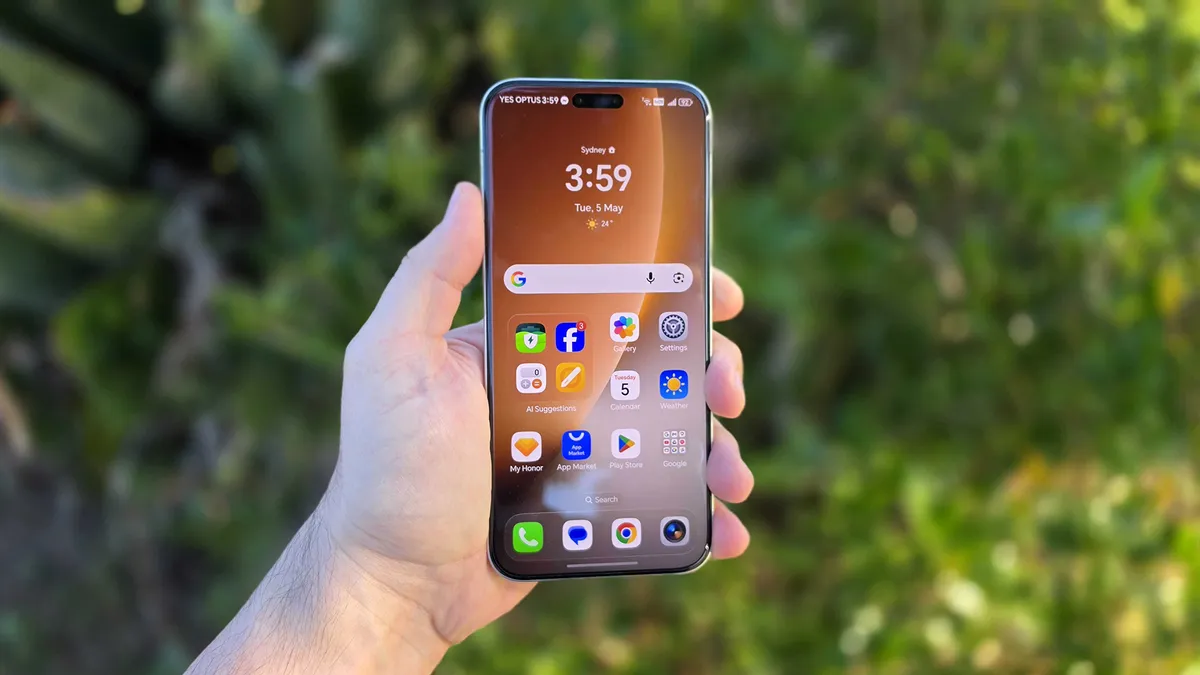
During my first week with the Honor Magic8 Pro, I was admittedly too busy to fully test it, so I didn’t insert my SIM card or use it as my main device.
However, I kept it turned on the whole time while connected to my Wi-Fi network, so it was still getting emails and notifications from social media and other apps.
After four days with light usage to test out camera functionality and check my social media, I was blown away to discover that the Magic8 Pro had only dropped down to 91% from a full charge.
Sure, this isn't how most people would use their phones, but it did illustrate to me that it would be more likely to go the distance than my usual primary device, the Galaxy S26 Ultra, which has dropped 4% in the last hour without being used at all.
First day as a primary device
Of course, the real test would come with an active cellular connection. It's no secret that connecting to a cellular network — particularly over 5G — makes a sizeable.
Much of that is due to polling, in which your phone will constantly test its connection to the nearest cellular tower or hunt for better signals when coverage is weak.
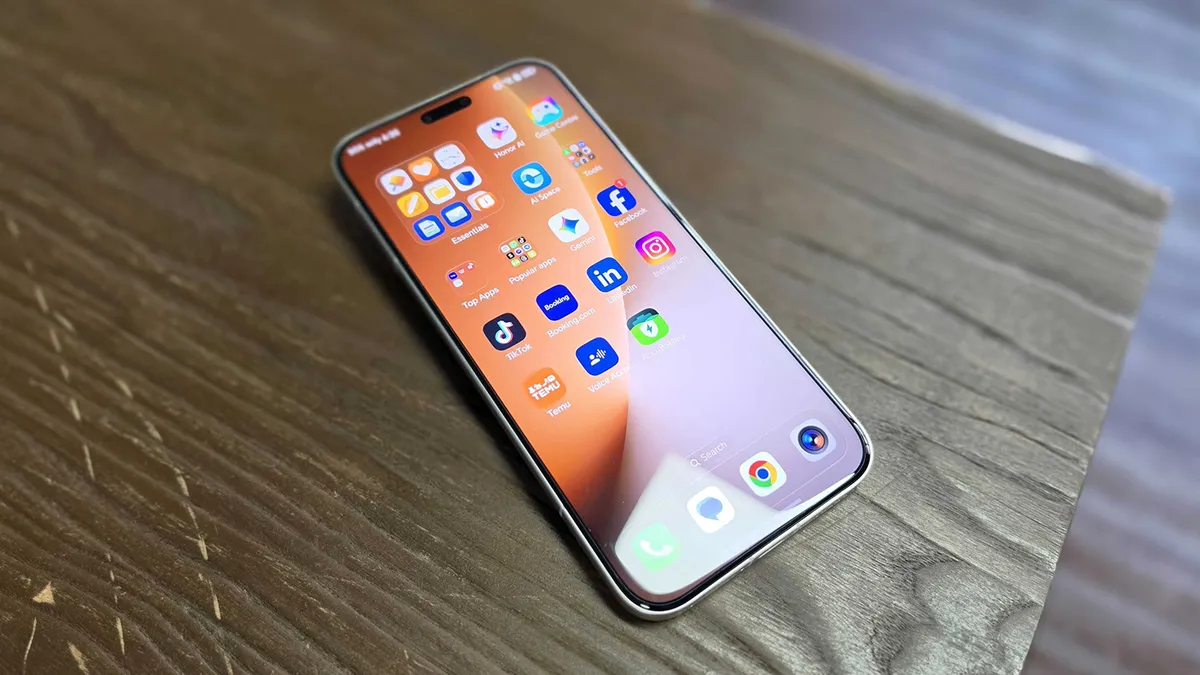
With my SIM card in and the phone as my main device, I was still impressed by the Magic8 Pro's battery life. After a full day of moderate use — mindlessly scrolling through socials, browsing the web, streaming on Spotify and watching YouTube videos — it had only dropped to 72% by the time I went to bed.
Better still, having opted against charging the phone overnight (something that I would never dream of doing with any of my previous phones), I woke up to find that the Magic8 Pro's battery had only dropped down to 71%.
Pushing it a little harder on day two
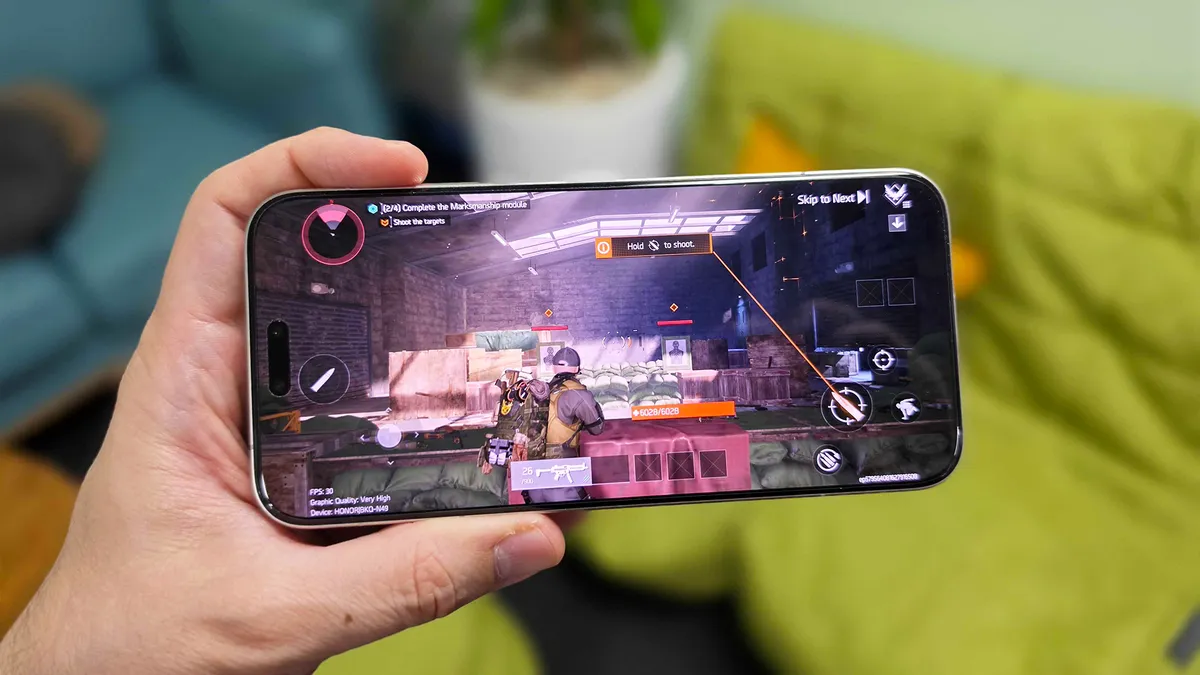
Having this much juice leftover gave me the confidence to take the Honor Magic8 Pro out for a second day on the same charge. This time, I decided to push it a bit by downloading and installing the online PvP and PvE shooter The Division Resurgence, along with several required resource packs over Wi-Fi. Even after all that, the battery didn’t drop a single percent. So far, so good.
Although I didn’t play long sessions, I estimate my total playtime was about 1 hour and 30 minutes throughout the day at 'Very High' graphics settings, playing exclusively over 4G and 5G connections. This, along with my usual phone usage, resulted in the Magic8 Pro's battery dropping to 28% by the end of the second day.
Needless to say, two-day battery life is a game-changer, but having enough battery to continue into a third day? That's next-level. As much as I appreciated that there was still some battery left, and that the phone could conceivably last well into a third day, I decided it was time to fully recharge the phone again.
Faster charging (theoretically)
If you’ve ever wondered why your iPhone or Galaxy handset doesn’t chase extreme charging speeds, it’s because pushing high wattage creates heat, and heat is the fastest way to wear down the graphite‑based lithium‑ion batteries these phones still rely on.
That’s far less of a problem with silicon‑carbon, which can accept far higher charging rates without the same level of stress on the battery. In the case of the Honor Magic8 Pro, that means wired charging speeds of up to 100W and wireless charging up to 80W.
Unfortunately, the Magic8 Pro does not include a charging brick in the box, and I don’t own an Honor SuperCharge adapter, so I wasn’t able to test its full 100W charging speeds. My 65W UGREEN charger also lacks Programmable Power Supply (PPS) support, so the phone fell back to standard USB‑PD rates, topping out at around 25W in my testing.
If fast charging is a priority, make sure you pick up a charger that supports Honor’s proprietary SuperCharge protocol — PPS alone won’t unlock the phone’s maximum speeds.
Benchmarking in real world conditions
For a realistic measure of the Honor Magic8 Pro’s battery longevity, I ran PCMark’s Work 3.0 battery life test, which continuously performs everyday tasks until the battery drops under 20%.
I left the display untouched, avoiding artificially low brightness or screen refresh rates. Under these conditions, the Magic8 Pro still achieved a strong screen-on time (SOT) of 15 hours and 36 minutes. In comparison, my Samsung Galaxy S26 Ultra lasted 11 hours and 43 minutes.
According to research by Reviews.org from 2021, the average Aussie logs about 5.5 hours of SOT per day. Taking that into consideration, the benchmark result translates to around 2.8 days of battery life in real-world usage, which seems fairly consistent with my own experience.
Sounds great — what's the catch?
Given how great silicon-carbon batteries seem to be, there are a number of reasons why the world's biggest smartphone manufacturers are yet to adopt the technology. For one, Chinese companies are leading the charge when it comes to silicon‑carbon battery production and deployment, making it difficult for non-Chinese brands to source in large quantities.
Swelling is also a characteristic of silicon-carbon batteries, and while that's completely accounted for during the manufacturing process of these batteries, it's understandably still a cause for concern.
Additionally, silicon-carbon cells degrade more quickly, potentially reducing a handset's battery capacity within the first few years. However, it’s worth remembering that their initial, much larger capacity means that even with this loss, they’ll likely still offer longer overall life than the lithium-ion batteries currently found in most phones.
Despite these drawbacks, major brands like Samsung and Apple are almost certainly tracking the progress of silicon-carbon technology closely. After all, the existence of phones like the Honor Magic8 Pro, which boasts a battery life exceeding two days on a single charge, must surely serve as a wake up call to the world's largest smartphone manufacturers.

Follow Tom's Guide on Google News and add us as a preferred source to get our up-to-date news, analysis, and reviews in your feeds.
More From Tom's Guide
- OnePlus 15 review: The flagship with 2-day battery life changes everything
- Pixel 11 battery capacity just leaked and it has me worried
- Samsung Galaxy S26 Ultra battery life tested