Tom's Guide Verdict
My husband and I slept on a queen size DreamCloud Luxe Memory Foam mattress – a full foam, luxury bed – for three weeks. As a side sleeper, I loved the way it relieved pressure at my shoulders and hips, but back sleepers should opt for the firmer hybrid option as support is lacking slightly in the lumbar area. While the foam can trap some heat, this mattress is excellent value for money — competing against luxury brands like Saatva and Tempur-Pedic, and providing a surface that contours to your body.
Pros
- +
Excellent at relieving pressure for side sleepers
- +
Can sleep right up to the edge of the mattress
- +
Contours around the body
Cons
- -
Feels hot to sleep on
- -
Not enough support for back sleeping
Why you can trust Tom's Guide Our writers and editors spend hours analyzing and reviewing products, services, and apps to help find what's best for you. Find out more about how we test, analyze, and rate.
Review in brief
After sleeping on the DreamCloud Luxe Memory Foam mattress for three weeks, I’m impressed. Because I look after our guide to the best luxury mattresses, I’ve tried some of the highest quality beds you can buy online.
So I was excited to see how the DreamCloud Luxe compares, considering it comes in at under $1,600 for a queen. Now, this isn’t a budget price by any means, but for a mattress made with high-density foams and packing technical cooling features like phase change material, I’d usually expect a higher price.
The DreamCloud Luxe comes in a full memory foam build and a hybrid option (which incorporates springs). The foam model I tried certainly delivers that slow-moving cradling feel associated with memory foam. I was actually surprised at how soft the bed felt initially, despite DreamCloud describing it as ‘medium firm’. The layers of foam sank quickly beneath me, molding to my body.
This means that for me, as a side sleeper, pressure points are now a thing of the past. Because the bed cradles your shoulders, hips and knees, you’re very unlikely to feel pressure build up in your joints.
However, slow-moving foams mean this bed isn’t very responsive. Sometimes, it can feel like you’re battling the mattress when you’re trying to change sleep position. I’ve previously tested hybrid latex mattresses, like the Birch Luxe, which have a much more responsive surface, and I do think that is my preference.

Name: Lauren Jeffries
Age bracket: 25-30
Weight bracket: 100-150lbs
Predominant sleep position: side sleeper
Sleep issues: none
I think this feeling makes the DreamCloud Luxe Memory Foam a contender for our guide to the best mattresses for side sleepers, but I wouldn’t necessarily recommend it for back sleepers. My husband and I both found that our hips sank too far into the bed to keep our spines aligned. This meant we could feel some strain in our backs, and this will be the same problem stomach sleepers face on the DreamCloud Luxe.
While some foams can trap heat because of their dense structure, DreamCloud combats this problem by incorporating phase change material into the Luxe Memory Foam mattress. This is a specialist cooling material which draws heat away from the body to help keep sleepers cool.
However, I still felt like this bed ran hot. While my sleep wasn’t disturbed by feeling too warm, I woke up feeling hot and stuffy compared with the hybrid and organic mattresses I’d been testing.
Overall, however, for the price of the bed, I was impressed. This mattress is comparable with the best mattresses we’ve tested so far in 2026, and rivals beds that sell for twice as much.
For example, competitors like the all-foam Saatva Contour 5, which is upwards of $2,600 for a queen, and Tempur-Pedic's Tempur Adapt, might offer slightly more support for back and stomach sleepers, but overall, the DreamCloud Luxe delivers a very similar feel for a much lower price.
Keep reading for my full review of the DreamCloud Luxe, where I assess the performance of the bed and who I think would benefit most from it.
Overall score: 3.4 out of 5


Price and trial
- Prices start from $1,199 for a twin, $1,599 for a queen
- 365-night sleep trial included
- Regular sales means you can often get a discounted bedding bundle
While DreamCloud states that the ‘total value’ of a queen DreamCloud Luxe Memory Foam mattress is $3,349, you won’t see it sold for more than $1,599 — putting it in the mid-range price bracket.
In DreamCloud’s mattress lineup, it sits above the budget DreamCloud Classic and the Premier, but below the most luxurious offering: The DreamCloud Ultra.
Here are the 'official' total values for the DreamCloud Luxe Memory Foam mattress, and how much you can expect to pay.
Twin: MSRP $1,632 (usually sold at $1,199)
Twin XL: MSRP $2,866 (usually sold at $1,299)
Full: MSRP $2,086 (usually sold at $1,499)
Queen: MSRP $3,349 (usually sold at $1,599)
King: MSRP $3,867 (usually sold at $1,799)
Cal king: MSRP $3,883 (usually sold at $1,799)
Split king: MSRP $3,924 (usually sold at $2,598)
While DreamCloud does offer regular discounts throughout the year, especially during major sales periods, the prices of the mattresses rarely change. Usually, DreamCloud mattress sales focus on a free or discounted bedding bundle to add to your purchase. However, we have seen prices of other DreamCloud models discounted by $100 before, so you never know.
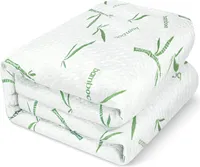
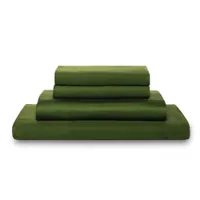
While currently the bedding bundle, which includes a mattress protector, sheet set and cooling pillow, is discounted from $449 to $129, this is very occasionally offered for free. (While difficult to predict, timing your purchase to fall in with a major holiday is your best bet).
In terms of the perks of buying a DreamCloud mattress, you can expect excellent benefits. This includes a 365-night trial to ensure the mattress is suited to your sleep style (if not, you can send it back for a full refund), a ‘forever warranty’ that covers the mattress for as long as you own it, plus free shipping and returns.
These are industry-leading benefits we’d expect from the most premium brands, and they make a mattress purchase from DreamCloud pretty risk-free.
Design
- A fully-foam mattress made up of five layers
- Including a Euro top made with a stitched-in layer of memory foam
- Zoned support with varying memory foam densities enhance lumbar support
At 14” tall, the DreamCloud Luxe Memory Foam mattress has a design built to relieve as much pressure as possible from areas of your body where it might usually build up.
This starts with a CloudQuilt+ Euro top, which is a layer of memory foam stitched on top of the mattress covered in a quilted fabric made from cooling fibers. This is designed to soften and contour around the body, and it's a feature often seen in the best pillow-top mattresses we've tested.
Next up is a layer of phase change material. This is a specialist cooling fabric that absorbs heat and dissipates it to help keep you cool.
Then the memory foam layers start, beginning with a contouring, therapeutic memory foam that’s designed to relieve tension in the body by molding to your shape and sleep position.


Next is a zoned layer, made up of three different memory foam densities. This helps to ensure that your lumbar area is adequately supported — an area that usually needs a slightly different firmness to stop the hips from sinking too much into the bed.
The mattress is then finished off with a foundational layer of memory foam that has reinforced edges, designed to absorb movement and stop it from traveling across the mattress (ideal for bed sharers) and increase stability around the perimeter of the bed (ideal if you like to sleep close to the edges or if you have mobility issues that make it harder to get in and out of bed).
Two handles are sewn onto each side of the mattress, making it easier to move, as this is a heavy bed — with a queen weighing 91lbs. Even with these handles, it’s still a difficult mattress to maneuver, but because it comes vacuum-packed and boxed, it's easy enough to set up.
Comfort and support
- The mattress had a medium feel that molded and supported my body
- I did feel heat building up and wake up sweaty
- The contouring foams helped me sleep comfortably in one position throughout the night
Immediately after lying on this mattress, I was comfortable. While I was quite surprised at how much I sank into the bed – my usual mattress is a firm latex bed with very little contouring – it felt like it perfectly molded to my body instantly when I was lying on my side. And this feeling remained throughout the night, meaning I stayed comfortable in one sleeping position and didn’t feel the need to toss and turn.
However, I love wriggling in my sleep. So when I did want to shift sleeping positions, I became frustrated with the slow-moving foam layers that seemed to suck me back into the bed, instead of responding to my movements.
It perfectly moulded to my body instantly when I was lying on my side
This could also be what contributed to me waking up hot and sweaty. My normal mattress is the Birch Luxe Hybrid mattress which is made with moisture-wicking, cooling materials.
In contrast, memory foam is a dense material that can trap heat, and I certainly felt that — despite the layer of phase change material designed to keep me cool. I think because I felt as if I was ‘inside’ the mattress instead of on top of it, there wasn’t much area for the heat to escape — instead it became trapped around my body.
When I moved onto my back, I wasn’t as comfortable. The medium firmness and the sinking feeling of the foams meant that it felt like my hips were sinking further into the mattress than other areas of my body. This resulted in my lower back feeling strained as my spine was misaligned.
And a similar thing happened when I switched onto my front — it was simply too soft to keep my body supported and aligned. When I placed a 56lb weight in the middle of the mattress where the hips would usually sit, it sank 4", which is quite a significant change.


While this does certainly come down to personal preference (I’m learning I naturally prefer a firmer bed), I wouldn’t recommend the DreamCloud Luxe Memory Foam for front sleepers as I think it’s likely to lead to strain on the spine. Instead, opting for one of the best mattresses for stomach sleepers, like the Siena Signature mattress, will offer firmer support.
The DreamCloud Luxe certainly excels for side sleeping. In this position, over the three weeks of tesing, I slept comfortably night after night with no ‘breaking in’ period needed. Pressure points like my shoulders and hips were cradled, and the foam contoured around them, meaning at no point did I feel tension or pressure building.
I also felt in this position that no part of my body sank in more than another, so my spine stayed aligned. I woke without aches and pains, feeling refreshed. My husband did mention that he found the mattress gave him a dead arm when sleeping on his side, however.
Importantly, when we conducted the pressure relief tests in our Sleep Lab, the DreamCloud Luxe did not perform well. After placing a 25kg weight on the mattress where a sleeper's hips would normally sit, we measured an average indentation of 5.4". That's a lot of sinkage and explains why we felt our hips dip too far into the mattress.
On top of this, it took a full 20 seconds for the mattress to recover to its full height after we removed the weight. That shows the lack of responsiveness from the foam, meaning it might not adapt to your sleeping positions overnight and therefore, not support you.
Overall score: 2.75 out of 5
Delivery and setup
Like the best mattresses in a box, the DreamCloud Luxe memory foam mattress comes compressed, rolled and packed in a box, where it's delivered direct to your doorstep. We had this mattress delivered straight to our sleep studio, where a team of two mattress testers unboxed it.
First, they placed the box on the bed frame (it's heavy, so you'll need two people). Next, they carefully cut the mattress out of the plastic wrapping, carefully avoiding cutting the cover with the scissors (DreamCloud usually include a handy cutting tool that helps with this).


Once out of the plastic wrap, the DreamCloud Luxe was able to inflate. It's usual for mattresses that have been compressed in a box to emit a mild chemical smell — this is called off gassing, and it's the release of volatile organic compounds (VOCs) into the air. There was a mild chemical smell when unboxing the Luxe, but only when you got very close to it. It has dissipated within a few hours.
DreamCloud say to allow their mattresses up to 72 fully expand, but explain that they're ready to sleep on within a couple of hours. That mirrors out experience — the Luxe looked ready to sleep on within two hours of unboxing it. It was easy to do, but we've compiled a handy guide on how to unbox your mattress if you'd like more of a steer.
Performance
- The DreamCloud Memory Foam Luxe stops almost all movement from traveling across the bed, making it a great choice for couples
- Despite cooling technology, I found the dense foam layers did trap some heat compared to the organic mattress I was sleeping on
- I could sleep right up to the edge of the mattress because it remained supportive around the perimeter
In our Sleep Lab, we assessed the performance of the DreamCloud Memory Foam Luxe by measuring three main elements: motion isolation, temperature control and edge support.
Motion isolation refers to how well a mattress absorbs movement and stops it from traveling across the bed. A bed with poor motion isolation will likely feel quite bouncy, especially when you’re sharing it, so it’s an important indication of how well a mattress will suit couples.
We measure temperature control to find out how a mattress dissipates body heat, rather than trapping it. Rising temperatures are a key cause of waking up at night, so a bed that keeps you cool is important for quality sleep.
And finally, edge support refers to how well a mattress’s support continues right around the edges of the mattress. It’s an important consideration for elderly people who find getting in and out of bed tricky, as well as couples who want as much sleeping space as possible and solo sleepers who like to sleep up to the edge of a mattress.
Motion isolation
To test the DreamCloud’s motion isolation, I placed a wine glass on one side of the mattress where a person’s hips would usually be. On the other side of the mattress, I dropped a 10lb weight from a 12” height to simulate somebody getting into bed.
When the weight hit the bed, the wine glass only wobbled slightly and stayed standing. This shows just how well the mattress absorbs movement, stopping it from traveling to another area of the bed.
Alongside this, we measured motion isolation in our Sleep Lab by dropping a slam ball on the mattress (to recreate the feeling of a partner getting in and out of bed) and recording the impact by using an accelerometer, and the time it took for the movement to stop after dropping the weight.
The average impact was recorded at 9.9 m/s2, and it generally took around 2.3 seconds for the movement to stop (this is called the decay rate). For context, the DreamCloud Classic (a budget hybrid bed from the same brands) had a decay rate of 3.22 seconds, so the luxe is certainly better at stopping movement from traveling. Another top memory foam mattress, the Siena Signature, stopped all movement in 1.77 seconds - so the Luxe isn't the best we've tested in this regard.

My husband and I also performed low, medium and high intensity movements while the other was lying down on the mattress to determine how much motion can be felt.
For all levels of movement, my husband couldn’t feel a thing. We were astonished at how well the DreamCloud Luxe was performing and decided to test it even further. While he lay on his back with his eyes closed, I bounced in and out of bed on the other side of the mattress. Still, he said he barely felt the bed move.
Out of all of the mattresses I’ve tested, the DreamCloud Luxe has the best motion isolation, alongside another mid-range foam bed: The Nectar Luxe mattress. For couples (especially light sleepers) this will help you sleep through the night. My husband and I have very different sleep schedules, and I wasn’t even woken up when he was coming to bed after me.
Overall score: 3.44 out of 5
Temperature control
To test temperature control, as well as monitoring how I felt over the three-week testing period, I lay on the mattress in each position for 5 minutes and felt the change in temperature on the surface of the mattress.
During these tests, I didn’t see any noticeable buildup of temperature. However, as the testing continued, I found that in the morning, I felt much warmer and sweatier than usual. While I didn’t wake up at night because of heat becoming trapped, I generally slept warmer than normal on the DreamCloud Memory Foam Luxe.

My mattress before the DreamCloud was made from latex, wool and cotton, which are specialist natural materials that wick away moisture and help improve airflow. For this reason, I think I’ve become used to a very cool bed, so switching to memory foam inevitably felt warmer.
We put the DreamCloud's temperature control to the test in our Sleep Lab by using a thermal imaging camera and measuring how much heat was absorbed by the mattress over 15 minutes while somebody was lying on it.
The maximum temperature increase was 8.3°F. This isn't particularly impressive, but it aligns with other top foam mattresses we've tested, like the Nectar Premier, which absorbed 8.1°F. This means the DreamCloud Luxe does stand up against its competitors.
It's also worth noting that within one minute of someone leaving the mattress, the temperature dropped by a huge 4°F, meaning the bed dissipates its heat quickly, too, rather than holding on to it. In fact, it had one of the best cooling rates in those five minutes of any mattress we've tested.
This is a good result, and I think unless you experience night sweats or hot flushes, this mattress doesn't trap enough heat to be an issue. But if you do naturally sleep hot, I’d recommend choosing one of this year’s best organic mattresses instead.
Overall score: 3.58 out of 5
Edge support
To test edge support, I placed a 56lb weight three inches away from the edge of the bed and 32” down from the head of the bed. This is where the ‘heaviest’ part of our bodies would naturally sit if you were lying on the bed.
I then measured in inches how much this weight sank straight away, and then remeasured after five minutes. I then compared this to the middle of the bed to see whether there was a difference in support.
Immediately, at the edge of the bed, the weight sank five inches, which is one inch more than the middle of the bed (which sank by four inches). This isn’t a significant difference and shows that the DreamCloud’s support does extend to the perimeters. After five minutes, it had sunk another inch, meaning the weight had a six-inch impression.


The foot of the bed was slightly less stable, with 5.5” sinkage immediately and 6.5” after five minutes. While this might sound like a lot of give, the whole mattress has a medium feel, which means it's supposed to be a softer surface that compresses and molds to weight. A firmer bed will always feel more supportive around the edges.
When we performed the same test in the Sleep Lab, we also measured how long it took for the mattress to return to its full height after the weight was removed. We noted an indentation from the weight that lasted a full five minutes, which reflects the lack of responsiveness I felt from the mattress. From this, we'd advise that you rotate your mattress regularly to avoid body impressions forming over time.
I like to sleep right up to the edge of the mattress, and over the three-week period, I could do that comfortably while still feeling supported. I also found that getting ready and sitting on the edge of the bed was super easy. It always felt stable, and this will be down to the reinforced foam edges.
Our 'roll off' test in the Sleep Lab reflected this, too. One of the Tom's Guide testing team lay on the mattress and slowly moved towards the edge of the bed, noting when they found it too unstable to lie on. From our results, we determined that there is 59.5" of effective sleeping space. Considering the width of the mattress is 60", that indicates pretty impressive edge support.
Inevitably, the edges didn’t feel as stable as some of the best hybrid mattresses that have reinforced steel perimeters. But for most people, the DreamCloud Memory Foam Luxe will offer more than enough support around the outside of the mattress.
Overall score: 3.68 out of 5
Customer reviews
- Customers have experienced a positive change in back and muscle pain after sleeping on the DreamCloud Memory Foam Luxe
- Customers like the softer feel in comparison with the firmer hybrid option
- Lower-rated reviews say that there isn’t enough support, and customers have found themselves sinking too far into the bed
Customer reviews on the DreamCloud website are collated from all different types of mattresses, which makes it difficult to determine which reviews are discussing the DreamCloud Luxe Memory Foam mattress.
But from searching through the reviews, it’s clear that there is a lot of praise for the DreamCloud Luxe Memory Foam’s ability to relieve back pain and muscle aches. This is likely because of the excellent pressure relief that alleviates tension in the joints.
Customers have also praised the soft, cradling feel in comparison to the firmer hybrid option, as well as feeling that it’s excellent value for money — coming in at under $2,000 for a queen.
The very few 1-3 star reviews complain that there isn’t enough support and that they sink too far into the bed. This is most likely referring to the mattress’s firmness, and as always, this is subjective. Some customers found it too firm, while others found it too soft.
Should you buy it?
Who should buy it and why?
✅ Side sleepers who like being cradled: The excellent pressure relief will benefit side sleepers most, contouring around pressure points like the shoulders, hips and knees. This will help side sleepers remain comfortable night long, rather than having to switch positions throughout the night.
✅ Couples and light sleepers: Couples will love how much movement is absorbed by the DreamCloud Luxe Memory Foam. The motion isolation makes it very easy to sleep next to a partner, even for light sleepers or those who have different sleep schedules.
Who shouldn't buy it and why?
❌ Hot sleepers: The layer of cooling tech isn’t enough to stop this mattress from trapping heat, so hot sleepers will likely feel too warm on the DreamCloud Luxe Memory Foam. Consider opting for the Siena Memory Foam mattress, which aced our temperature control assessment, if you're looking for a foam bed that stays cool.
❌ Back and stomach sleepers: The mattress sank too far at the hips to keep the spine aligned when in the back sleeping position. Instead, a slightly firmer bed like the Helix Dawn mattress will keep you elevated and supported throughout the night, whether you sleep on your back or your front.
Is it worth it?
I think the DreamCloud Luxe Memory Foam mattress is good value for money. At under $2K for a queen, you get a luxurious-feeling mattress made with genuinely high-quality materials like phase change material and high-density memory foam.
Features like zoned lumbar support are usually found in mattresses costing upwards of $2,000, so it’s impressive that DreamCloud has kept the price down for the Luxe. The perks DreamCloud offers rival even the most premium bed brands out there, such as Saatva and Tempur Pedic — something you don't often see at this price point.
Personally, however, I found the DreamCloud Classic mattress – the brand's entry-level bed – more comfortable. It could be that I naturally prefer a hybrid, responsive feel compared to slow-moving foams, but for that reason, I wouldn’t necessarily pay $1,000 more for the Luxe.
Value for money score: 3.65 out of 5

Pairs well with…