Cleaning up after a meal is one of those household chores that many of us loathe, especially when we’re doing it daily. Dishwashers can make the process much simpler, replacing all that handwashing with a hands-off cleaning solution… but even that can feel like a minefield sometimes. Everyone has their own method for loading the dishwasher, whether it’s how to stack the plates or how to balance glassware — I’m sure a lot of people have had a disagreement over the right way to do it!
While I can’t provide a single source of truth for correct dishwasher loading, I can offer some expert perspectives on one aspect of the protocol: silverware.
Store it handle up or handle down? People will argue over this until the end of time. But I have the answer – and it might surprise you.
Cleaning Efficiency: The Silverware “Handle Down” Side

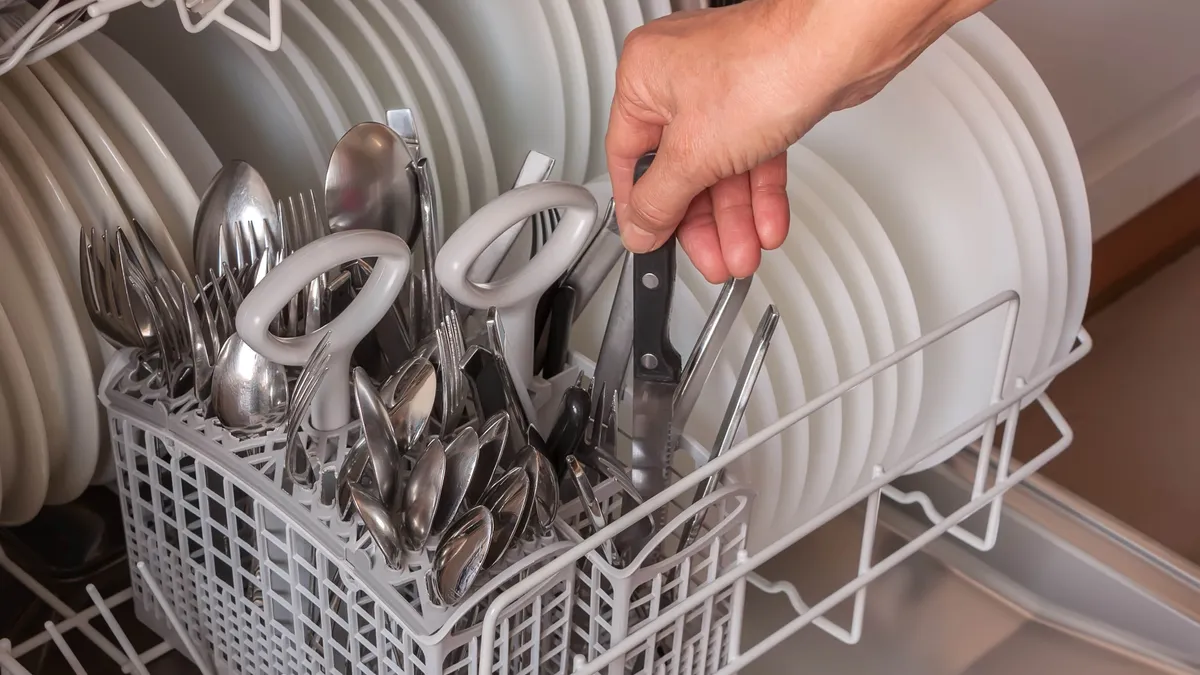
For Isabella Flores, a cleaning specialist and professional organizer at Sparkly Maid San Diego, the most effective cleaning will always come from placing silverware with the handle facing downwards into the cutlery basket.
“When you place utensils with the eating surface facing up and the handles facing down, the spray arms and detergent will hit the working ends of the utensils best, where the majority of the food particles and sauce are left behind,” she said.
By targeting the heaviest food stains with the strongest spray of cleaning solution, you increase the likelihood that the stains will be removed. For water and detergent to penetrate the inside of the cutlery holder, it often has to drip down from the other end or travel through gaps in the container itself. This is inefficient at best, leading to unwanted food residue even after a full cleaning cycle.
When you place utensils with the eating surface facing up and the handles facing down, the spray arms and detergent will hit the working ends of the utensils best
Isabella Flores, cleaning specialist at Sparkly Maid San Diego
Alicia Sokolowski, president and co-CEO of AspenClean, agrees that there are cleaning benefits to placing cutlery upright in the dishwasher basket: “From a drying perspective, positioning utensils with the handle ends down improves water drainage and prevents water from pooling in the bowls of spoons or between nested forks, which can leave residue or spots.”
So far, that’s one clearly favored method. But cleaning efficacy isn’t the only thing to keep in mind.
Safety First: The Silverware “Handle Up” Side

Sokolowski was quick to point out the benefits of the alternative method, namely storing silverware with the handle facing upwards. The main reason is clear: safety.
“Placing silverware with the handles facing up reduces the risk of hand injuries when loading and unloading the dishwasher, as it keeps sharp or pointed ends away from your fingers,” she explained.
Placing silverware with the handles facing up reduces the risk of hand injuries
Alicia Sokolowski, president and co-CEO of AspenClean
This is quite intuitive; no one wants to reach into the dishwasher and be caught by the sharp end of a knife. Flores agreed with this point, arguing that safety should always come first and suggesting that knives specifically should be stored downwards, while other cutlery is stored upwards.
Yes, fork tines can cause damage if the unloader isn’t paying attention, but the safety risk is much lower than with knives. What you lose in cleaning efficiency is balanced by improved safety.
Be a Maverick: The Silverware “Lay Flat” Side

So storing handleside-up is better for safety, while handleside-down is better for cleaning. A compromise of storing knives blade-down and other utensils eating side-up seems to be the most fair and efficient route — but wait.
Both Flores and Sokolowski argue that utensil orientation isn’t actually the biggest barrier to effective dishwasher cleaning. Instead, it’s about proximity to other utensils.
“Cleaning silverware is more effective when some pieces face up, and others face down, as this prevents utensils from nesting together”
Alicia Sokolowski, president and co-CEO of AspenClean
“Cleaning silverware is more effective when some pieces face up, and others face down, as this prevents utensils from nesting together,” suggested Sokolowski. “When silverware nests (such as spoons stacking or forks interlocking), water jets and detergent cannot reach all surfaces, leaving food particles and residue behind.”
Flores recognizes nesting as a problem but sees the broader issue of overcrowding as being the biggest deterrent to cleaning. When too many utensils are crammed together in a cutlery basket, it restricts the flow of the water and makes it harder for every surface to be cleaned properly. Crowding also increases the chance that you will accidentally hurt yourself on a sharp surface, since it’s harder to see each individual edge.
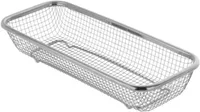
The ideal situation is therefore either to clean fewer utensils at a time, with some stored upwards and some downwards — or to utilize a flat tray and place silverware in an even, horizontal layer.
“A cutlery tray allows silverware to lie flat, keeping utensils separated so that water and detergent can reach all surfaces,” said Sokolowski. “This setup prevents nesting, ensuring more thorough cleaning and faster drying, as well as further minimizing the risk of injury when handling the utensils.
The final verdict
Many modern dishwashers now have the cleaning capabilities to combat any orientation of cutlery; you’ll see the biggest difference if you have an old model, or an overly crowded machine. Still, if you really want to know the best way: It’s not up or down. It’s horizontal.

Follow Tom's Guide on Google News and add us as a preferred source to get our up-to-date news, analysis, and reviews in your feeds.
More from Tom's Guide