




If you're like me, and believe the best coffee is well-filtered and ready in under a minute, then looking for the best AeroPress is a smart course of action.
The only problem is that the AeroPress line-up has exploded in size in recent years, making choosing the right one a little difficult. But I, along with TG's coffee experts, can direct you to the version that will suit your needs best, whether that's the luxurious AeroPress Premium , the compact AeroPress Go, the two-cup AeroPress XL or the good old AeroPress Original.
Focusing on what materials, capacity and looks you would like your AeroPress to have will help narrow things down. But ultimately, all of these brewers make coffee in the same way and to the same high quality (assuming you use it correctly), so you can't go too wrong with any of them.
Here's our list of the best AeroPress models you can currently buy, and thorough explanations of what makes each brewer uniquely suited to certain types of coffee lovers.
The best AeroPress for most people

While it's seen a few revisions since it first came on the market, the AeroPress Original is still the brewer where it all began.
Even though this isn't AeroPress' travel-focused model, the Original is still a great option for making coffee away from home. I keep one in my work bag at all times, meaning a brew is as close as the nearest sources of hot water and coffee grounds, all without the stress of a glass or ceramic coffee maker's fragility.
The AeroPress Original, AeroPress Clear and AeroPress Clear Colors are all functionally identical. The Original is cheaper, but comes only in the default grey color. The Clear and Clear Colors variants are transparent/translucent for a more unique and playful look, but do cost a little extra.
A wide variety of AeroPress-branded and third-party accessories are offered for the standard sized brewer. If you want an espresso or french press-style metal filter, a pressurised filter cap, an organizer stand or a hand grinder that fits perfectly inside the plunger for easy transport, those are all available to take your AeroPress game up a notch.
Read our full AeroPress Clear review
Best premium AeroPress
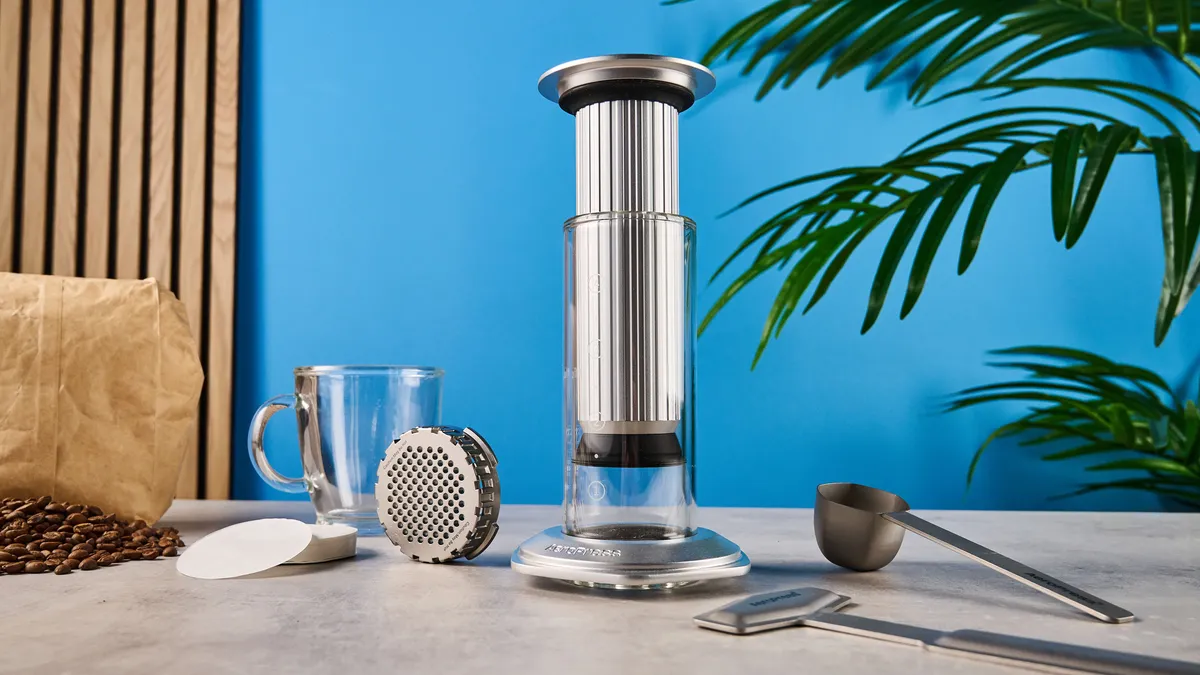
By switching out the usual plastic build for glass and metal, the AeroPress Premium feels like just as much of a statement on your kitchen counter as a full-blown espresso machine.
The AeroPress Premium comes with metal tools, but otherwise uses the same paper Micro-Filters and brewing technique as the company's other brewers.
So it's definitely more luxurious, but is the AeroPress Premium's coffee any tastier? Perhaps, according to TG's coffee guru Erin. But three times as tasty as the standard AeroPress Original/Clear
Read our full AeroPress Premium review
Best for multiple brews

After decades of asking, AeroPress fans who wanted to make two full cups of coffee with one press now have the AeroPress XL (and the XL Clear if you prefer a transparent brewer) to answer their demands.
It operates just like any other AeroPress, just with double the capacity. There's an included carafe for you to press into so you don't have to switch cups mid-brew, a thoughtful addition that should save on spillages.
As it's a different size to regular AeroPress, the XL requires a larger Micro-Filter, and won't work with many of the accessories produced for the other AeroPress models. Not a problem if you like your coffee made the traditional way, but a possible hitch if you want something more elaborate like a cold brew or espresso-style drink.
Best for travel

The AeroPress Go and Go Plus aim to be the most portable version of the AeroPress brewer, by both shrinking down the basic formula and by adding more to it.
The coffee-making part of the AeroPress Go is a smaller version of the standard model - you'll only get one small cup per press. But this press fits within that cup, into which you can brew your coffee. It also comes with a lid and a Micro-Filter holder to give you an all-in-one experience wherever you go
The Plus version goes another step further, combining the filter holder and cup together into a new insulated tumbler, complete with a magnetic lid, so you can enjoy your coffee hot and on the move more easily. However, in testing we found the mug isn't as leak-proof as you'd hope, plus it's not great at keeping your drink hot over long periods of time.
Read our AeroPress Go hands-on
How to choose your AeroPress

For most people, the AeroPress Original is the right first buy: it’s affordable, durable, and delivers that signature smooth cup. If you want a tidy travel setup, the AeroPress Go is brilliant, or upgrade to the Go Plus for a more polished kit.
Brewing for two? The Original XL (or Clear XL, should you prefer the look) saves time with a larger press. And if you’re splurging on design and longevity, the AeroPress Premium’s glass-and-metal build is the standout — just know you’re paying for materials and aesthetics rather than a different cup of coffee
Here are the key elements to consider if you're struggling to decide:
- Capacity: The Original or Go is perfect for one small to medium-sized cup. If you brew for two or prefer large mugs, opt for XL to avoid double pressing.
- Portability: Choose the Go or Go Plus if you’ll be travelling or brewing at work. The integrated mug-and-case setup is hard to beat in terms of convenience.
- Materials and aesthetics: If you want a countertop keeper with premium materials, the Premium is the only option; the Clear & Colours lines keep the familiar workflow intact if you just want a fresh look.
- Budget: All AeroPress models make the same signature style of coffee quickly — a clean, sweet cup with minimal bitterness thanks to the brand’s hybrid pressure-and-immersion approach. Spend more for capacity, portability, or nicer materials, not for a different taste profile.
How we test AeroPresses
We test AeroPresses the same way that we test all manual brewers that enter the TG labs. That is to say, thoroughly.
As you'd expect, we make multiple coffees using different recipes and styles of brewing. We use the same medium-roasted beans from Ethiopia in all reviews for consistency, but we will use other coffees as well to get a full picture of the brewer's characteristics.
We take the brewers around with us as well to try brewing in different places. That's especially important in this case since one of the main benefits of the AeroPress, especially the Go models, is how portable they are.
As well as the physical tests, we consider the specs, price point and even the look and feel of the brewer's components, both alone and compared to rival products to come to our ultimate conclusion.
FAQ
Are all AeroPresses the same?
Every AeroPress uses the same fast, hybrid brew method that blends immersion (mixing water and coffee grounds then filtering the result) and percolation (pouring water through a bed of coffee). The result is a low‑bitterness coffee with a smooth texture, since the paper micro-filter stops the oils and tiny pieces of coffee that make your brew "thicker" from entering your cup.
What changes instead is the gear surrounding the basic AeroPress structure. For one, the capacity varies: the standard models are perfect for single servings, while the XL versions allow for back-to-back presses if you prefer large mugs or brew for two.
Portability differs as well — the AeroPress Go and Go Plus are designed to fit inside their included cup/tumbler for an all-in-one experience out of the box. While all other AeroPresses can easily be thrown in a bag, they take up more space, and would benefit from a pouch or carrying case to keep all the components securely together.
Materials and aesthetics also separate them: The Clear & Colours editions give you a see‑through, modern look, while the Premium opts for a stylish glass‑and‑metal build.
What are the disadvantages of AeroPress?
AeroPress is brilliant for fast, clean coffee, but it’s by no means the right coffee brewer for everyone or every purpose.
The biggest limitation is that most models are single-serve brewer, so if you regularly make coffee for multiple people, you’ll need to repeat the process. Even the XL models are only designed to make two full cups at a time.
It’s also worth noting that this is a manual brewer. While it's easy to make coffee with an AeroPress, it isn't automatic like a Keurig or automated pour-over machine, which is perhaps still too much effort for your liking.
Then there's the style of coffee the AeroPress makes. If you like the rich flavor and texture of an espresso-based drink or a French press brew, you won't get that by default. You can buy metal filters for the AeroPress to get some of the same effect, but it's not a default option, and you'll need to modify your recipe to account for the lack of paper.
What is the lifespan of an AeroPress?
With regular use and basic care, an AeroPress should last for years. AeroPress itself pegs two to three years as a typical service life, which is a sensible baseline for daily brewers.
In practice, many owners see far longer — well over a decade isn’t unusual when you clean it gently and avoid rough handling. There are also plenty of “vintage” units still pressing happily, according to community reports. Remember, the consumables are separate: paper filters are designed to be replaced as you go, but even these can last two or more brews if you rinse them carefully between uses.
Realistically, the first thing to show age is the plunger seal; pushing out your used coffee as soon as you're done brewing, and keeping the seal clean helps significantly extend the brewer’s lifespan. Treat it well and you’ll likely upgrade for capacity or aesthetics before the AeroPress itself gives out.
Is the plastic in AeroPress bad for you?
AeroPress states that all materials that come into contact with your coffee are FDA and EU food-contact approved and free of BPA and phthalates. The standard models are primarily made from polypropylene, a food-grade plastic widely used for hot beverages and kitchenware. The Clear and Clear Color models use Tritan, another BPA-free plastic, instead.
If you’d still rather skip plastic entirely, AeroPress now offers the Premium model, which replaces the main body with glass and metal, while producing the same clean, fast cup the brand is known for.
Bottom line: The classic AeroPress uses certified, food-safe plastics; the Premium offers a glass-and-metal alternative if that better suits your comfort level.

