




Apple has been delivering some of the best laptops for years, with its MacBook Pro continuing to be the go-to machine for power users. Aside from annual processor upgrades, though, we haven't seen many changes to its usual formula. But that could all change with the upcoming MacBook Pro M6.
As early as 2026, Apple is expected to launch a completely revamped M6 MacBook Pro with an OLED touchscreen, a hole-punch camera with no notch and a lighter, slimmer form factor. But that's not all, as the Cupertino tech giant is also tipped to introduce its first 2-nanometer process for even higher performance.
This would be the first time in years since Apple revamped its MacBook Pro lineup, ever since the design overhaul of the M1 Pro and M1 Max models. That means the latest MacBook Pro M5, along with its anticipated M5 Pro and M5 Max configurations, will be the last to sport Apple's familiar design.
The major MacBook Pro upgrade (with OLED, finally) we've been waiting for is rumored to be coming, and there are plenty of changes to look forward to. It may be a while before we see it, but leaks and rumors have given us a good idea of what to expect. For the latest updates on all things MacBook Pro M6, read on.
MacBook Pro M6: Rumored price and release date
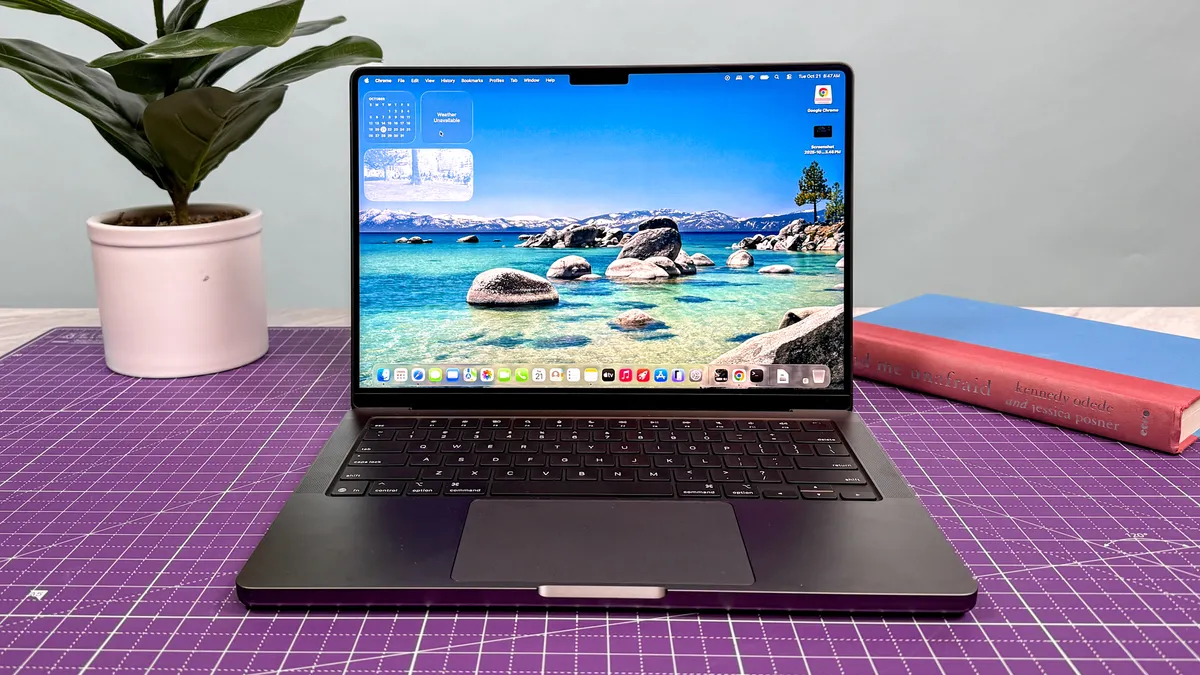
Seeing as Apple is consistent with its annual launch of products, the MacBook Pro M6 is largely expected to arrive as soon as 2026. However, according to the latest rumors, we may see an updated release schedule.
As per Bloomberg's Mark Gurman, a reliable source on all things Apple, claims the OLED MacBook Pro could arrive sometime between 2026 and early 2027. If accurate, this could be a sign that the Cupertino tech giant will follow a similar release as the MacBook Pro M5, launched in October 2025.
That said, we've still yet to see the M5 Pro and M5 Max models, which are tipped to arrive in early 2026 (along with an M5 MacBook Air soon after). If this is the case, then we may see a staggered release of the next-gen MacBook Pro models, with the base M6 launching in fall 2026 and the higher-end Pro and Max configurations releasing in early 2027.
But there's more to the story. As stated by Gurman, the base MacBook Pro M6 may skip out on the big OLED redesign, reserving the upgrades for the M6 Pro and M6 Max models. If true, it's now looking more likely that we'll see the base M6 model (with no redesign) first, with the upgraded OLED M6 Pro and Max configurations coming after, possibly in 2027.
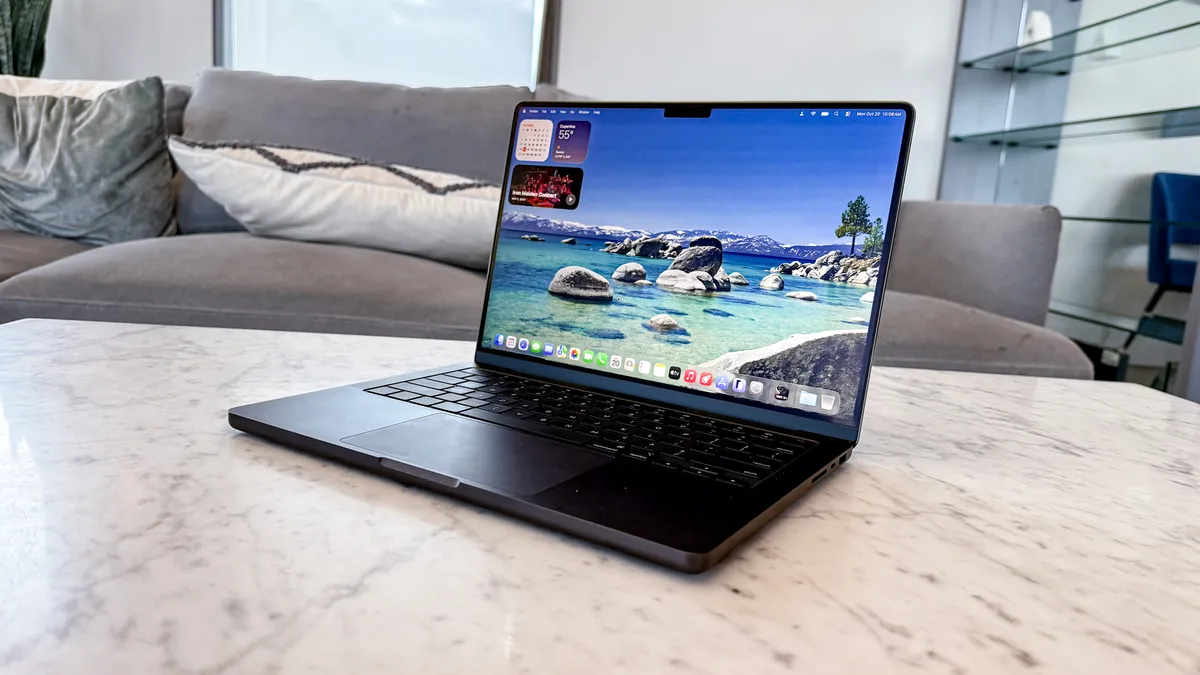
Right now, there's no telling what Apple has up its sleeves for its release schedule. Keep in mind, the MacBook Pro M3 family all launched at the same time in October 2023, including the M3, M3 Pro and M3 Max. So, we may see this happen with the M6-equipped MacBook Pro models, too.
As for pricing, this is expected to be a little trickier to speculate on. With the upgraded OLED display with touchscreen support, improved silicon with a 2nm process, an overhauled design sporting a slimmer chassis and redesigned hinge, not to mention the RAM crisis seeing price hikes, the MacBook Pro M6 may be pricier than usual.
Currently, the 14-inch MacBook Pro with M5 is priced from $1,599, while the 16-inch model (still sporting M4 Pro and M4 Max) starts at $1,999. With the additional upgrades, next year's anticipated model could be priced higher, although there's no telling by how much.
But you also have to take into consideration that the MacBook Pro with M6 may not get the anticipated upgrades. Instead of increasing the price of the most affordable MacBook Pro, Apple may be planning to make up the cost of the upgrades by offering them exclusively to the pricier Pro and Max models.
MacBook Pro M6: Design

Since 2021, the MacBook Pro has kept the same machined aluminum unibody design that we've been a fan of for years. It's portable, lightweight and simply elegant (especially in Space Black, but it still rocks Silver), and while the MacBook Pro M6 will likely carry on these design elements, there are a few exciting changes expected.
For one, as noted by Gurman, the OLED MacBook Pro will be even lighter and slimmer. The current M5-equipped MacBook Pro, as with its predecessors, comes in at 12.31 x 8.71 x 0.61 inches and weighs 3.4 pounds. So, for the next-gen model to be even more compact and lighter will be a welcome improvement.
Another interesting change? A notch-less display. Instead, we'll apparently see a hole-punch camera, giving slightly more screen space to the MacBook Pro. It may possibly resemble the smaller, pill-shaped cutout of the iPhone 17 lineup, but either way, the notch may be scrapped.
Moreover, since the M6 model is tipped to feature a touchscreen, the OLED laptop will reportedly have an improved hinge to reinforce its touchscreen, all to make sure the display itself doesn't move when it's inevitably touched.
While not a major departure from the MacBook Pro we've become familiar with, these rumored changes will finally shake up Apple's most powerful laptop — and hopefully for the better.
MacBook Pro M6: Display

The most notable upgrade we've all been waiting for. Finally, the MacBook Pro will come with an OLED display, if rumors are accurate.
According to Korean news site The Elec, Apple will use Samsung Display to offer OLED screens for the 14- and 16-inch MacBook Pro M6 models, and it's kicking off in spring 2026. With reliable tipsters Gurman and Ming-Chi Kuo hinting that touchscreen tech is finally coming to Apple laptops, it's looking more likely than ever that the next MacBook Pro will be the redesign we've been waiting for.
We've heard rumors of an OLED MacBook Pro since back in late 2024, and it's been hugely desired, considering the iPad Pro M5 (with the iPad Pro M4 being the first) comes with an Ultra Retina XDR OLED display.
Pro-level MacBooks have come with Liquid Retina XDR Mini-LED displays with a 120Hz refresh rate for a while, and these have delivered high-quality, color-accurate visuals. But with an OLED panel, we can expect increased brightness, deeper blacks, improved power efficiency and better contrast.
Not only will that make for striking visuals when watching shows, but it will also be an upgrade for gaming and creative work. Especially the latter, as the OLED display is also expected to be a touchscreen (hence the reinforced hinge).
This will bridge the gap between a MacBook and an iPad even further, making for a versatile machine.
MacBook Pro M6: M6
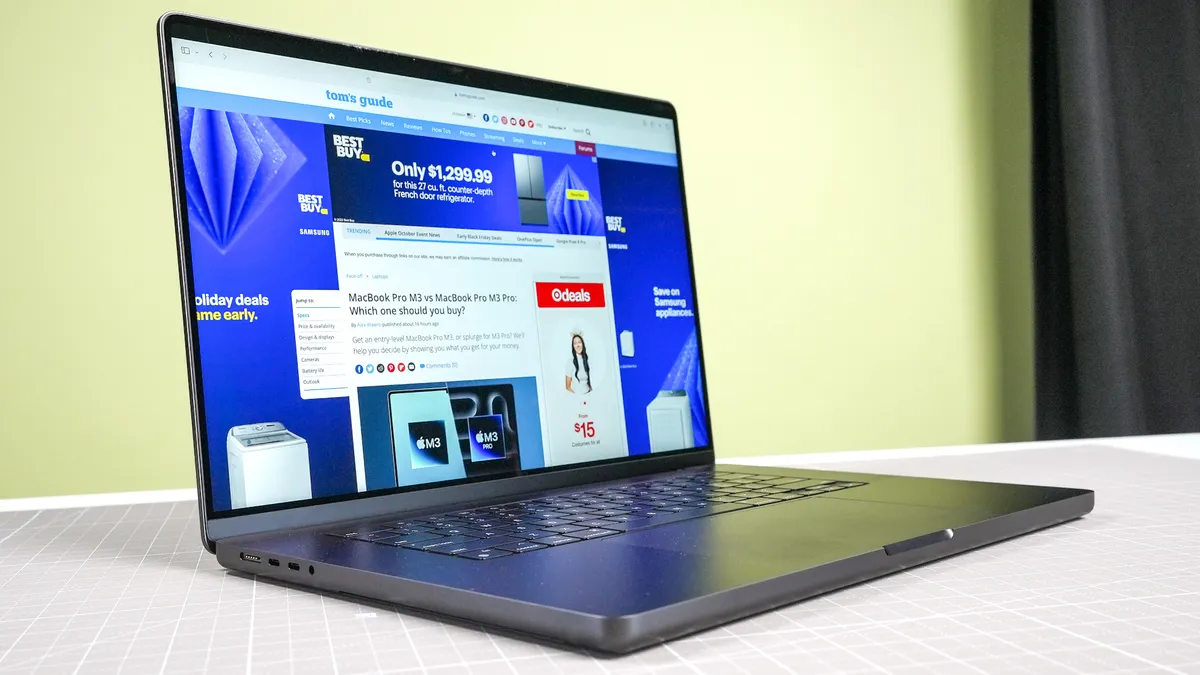
Just like every iteration of the MacBook Pro, we can also expect a huge performance boost with the M6 silicon that will likely power Apple's next-gen laptop. Interestingly, though, the jump in power may be bigger than usual.
Apple's M-series processors are among the strongest in the market, and the M5 chip is a fine example of this. In our M5 MacBook Pro benchmarks, you'll find the M5 outperforms the M4 by a significant margin, and even measures up to the M4 Pro. With the upgraded M6, we expect an even wider gap.
| Row 0 - Cell 0 | MacBook Pro M5 |
MacBook Pro M4 |
Dell 14 Premium |
Geekbench 6 (single-core) |
4,288 |
3,807 |
2,701 |
Geekbench 6 (multi-core) |
17,986 |
15,114 |
15,794 |
Handbrake |
3:31 (mins:secs) |
4:27 |
5:06 |
PugetBench (PhotoShop) |
13,755 (score) | 8.2 secs (time) |
10,542 | 11.74 |
7,583 | 18.1 |
The M6 is tipped to be the first MacBook chip to be based on TSMC's 2nm process, with the iPhone 18 rumored to be getting the same treatment. These chips were already revealed back in April, and they promise a 10-15% increase in computing speed, while simultaneously offering a 20-30% drop in power consumption.
The Taiwanese semiconductor manufacturer's 2nm chips are roughly 15% denser than the current 3nm chips, and seeing as smaller chips are able to operate faster and more efficiently on account of their increased transistor density, that will translate to a major increase in not only performance, but also extended battery life for the M6-equipped MacBook Pro.
Considering the MacBook Pro M5 reaches 18 hours in our testing, making it one of the best laptops for battery life, the M6 MacBook Pro could take this long-lasting time even further.
It's still uncertain if the M6 chip, along with its Pro and Max variants, will be based on 2nm, but either way, expect a massive performance and efficiency boost in the next-gen MacBook Pro.
MacBook Pro M6: Outlook
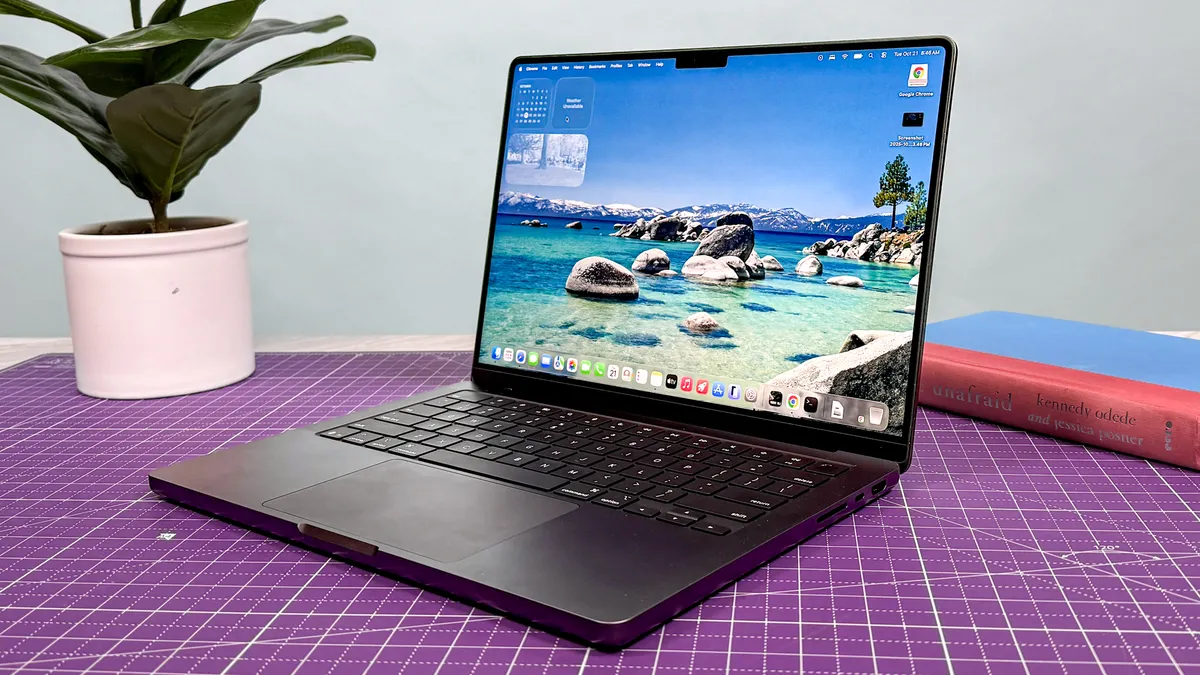
The MacBook Pro M5 impresses with its upgraded processor, but with all the rumors circling around Apple's next-gen Pro laptop, the MacBook Pro M6 will be the upgrade many have been waiting for.
While it's looking to be a pricey machine, the OLED touchscreen, a faster M6 processor, and tweaks to the design to offer an even slimmer, lighter laptop (with no notch!) will be a hugely welcome revamp.
It's still early days, and Apple may make further changes to its anticipated MacBook Pro M6 in the lead-up to its expected release in fall 2026 (or early 2027). We'll keep you updated on the latest happenings in the meantime, and there's plenty to look forward to from the Cupertino tech giant while we wait. That includes a rumored cheap MacBook running an iPhone chip to rival budget laptops like Chromebooks, which is set to arrive in 2026.

Follow Tom's Guide on Google News and add us as a preferred source to get our up-to-date news, analysis, and reviews in your feeds.
More from Tom's Guide
- RAM prices are exploding — here's why and everything you need to know about surviving RAMageddon
- The great CPU war of 2026 is already erupting — Intel Panther Lake vs. Snapdragon X2 Elite vs. AMD Gorgon Point
- Microsoft promises to improve PC gaming in 2026, but will it be enough to topple Steam?

