To say that Apple’s MacBook Neo has shocked the tech industry would be an understatement. While an Asus executive effectively described the Neo as “just a tablet,” others have a more positive outlook on the $599 MacBook. One of these is former Windows chief Steven Sinofsky, who took to X (formerly Twitter) to share his thoughts (via Windows Central).
The man who led the Windows division during the ambitious and turbulent era of Windows 8 and the original Surface RT doesn’t see the MacBook Neo as just a tablet or another standard MacBook. Based on his post, he considers it a validation of a vision he tried to sell to the world over a decade ago. The rather melancholic post could be considered an admission that Apple has won the war he started.
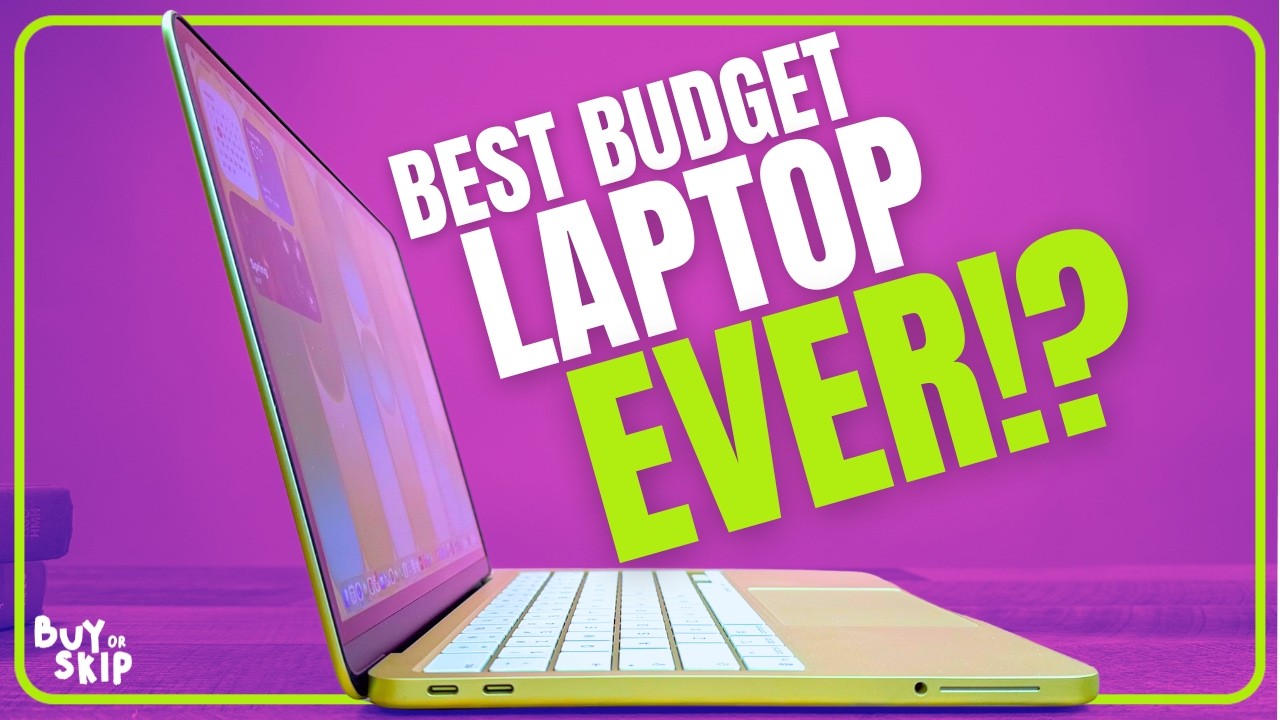
The former Microsoft executive thinks of the MacBook Neo as a “paradigm-shifting computer.” For Sinofsky, the Neo is the final victory of ARM-based computing. It's a clean break from the past that Microsoft couldn’t pull off so long ago.
"Completely blown away"

While much of the tech world has spent the week debating whether the Neo's 8GB of RAM and A18 Pro chip are enough for a real laptop, Sinofsky has a different stance. "I am completely blown away by it," Sinofsky posted. "It is a paradigm-shifting computer. All the 'compromises' are totally acceptable and go unnoticed to me."
For Sinofsky, the A18 Pro chip inside the Neo isn't a limitation. It’s the same basic concept that drove the Surface RT back in 2012: a thin, light, instant-on device that prioritizes efficiency over raw performance. The difference is that Apple actually made the idea work.
The right concept at the wrong time

Looking back at his time at Microsoft, Sinofsky reflected on the thin line between innovation and failure. "A theme in computing that repeats is how something that appears to have been a prescient product or 'early' is actually little different than 'wrong,'" he wrote. "The 'concept' was right, but the ability to actually execute the concept was wrong."
In 2012, the Surface RT was hamstrung by a lack of apps and a confusing "desktop" mode that didn't really work with ARM. Apple, conversely, spent years migrating its entire ecosystem to silicon. By the time the Neo arrived, the transition was seamless. "Neo doesn't have to get better. It just has to stay excellent."
The RAM controversy

One of the biggest talking points surrounding the Neo is the 8GB RAM cap, but Sinofsky dismissed the panic.
He noted that Activity Monitor showed the Neo using less than 7GB during his initial hours of heavy use, stating that concerns about memory are "overblown" for the Neo's intended audience.
To him, the Neo is a replacement MacBook Air for people who want something more affordable and eye-catching. It’s not supposed to be a workstation. "The Neo in 5 years will be more powerful than most of those [other devices] and probably still cost $699. Moore's law is undefeated."
Why Microsoft lost the ARM war

The most stinging part of Sinofsky’s reflection was his assessment of why Microsoft is still playing catch-up. He suggested that Windows on ARM remains "held back by Microsoft's commitment to x86 compatibility."
While Microsoft tried to keep one foot in the past, Apple made a clean break. The Neo is the result of that focus: a $599 machine that isn’t hampered by legacy software because its modern ecosystem is already strong enough. "I type this today with these emotions, and there's no escaping my 'certainty' that had we [Microsoft] kept going... we would have been in the same spot Neo is today."
Bittersweet admiration
Ultimately, Sinofsky’s thread is a celebration of the ARM future, one which the likes of Qualcomm, with its Snapdragon X chips, has also embraced.
By hitting the $599 price point with a phone chip that runs a desktop OS, Apple has achieved what Sinofsky attempted back in the 2010s. For the man who tried to build that future in 2012, seeing Apple finally cross the finish line is clearly a moment of bittersweet admiration.

Follow Tom's Guide on Google News and add us as a preferred source to get our up-to-date news, analysis, and reviews in your feeds.
More from Tom's Guide