




It's not news anymore that Gen Z and the younger generations love "retro" tech. MP3 players, vinyl, film cameras, and flip phones have all had a resurgence. Add to that list compact cameras like the much-talked-about Fujifilm X100VI, Ricoh GR IV, and Canon PowerShot G7X Mark III. These three are the usual suspects and the darlings of TikTok. Look up any article, video or short on the best compact cameras, and you'll see one or more of these cameras guaranteed. There's just one problem: you can't find them anywhere new.
The hype around them is just too much for manufacturers and retailers, making it impossible for the average person to buy one at retail value. But, they're not the only game in town. Older cameras like the Panasonic GX1 and GX85 are well-known, reasonably priced cameras that produce great images. And they're easy enough to find, so I got one of each… for less than half the cost of a Fujifilm X100VI.
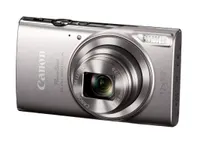
Though Lumix shooters are well aware of these two pocket rockets, Gen Z photographers aren't clamoring for them like they are the Canon PowerShot Elph 360 HS A. I believe they should.
Smaller sensors need love too

The bigger the sensor, the better the image quality. You get better low-light performance and less noise thanks to larger and more sensitive photosites (the analog light sensors that become digital pixels). You get a shallower depth of field, and there's less crop as the sensor size goes up — 35mm full-frame sensors don't have any crop because thanks to the legacy of 35mm film, it sets the standard. But, despite what YouTubers say, bigger isn't always better.
The advantage of a smaller sensor is a smaller camera body. That's why the three aforementioned Fuji, Canon and Ricoh point-and-shoot compacts all feature APS-C sensors instead of full-frame sensors. At roughly 2/3 the size of a full-frame sensor, APS-C sensors are small, but they're not the smallest.

The Micro Four Thirds format is twice as small as full-frame, with a 4:3 aspect ratio, hence the name. This system used by Olympus and Panasonic has produced some of the smallest digital cameras to date, like the legendary Panasonic Lumix GM1 (an absolute powerhouse of a compact camera). While the size and sensor help it stand out, it's the choice of lenses on such a small body that makes it so sought-after.
M43 compacts give you options

The point-and-shoot experience is simultaneously freeing and limiting. The fixed lenses on these cameras are great and allow you to keep your kit small when going on a shoot. The Fujifilm X100VI has a 23mm lens, which gives a field of view equivalent to a 35mm lens on a full frame camera — a classic all-purpose field of view. You can't go wrong with it. After a while, though, the convenience becomes a setback. If you want to shoot landscape, portraits, or sports photography, you're out of luck. That's not an issue with an interchangeable lens compact camera like the GX85 and GX1.


On a trip home to South Texas a few years back, I brought my recently purchased Lumix GX85 and the kit lens it came with. This cheap, plastic 12-32mm, f/3.5-5.6 lens turned out to be all I needed. I snapped a ton of great images of my family, and I got to see the city I once lived in and knew so well in a whole new light with this dinky little lens. And due to the collapsible design of the lens, the entire kit was still small enough to fit in my Wandrd D1 crossbody sling. When I want to travel light but am unsure of what I'll be shooting, this lens is a no brainer.

Another lens I've grown to love is the Lumix 14mm f/2.5 pancake lens that came bundled with my used Lumix GX1. This stubby lens is a community favorite because of its small size and unique 28mm equivalent shooting experience that’s great for street photography. The wider aperture, while not incredible for low-light shooting, is fine for most dusk and indoor shots — the built-in flash on the camera is a lifesaver here.

But if you want options and you're on a budget, spare a thought to the Lumix 14-140mm f/4-5.8 lens. Since this ends up being a 28-280mm equivalent lens, it's great for sports photography, street, landscapes, and portraits all at once. It's the biggest lens I own, and it's even bigger when I max out the focal length. Though it looks ridiculous on a smaller body like the GX1, it's worth the additional size and weight. I've taken it to several MLS matches, where I've captured my Rapids up-close as if I was standing on the sidelines. Most sports venues won't let you bring a telephoto lens inside, but if you can, this is the one.
You don’t get that versatility with a fixed-lens compact.
Access to Leica glass

Panasonic and Leica have a longstanding partnership that goes back to the early days of digital photography, when the two brands worked on the Lecia Digilux 1. Since then, Leica has been making glass for Panasonic in formats like Four Thirds, Micro Four Thirds, and L-Mount — the latter is a partnership between the two and Sigma to create full-frame L-Mount lenses. That means Micro Four Thirds shooters are spoiled for choice when it comes to quality lenses.


One of those lenses is my all-time favorite, the Leica Summilux 25mm f/1.4 lens. This 50mm equivalent lens is my go-to when shooting at night or indoors. It's a must-have for concert photography, which is where I've taken some personal favorite shots. Despite having to shoot manual because of loud and slow focus, this is also my top choice for shooting video due to the superior image quality. It's basically glued on to my Lumix GH5 these days, which I use any time I'm headed out the door on the weekends.

A lens I got recently and have been using a lot is the Leica 45mm f.2.8. It's a prime macro lens great for shooting detail up-close, though I've mostly used it to scan 35mm film at home. That said, it has a lot of potential as a portrait lens since it offers a field of view equivalent to 90mm on full frame. If you're shooting product photography or videography, this is one lens you need in your kit for close-up shots and b-roll.
Get more value for your money

The Micro Four Thirds system is alive and well — the Lumix GH7 is a heck of a video camera with the option for Arric LogC3. But the M43 cameras and lenses I've mentioned have been around for a while. You can pick them up for relatively cheap on the used market.
The Lumix GX1 goes for about $200, while the Lumix GX85 tends to fetch a higher price of roughly $400-500. I got lucky when I purchased mine, finding it a local used camera shop for $350. It came bundled with the kit lens, charger, three batteries, and a half-cage. All in, that’s $700 max for my two cameras — less than half the asking price of a new (if you can find one) Fujifilm X100VI ($1,799).

Lenses aren't expensive, either. The trusty Lumix G 14mm pancake lens goes for about $120-$200, and the 12-32mm kit lens sells for $125-$175. The Leica lenses are a bit pricier used, but it's nothing outrageous. My favorite Leica Summilux 25mm is in the neighborhood of $300-$400. Seeing as how this lens has made me many times what it costs through client work, I don't regret purchasing it.
Leave the hype to the influencers

The compact point-and-shoots that everyone is hyped about are great cameras. They're not so good that they're worth paying way above retail value or waiting years until they become available. Let the influencers do that. If you care more about creating images than the status of owning one of these cameras, then there are other options out there.
Micro Four Thirds are near and dear to my heart because they offer a ton of value for not a lot of money. Their compact size, modern features, and lens selection make them more viable for just about any type of shooting you're planning to do. And you don't have to wait years to get one.

Follow Tom's Guide on Google News and add us as a preferred source to get our up-to-date news, analysis, and reviews in your feeds.
More from Tom's Guide

