When we upload photos, stream movies and search Google, we often don't think about the consequences. "The cloud" has made the internet feel weightless but AI is making the physical side of the internet impossible to ignore.
As useful as it may be, AI does not just run on software. It runs on land, chips, power plants, cooling systems, transmission lines and data centers so massive they could be the size of 2,000 Walmarts. That's why some communities are now pushing back before these data centers are even built.
That may help explain why one of the strangest-sounding ideas in tech suddenly feel a lot less absurd. For one, putting AI data centers in space.
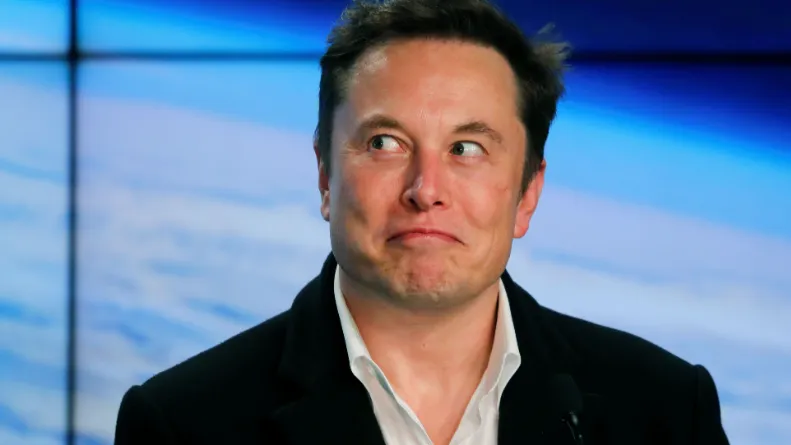
According to Reuters, Google is reportedly in talks with Elon Musk’s SpaceX about launching orbital data centers as part of Project Suncatcher, Google’s effort to test solar-powered, satellite-based AI cloud infrastructure using its own Tensor Processing Units.
Yes, AI is getting so demanding that the answer is apparently....rockets? But the more you look at the problem, the more revealing the idea becomes.
AI is running into the real world

The unfortunate side of the AI boom is that AI’s appetite for power, cooling and compute has become so extreme that space is now being discussed as a serious part of the infrastructure conversation.
That's because AI has been sold to us as software. But every query, every prompt has to run somewhere. Behind the scenes, AI depends on enormous data centers packed with specialized chips. Those chips use huge amounts of electricity and generate heat that has to be managed. As AI models become more powerful and more widely used, the demand for data center capacity is growing fast.
According to the IEA’s "Electricity 2024 – Analysis and Forecast to 2026" report (and subsequent updates in May 2026), global data center electricity consumption is projected to exceed 1,000 terawatt-hours (TWh) by the end of 2026. This figure is roughly equivalent to the entire annual electricity consumption of Japan, which currently ranks as the world’s fourth-largest economy.
Communities are raising concerns about electricity demand, water use, emissions, land use and rising power bills. The fight over massive AI data center projects in places like Utah shows how quickly “the cloud” can become a local zoning, water and environmental issue.
Why space is appealing
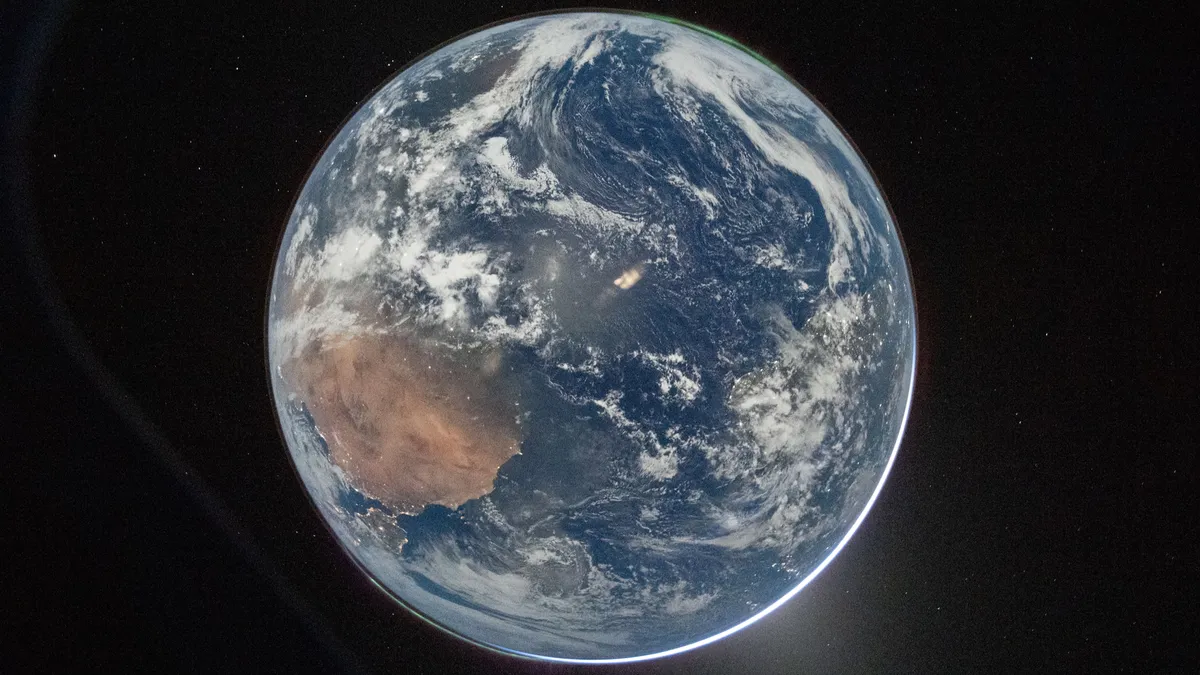
The basic appeal of orbital data centers is solar power. That's because in space, satellites can collect sunlight more consistently than solar panels on Earth. There are no clouds, no nighttime in the same way and no local fights over using thousands of acres of land for power infrastructure.
Another perk is no wildlife. Data centers can disrupt wildlife by converting large stretches of habitat into industrial infrastructure, and in the case of Utah’s proposed Stratos project, critics have warned that the 40,000-acre site near the Great Salt Lake could bring major ecological impacts that could include increasing the average temperature dramatically.
Google’s Project Suncatcher is built around solar-powered satellites equipped with AI chips, linked together to create a kind of orbital AI cloud. The company has described its upcoming early-2027 mission as a learning test designed to see whether its hardware can survive and function in orbit.
And while Elon Musk may be the most visible figure talking about AI data centers in space, he is no longer the only one. . NVIDIA has announced space-focused AI computing platforms, including its NVIDIA Space-1 Vera Rubin Module, which it says is designed to bring AI compute to orbital data centers, geospatial intelligence and autonomous space operations.
Meanwhile, Aetherflux, a startup originally focused on space-based power beaming, reportedly rebranded this week as Cowboy Space,and is now pitching a constellation of orbital AI data centers. Its approach appears to involve turning the upper stage of its planned rockets into the data center itself, rather than launching a separate dedicated satellite. Taken together, these moves suggest the space-based AI infrastructure race is no longer just a Musk moonshot — it may be the start of a much broader orbital data center boom, or even an early-stage bubble.
For AI companies, the dream is obvious

Just last week, Anthropic reportedly agreed to use SpaceX’s Colossus 1 infrastructure and explicitly stated interest in gigawatts of orbital compute.
It’s a signal that the industry is hitting a physical wall; if space-based data centers can be scaled, they solve the 'impossible' constraints currently choking Earth-based facilities, including:
- Less pressure on local power grids
- Less land conflict
- Less dependence on water-heavy cooling
- More access to continuous solar energy
- Fewer battles with communities that do not want giant data centers nearby
Everyone wants faster AI, better assistants and more powerful tools. Far fewer people want the infrastructure required to make those tools possible built near their homes.
Space creates new problems
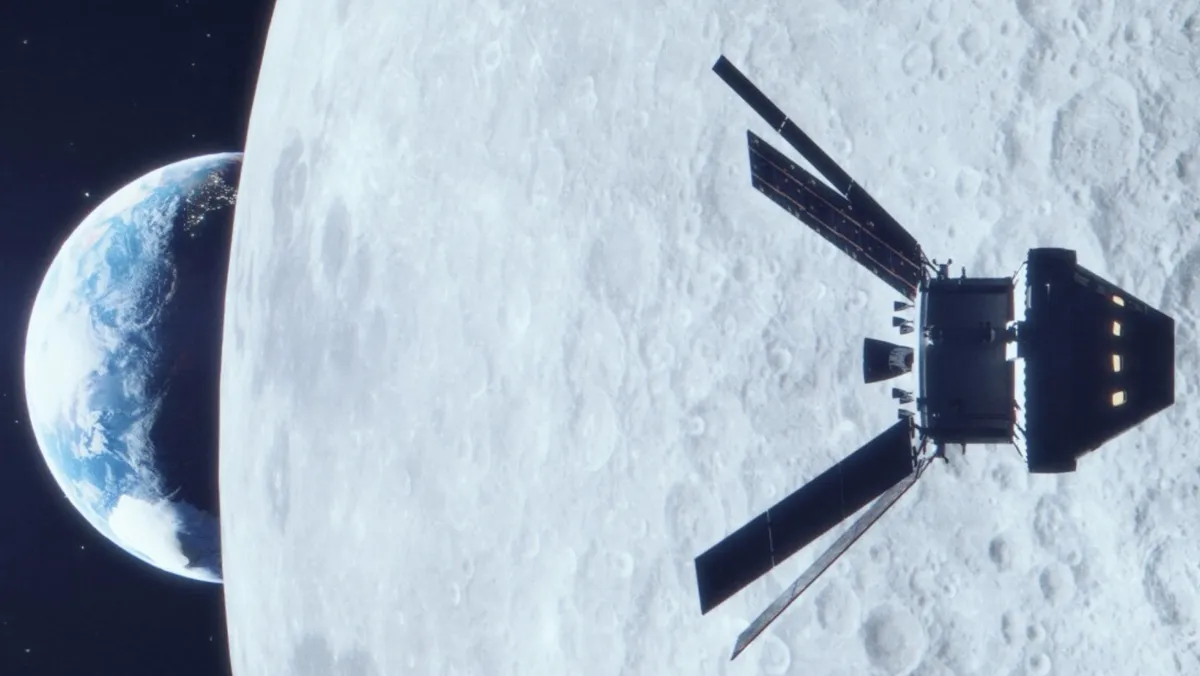
Data centers on Earth already have to manage enormous amounts of waste heat. In space, there is no air to carry heat away. That means orbital data centers would need highly advanced thermal systems, likely including large radiators, to prevent the hardware from overheating.
That means, an enormous cost. The Wall Street Journal reported that launch costs remain a major obstacle, with current costs around $3,400 per kilogram and experts suggesting that space-based data centers would likely need launch costs closer to $200 per kilogram or less to make economic sense.
There are other problems, too, such as radiation, satellite maintenance, high-speed communication, space debris, orbital congestion and the challenge of manufacturing and launching hardware at a scale that would actually matter for AI.
Astronomers are also worried. Space.com has reported that scientists have raised concerns about SpaceX’s proposed plan for a massive constellation of orbiting AI data centers, warning that large numbers of bright satellites could interfere with astronomy and permanently change the night sky.
So, no, space data centers are not an easy fix. While they may solve one set of problems, they could create others.
Musk’s idea shows how extreme the AI race has become

Musk’s space data center idea shows how far the AI race means to the U.S. The companies that dominate AI may not simply be the ones with the smartest models. They may be the ones with the most compute, the most power, the best chips, the biggest data centers and the ability to build infrastructure faster than everyone else.
According to Financial Times, SpaceX has reportedly struck major AI infrastructure deals, including a deal for Anthropic to use compute capacity at SpaceX’s Colossus 1 data center in Tennessee. The Financial Times reported that the deal gives Anthropic access to more than 300 megawatts of compute capacity as AI companies scramble for the infrastructure needed to train and run their models.
It's clear that AI is becoming an infrastructure race just as much as anything else. And Musk is not the only one who sees it. Google’s Project Suncatcher, SpaceX’s orbital ambitions and the growing rush for data center power all point to the same uncomfortable truth that the next phase of AI may be limited by electricity, cooling, chips and physical capacity.
The takeaway
With so many peopple shouting "NIMBY" ("not in my back yard") about data centers, Elon Musk and others might be on to something, especially as AI becomes more integrated into our daily lives.
Local fights over data centers are likely to grow, making nuclear power, natural gas, grid upgrades and now even space-based computing something worth exploring.
Musk’s idea may sound extreme. But the fact that companies are even discussing orbital data centers says a lot about where AI is headed.

Follow Tom's Guide on Google News and add us as a preferred source to get our up-to-date news, analysis, and reviews in your feeds. Subscribe to Tom's Guide on YouTube and follow us on TikTok.
More from Tom’s Guide
- I tried the ‘Goldfish Prompt’ with ChatGPT — and it instantly stopped my overthinking
- I asked ChatGPT to apply Lewis Howes’ ‘Greatness’ mindset to my life — and it completely changed how I approach work
- I gave ChatGPT permission to disagree with me with this prompt — and its responses became dramatically better