Mother Nature hasn’t exactly been kind to those of us on the East Coast this winter.
I’m right there in the deep freeze — the brutal mix of sub-zero wind chills and endless snow across the New York tri-state area has made leaving the house feel like an extreme sport. And while I’ve been trying to take my fitness routine more seriously, convincing myself to trek to the gym in this weather is its own workout. It takes real fortitude to stick to a regimen when the cold outside feels personally offended by your existence.
So instead of braving the icy sidewalks, I decided to stay warm and try something different: I asked ChatGPT to build me a home workout plan.
To my surprise, it delivered exercises that were actually doable in my living room, along with practical — and occasionally funny — tips that felt beginner-friendly instead of intimidating. It wasn’t just a list of random moves; it was a routine I could realistically follow without stepping outside into the tundra.
In a season where motivation freezes faster than the sidewalks, having a simple, at-home plan made sticking to my fitness goals feel far less daunting — and a lot more achievable.
First, ChatGPT developed a workout plan that I can refer to 3x a week

I kicked off my new at-home workout routine with a simple prompt — one that included my height and weight so ChatGPT could tailor something to my actual body, not a generic template.
My exact prompt was: “Can you build me an at-home workout for someone just starting? I’m 6'4" and 170 pounds.” That was all it needed to point me in the right direction.
Instead of throwing a punishing fitness plan at me, the goals were refreshingly realistic: build a strength base, add a little muscle, protect my joints and — most importantly — don’t go so hard that I burn out after a week.
From there, ChatGPT produced a short list of four in-house exercises built around a theme I could actually get behind: no equipment, no gym intimidation and absolutely no “do 100 burpees” nonsense. (Yes, it even had a sense of humor about it.)
- Bodyweight Squats (3 sets x 8–12 reps): sit back like you’re hitting a chair, chest tall, heels on the floor, and if it feels easy, slow it down
- Glute Bridges (3 sets x 10–15 reps): lie on your back, feet planted, drive hips up, and squeeze your butt at the top
- Plank (3 sets x 20–40 seconds): straight line from head to heels, and don’t let your hips sag
- Doorway or Towel Rows (3 sets x 8–12 reps): hold a towel around a door handle and lean back, or lie under a sturdy table and pull yourself up
Along with a layout of how I should proceed with each exercise, ChatGPT gave me reasons why I should add each of them to my daily at-home workout routine (“balances push-ups and protects shoulders” was the reasoning provided for doing Doorway/Towel Rows).
I also appreciated the post-workout “finishers” I should adopt after a full workout, tips for weekly progression, nutrition tips and red flags I should keep in mind so I don’t risk the threat of injury. On that last note, ChatGPT made this point very clear: “Soreness = normal. Pain = not.”
Then ChatGPT incorporated dumbbells & resistance bands
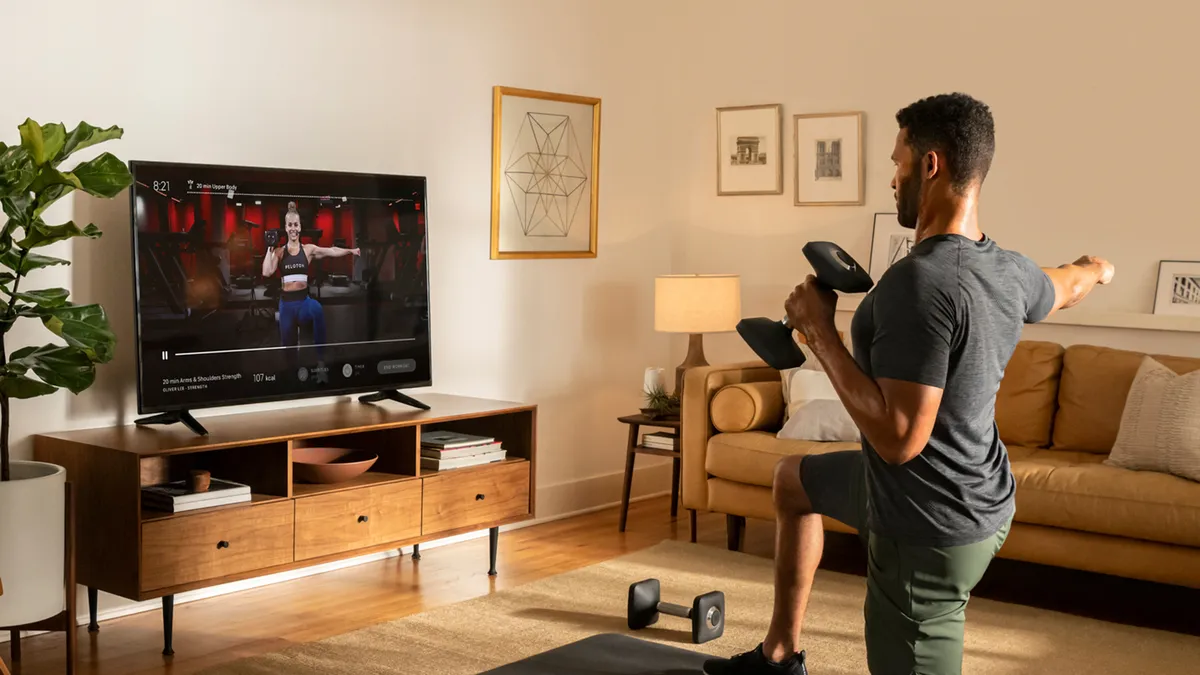
A thought came to mind as I read through ChatGPT’s collection of workouts: “What if I incorporated dumbbells or resistance bands into my workouts?” After asking my AI trainer to build me some exercises with those specialty items in mind, it showcased a full-body strength workout that looked pretty fun and useful for me as I try to avoid leaving the house until the Spring.
Here are four of the dumbbell/resistance bands-assisted exercises ChatGPT presented me with:
- Goblet Squat (3 sets x 8–12 reps): hold one dumbbell at chest level or stand on a band and hold handles at shoulders. Sit back, chest tall
- One-Arm Dumbbell Row/Band Row (3 sets x 8–12 reps per arm): support one hand on a chair, pull elbow toward hip, not shoulder, and slow on the way down
- Romanian Deadlift (3 sets x 8–12 reps): slight bend in knees, push hips back, feel stretch in hamstrings, and keep back flat
- Standing Dumbbell Shoulder Press/Band Press (2–3 sets x 6–10 reps): core tight, don’t lean back, and stop if shoulders feel cranky
Just like the previous breakdown of at-home workouts, ChatGPT made sure to provide additional advice to take into consideration. It gave me optional arms workouts to do once I reach the end of a workout, a weekly progress plan to keep track of, suggestions for the type of equipment I should adopt, and mistakes I should avoid as a beginner trying these workouts for the first time.
I also valued an explanation of why this workout plan fits my body type, which was broken down into three suggestions: it emphasizes hinge + row (protects your back), avoids junk volume, and builds muscle evenly, so I don’t feel “stringy” or beat up.
Finally, ChatGPT provided me with brief 30-minute exercises for busy days

I realized there will be days when I won’t have all the free time needed to break a sweat in my living room. I’m a dedicated AI writer for Tom’s Guide, after all. And sometimes, I’ll have to leave my comfortable crib to head to the New York office on occasion. So I asked ChatGPT to cook up a brief yet still helpful 30-minute workout I could tap into before I take my leave.
This is the quick workout plan it managed to construct for me:
- 5-Minute Warm-Up: 30-second arm circles, 15 reps of bodyweight squats, 15 reps of band pull-aparts, 15 reps of hip hinges (hands on thighs), and 1-minute of marching or jogging in place
- Strength Circuit - Push + Legs (20 minutes): 10–12 reps of Goblet Squats, 8–10 reps of dumbbell floor presses or band chest presses, and a 30-second plank
- 5-Minute Finisher - Conditioning: 30-second jumping jacks, rest for 30 seconds, and repeat for 5 rounds
The Strength Circuit section featured an additional workout themed as “Pull + Hinge,” plus two extra finisher exercises aimed at working my arms and improving my mobility.
On top of all that, ChatGPT told me how I should mark my progress for its 30-minute workout plan, rules I should remember for busy days that will keep me consistent, and why these exercises work for my specific body dimensions.
The takeaway
Braving arctic temperatures just to make it to the gym is admirable — it’s also something I rarely manage to do. The moment I check my Weather app and see a single-digit forecast, my motivation instantly shifts from “fitness warrior” to “stay under a blanket forever.”
So instead of battling the cold, I stayed inside and put ChatGPT’s at-home workout suggestions to use. If you’re trying to stay active without freezing on the way to the gym, these moves are surprisingly easy to follow — and, most importantly, they let you stay warm while you break a sweat.

Follow Tom's Guide on Google News and add us as a preferred source to get our up-to-date news, analysis, and reviews in your feeds.
More from Tom’s Guide
- I asked ChatGPT to build a beginner workout plan — and it actually made me want to go to the gym
- I almost abandoned my workout routine — here's how ChatGPT helped me stick to it and stay motivated
- I coach mobility classes: This 5-move stretching routine is responsible for developing my healthy hips and stronger body