As a certified personal trainer, I work with a wide range of clients who have lots of different fitness goals. But for my clients in their 60s and beyond, there’s usually one objective that drives their training: improving balance and stability.
I recently started working with a 60-year-old client who wanted to focus on just that. She noticed that she was a little more unsteady on her feet than she used to be, and had a few close calls with falling. After a thorough check-up with her doctor, we began our work together with the following routine.
These exercises aren’t just for seniors. It’s never too early to start thinking about your balance, so give them a try during your next workout. They’re appropriate for any fitness level and you won’t need any equipment to do them (but adding a dumbbell or two will always make things more challenging).
How to do the exercises to improve your balance
Check in with your doctor before trying any new workout, especially if you have balance concerns.
These exercises aren’t hard, but doing them correctly is important. Beginners should consider meeting with a personal trainer or physical therapist for feedback and guidance on form, and to get modifications if needed.
You’ll just need some room and an elevated platform, like a stair step, for this workout. Hang onto a chair or another stable surface for additional support if you need it.
Start by doing each exercise for one set of 10 reps. As your balance improves, you can add an additional set and increase your reps to 12. You can also use small dumbbells for the step-up to balance to ramp up the difficulty.
These exercises can be done on their own or as a warm-up for other activities.
You may feel muscle fatigue when doing this workout, but you should never feel sharp pain. Stop the workout immediately and consult your physician if you feel sharp pain at any point.
Here’s how to do the exercises:
1. Standing marches
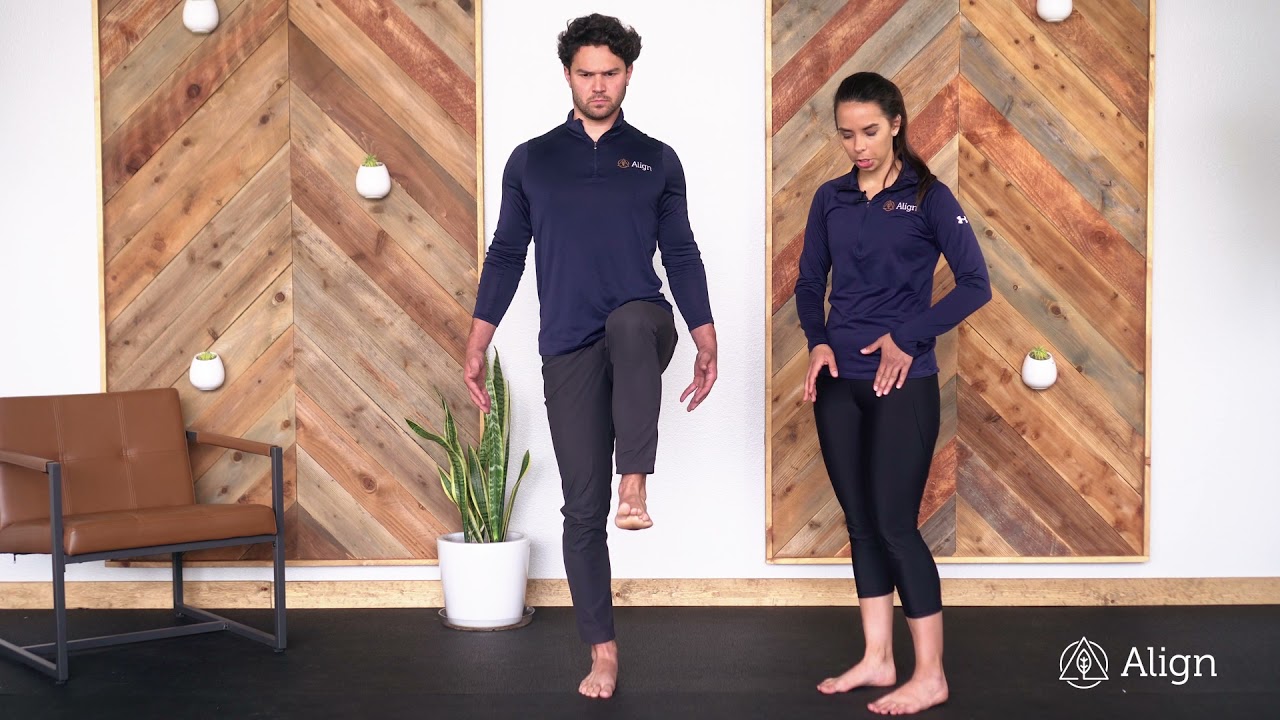
- Stand tall with your feet hip-width apart.
- Engage your core muscles.
- Lift your left knee to a 90-degree angle.
- Pause and maintain your balance, keeping your hips level.
- Lower your left foot to the ground.
- Lift your right knee to a 90-degree angle.
- Pause and maintain your balance, keeping your hips level.
- Lower your right foot to the ground.
- Continue alternating between your left and right legs for 10-12 reps.
2. Step up to balance
- Stand in front of an elevated surface, like a stair step.
- Keep your feet hip-width apart and engage your core.
- Place your left foot on the step.
- Step up onto the step and bring your right knee to a 90-degree angle.
- Pause and balance briefly.
- Lower your right foot back to the ground.
- Continue for 10-12 reps, then repeat on the other side.
3. Heel-to-toe walks
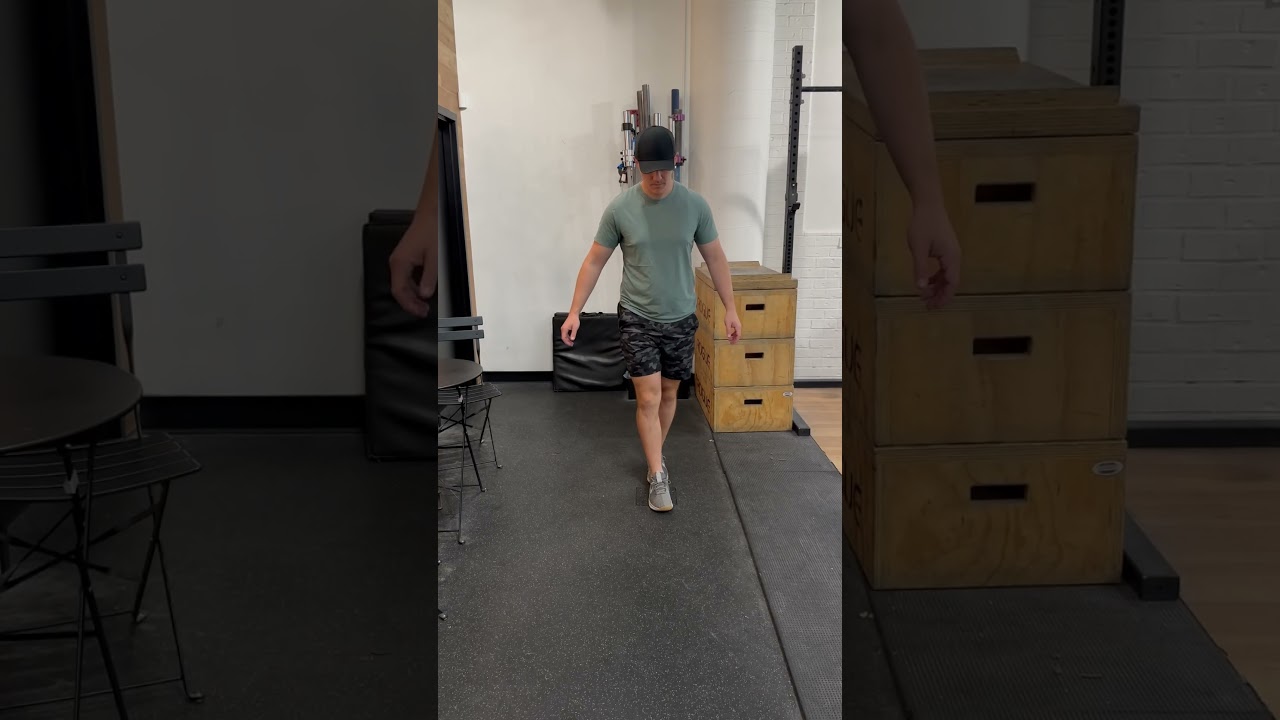
- Stand tall with your feet hip-width apart.
- Engage your core.
- Step your left foot in front of you.
- Step your right foot in front of your left, aligning your left heel with your right toes.
- Continue walking forward in this manner for 10-12 steps on each leg.
4. Side step to balance
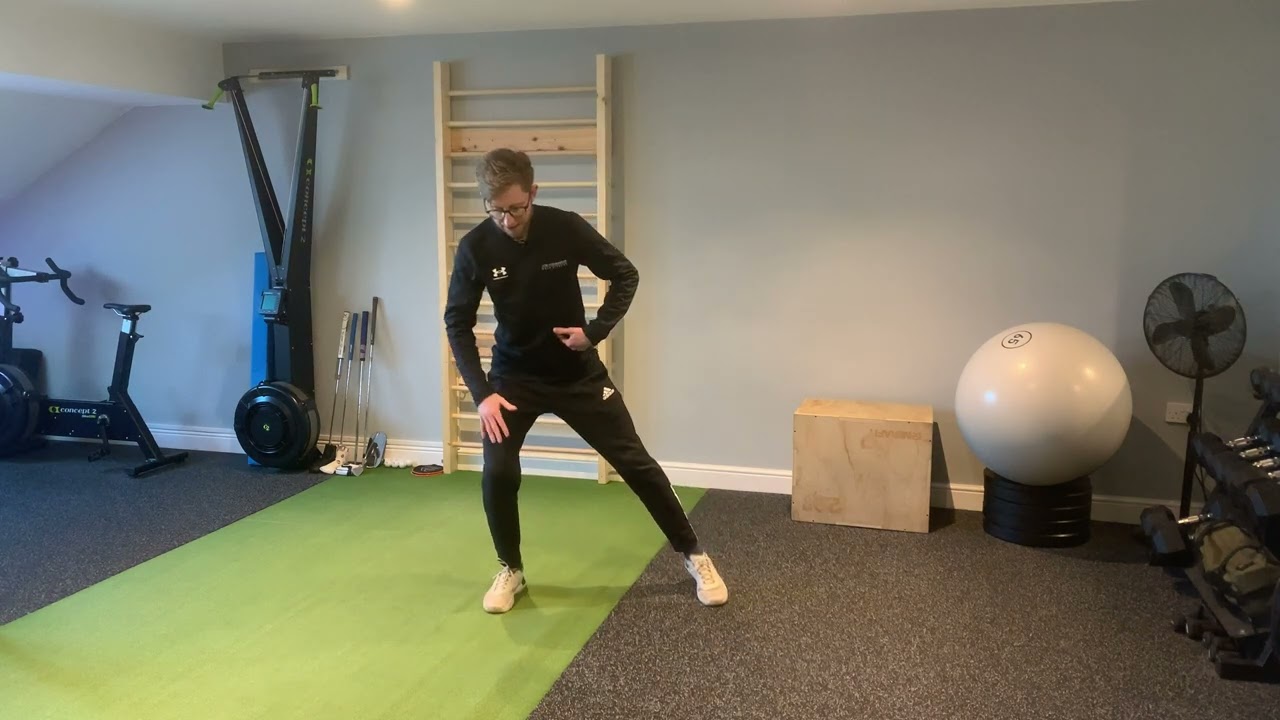
- Stand tall with your feet hip-width apart.
- Engage your core.
- Step your left foot out to the side.
- Shift your body weight and lift your right knee to a 90-degree angle.
- Pause and maintain balance.
- Step your right foot out to the side.
- Shift your body weight and lift your left knee to a 90-degree angle.
- Pause and maintain balance.
- Continue alternating between your left and right side for 10-12 reps per side.
Benefits of these exercises
The exercises in this workout force you to find equilibrium when your center of gravity is maintained over a smaller surface area – either one foot for the standing marches, step up to balance, and side step to balance, or a narrow placement of two feet for the heel-to-toe walks.
During these exercises, your deep core muscles like the rectus abdominis and internal obliques engage to stabilize and support your entire body. Your glutes and hip stabilizing muscles also work to keep the hips in a level position. The stronger these muscles are, the more conditioned they’ll be to keep you upright and sturdy during everyday movement.
Additionally, exercises like the step-up to balance strengthen key muscle groups in your lower body, like the quadriceps, hamstrings, and glutes.

Follow Tom's Guide on Google News and add us as a preferred source to get our up-to-date news, analysis, and reviews in your feeds.
More from Tom's Guide
- I’m a physical therapist who works with seniors: Here are the 5 bodyweight exercises I recommend
- No, not planks! I'm a personal trainer for seniors, and these are the 4 best exercises you can do for core stability at every age
- Over 60? I’m a personal trainer, and these 3 floor exercises will show you how strong your core is