Good balance may be something that the under 40 crowd takes for granted, but it becomes a crucial element of health, longevity, and independence as we get older.
That’s why I started to think more seriously about balance once I hit 40. As a personal trainer who works with lots of senior clients, I see firsthand how our balance can deteriorate with age, and what an impact that can have on our day-to-day lives.
I’ve been doing the following four exercises regularly to keep my balance sharp. These moves strengthen the muscles that stabilize and support our entire body, so the stronger they are, the better my balance will be.
Roll out your yoga mat, pick up some dumbbells, and give them a try for yourself. Whether you’re 20, 40, or older, these exercises can help lessen the risk of injury from serious falls.
How to do the 4 exercises
Check in with your doctor before starting any new activity. These exercises may not be appropriate for everyone, so it’s important to get clearance from your medical team before starting.
If you’re a beginner, consider meeting with a certified personal trainer to learn proper exercise form. Incorrect form can lead to pain and injury. A trainer can also provide modifications and progression options.
You’ll need a yoga mat for the single-leg glute bridge and side planks, and two moderately heavy dumbbells for the overhead marches. Once you’ve built up some strength, you may want to use dumbbells for the reverse lunge to balance as well. The right dumbbell weight lets you complete all reps in a set without resting. If you can’t complete all of the reps with good form, drop to a lighter weight. If you can do all of the reps without much effort, choose a heavier weight.
Start off with one set of 10-12 reps for the single-leg glute bridge, reverse lunge to balance, and overhead marches, and one set of 30 seconds for the side planks. As you get stronger, add an additional set or two of each exercise, and add 15 seconds to your side plank. Eventually, you’ll want to complete 2-3 sets of 10-12 reps (or 30-45 seconds) for each exercise. Do these moves 3-4 times per week.
These can be done on their own or as part of your existing workout routine. Here’s how to do the exercises:
1. Single-leg glute bridge
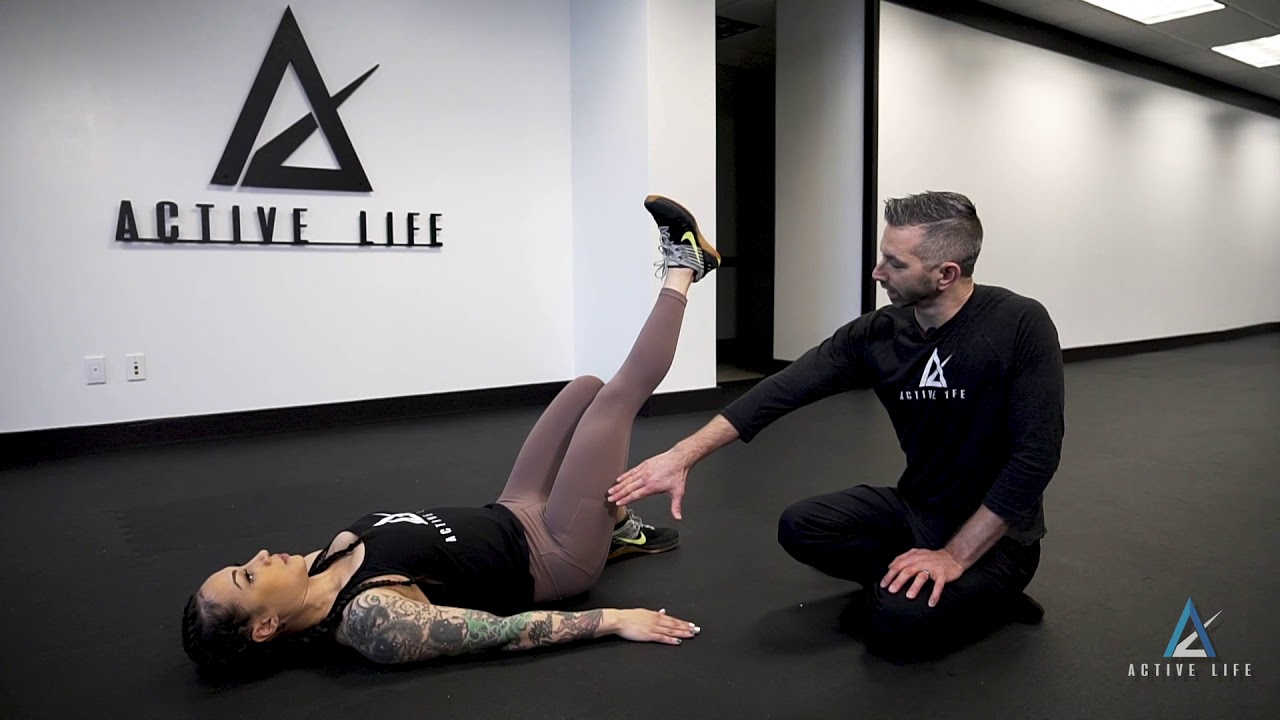
- Lie on your back with your knees bent and feet flat on the floor.
- Engage your core.
- Extend your left leg into the air.
- Squeeze your right glute and lift your hips off the mat.
- Pause briefly.
- Lower your hips back down.
- Continue for 10-12 reps, then repeat on the other side.
2. Reverse lunge to balance
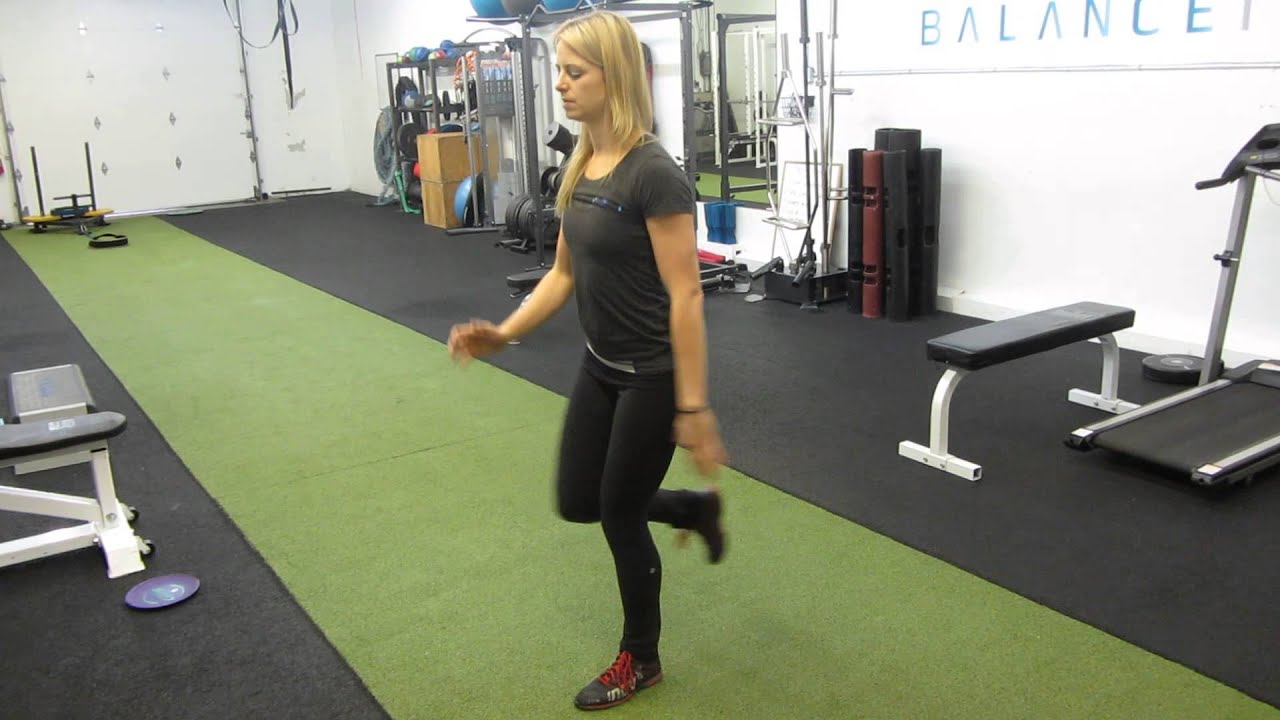
- Stand tall with your feet hip-width apart.
- Engage your core.
- Step your left foot behind you.
- Bend both knees, lowering your left knee towards the floor.
- Stand back up.
- Lift your left knee in front of you to a 90-degree angle.
- Continue for 10-12 reps, then repeat on the other side.
3. Side planks
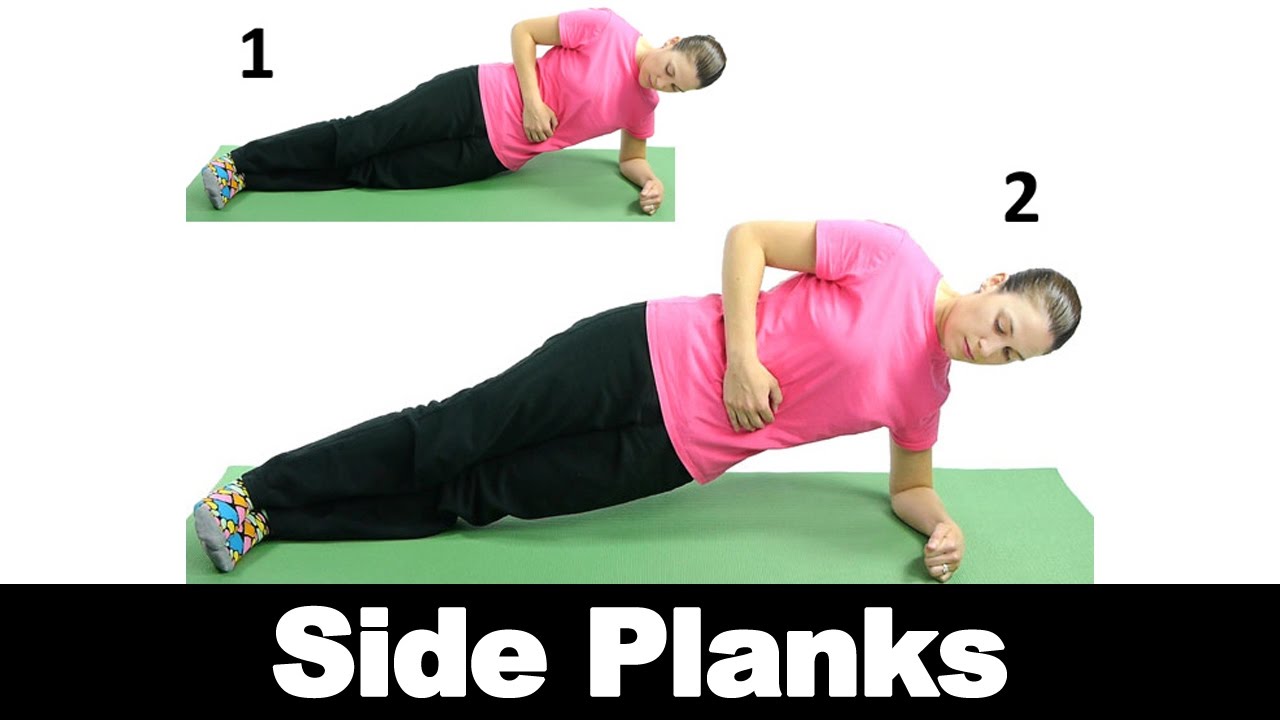
- Lie on your left side.
- Place your left elbow underneath your left shoulder.
- Lengthen your legs and keep your hips stacked on top of each other.
- Engage your core.
- Lift your hips off the mat.
- Hold for 30-45 seconds, then repeat on the other side.
4. Overhead marches
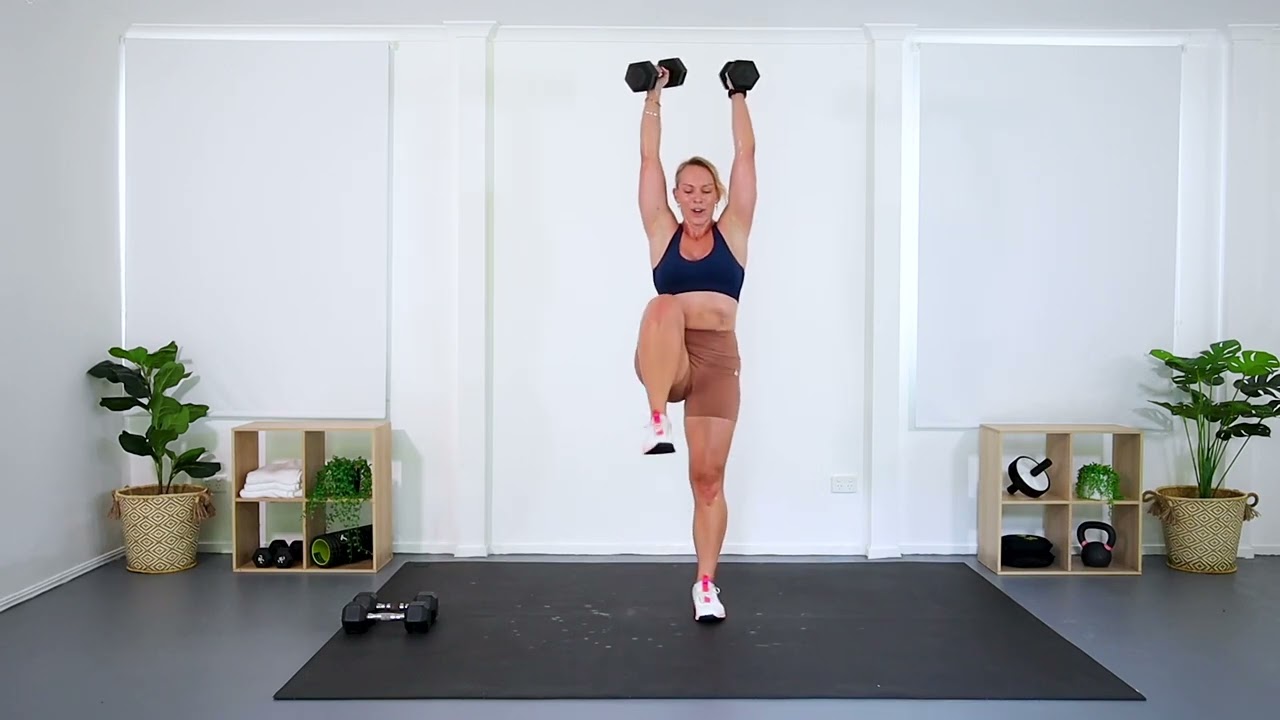
- Hold a dumbbell in each hand.
- Stand tall with your feet hip-width apart.
- Press the dumbbells overhead.
- Engage your core.
- Lift your right knee to a 90-degree angle
- Pause briefly.
- Lower your right foot back to the ground.
- Lift your left knee to a 90-degree angle.
- Pause briefly.
- Lower your left foot back to the ground.
- Continue alternating between the two sides for 10-12 reps per side.
Benefits of the 4 exercises
The exercises in this routine target the muscles that support our body during movement and help to keep us upright and stable.
The single-leg glute bridge and reverse lunge to balance work the glutes, hamstrings, and deep core. The glutes help to stabilize the pelvis and lumbar spine, while the deep muscles in our core provide support to the entire spine and promote proper posture. Balancing on one leg also challenges our proprioception, or our sense of positioning.
The side planks and overhead marches target the transverse abdominis and internal obliques. The transverse abdominis stabilizes the entire body by supporting the spine, while the internal obliques facilitate torso rotation.

Follow Tom's Guide on Google News and add us as a preferred source to get our up-to-date news, analysis, and reviews in your feeds. Alternatively, you can read our content on the Tom's Guide app available now for iOS and Android.
More from Tom's Guide
- I'm a personal trainer who works with clients over 50 — these are the 3 mobility exercises I never skip
- After 60, this is the 10-minute routine I use with my clients to stay strong, mobile and independent
- 'I’m a Pilates instructor, and I recommend these 5 core exercises to help older clients build strength and improve posture'