I meet with plenty of personal training clients over 60 who are embarking on a fitness routine for the first time, and truthfully, they’re some of my favorite clients to train. I wholeheartedly believe that exercise can be life-changing at any age, and it’s never too late to start.
It’s important to start the right way, though. Most of my newcomers tend to be intimidated by the whole process, but I do have a few that make a beeline right for the dumbbells. Instead of picking up weights right away, I begin with the following no-equipment exercises that build up the appropriate strength for more complex moves.
These exercises aren’t reserved just for seniors. Beginners of any age can benefit from them, and they even make great warm-up options for intermediate or advanced fitness levels.
How to do the 4 no-equipment exercises
Be sure to check in with your medical team before trying this workout. These exercises are doable for most people, but your doctor may recommend alternatives based on your personal health background.
You should also consider meeting with a certified personal trainer or physical therapist to learn proper form, especially if you’re dealing with any current or past injuries. A trainer and therapist can also give you modifications if needed, and will know how to make things more challenging as you get stronger.
You’ll just need a chair and a section of bare wall for this workout.
Start by doing 10-12 reps of each exercise for one set, and hold the wall plank for 15 seconds. After a week or so, add an additional set of each exercise. When that starts to feel easy, tack on one more set. Eventually, you’ll do 3 sets of each exercise with a brief rest in between each set. You can also increase your reps to 15 and your wall plank time to 30 seconds.
These exercises should be done as their own workout at first. After a while, you may be able to use them as a warm-up for more intense programs.
Here’s how to do the exercises:
1. Diaphragmatic breathing
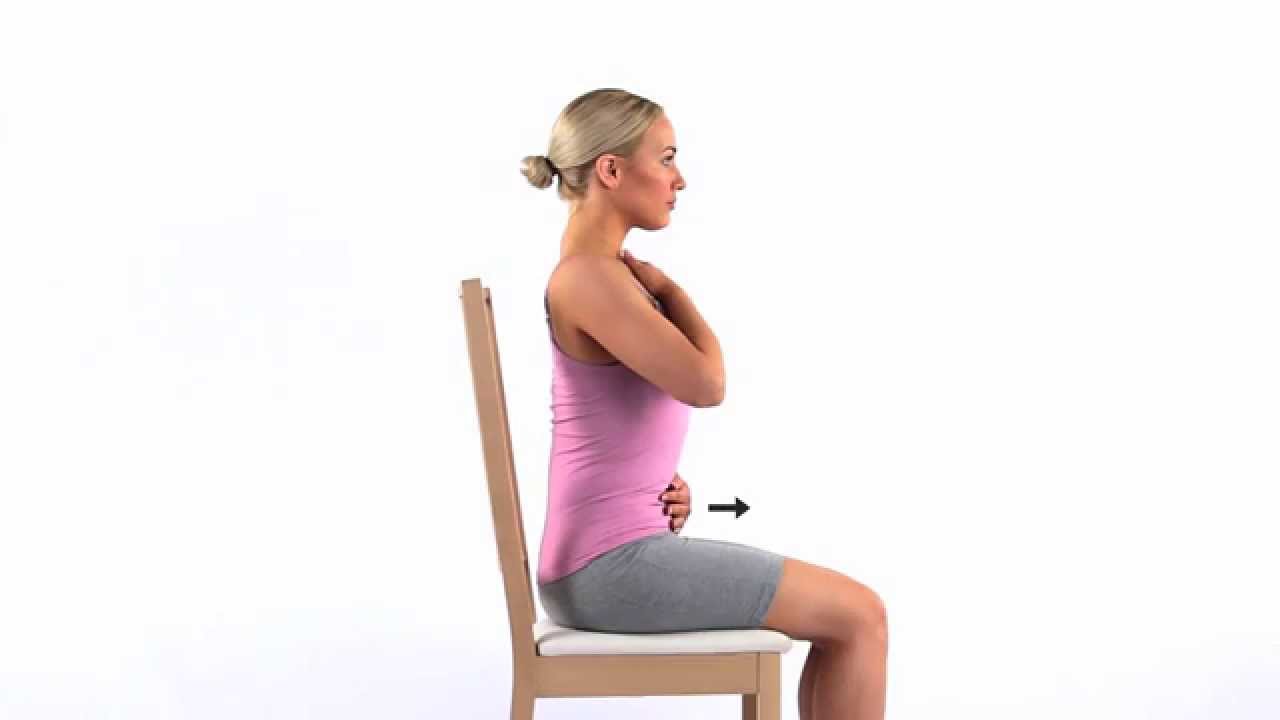
- Sit upright in a chair.
- Keep your spine tall and shoulders relaxed.
- Place one hand on your stomach and the other on your chest.
- Inhale deeply, breathing into the hand on your stomach.
- Pause briefly.
- Exhale, drawing your belly button towards your spine.
- Continue for 10-15 reps.
2. Chair squats
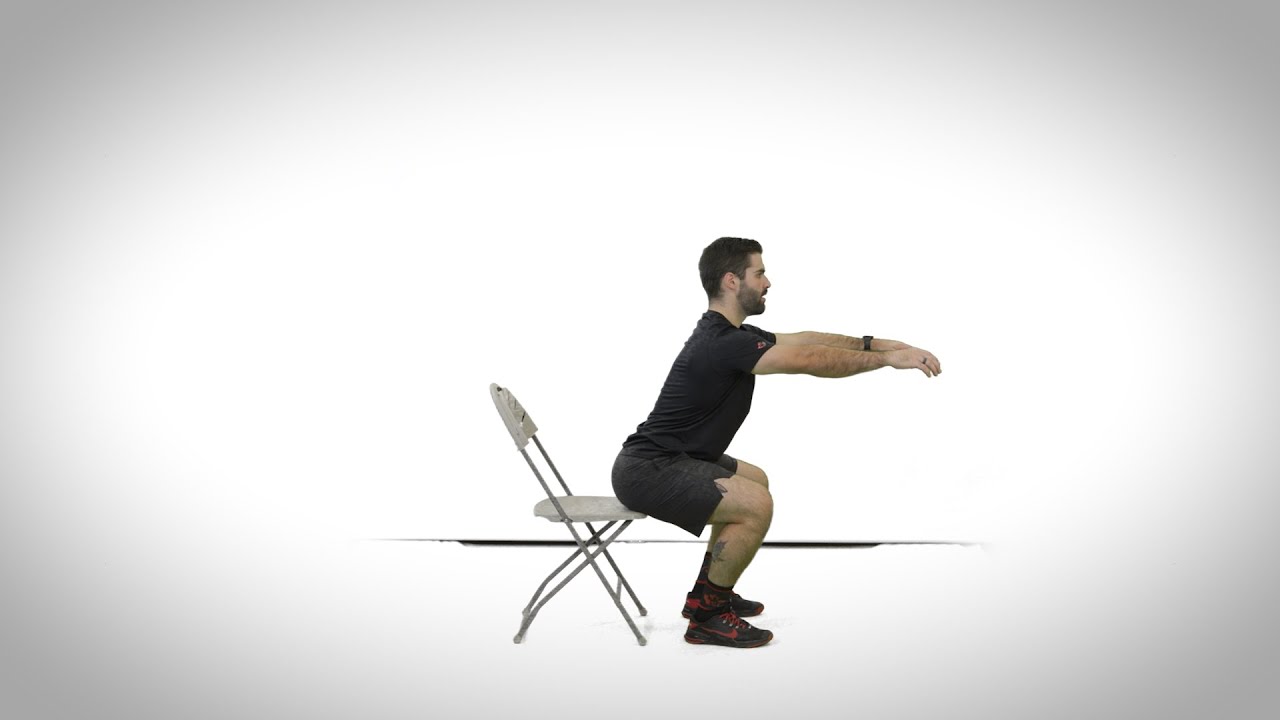
- Stand tall in front of a chair with your feet hip width apart.
- Lengthen your arms in front of you.
- Engage your core muscles.
- Hinge your hips behind you.
- Bend your knees and lower your hips towards the seat.
- Tap your hips onto the seat, then stand back up.
- Continue for 10-15 reps.
3. Wall planks
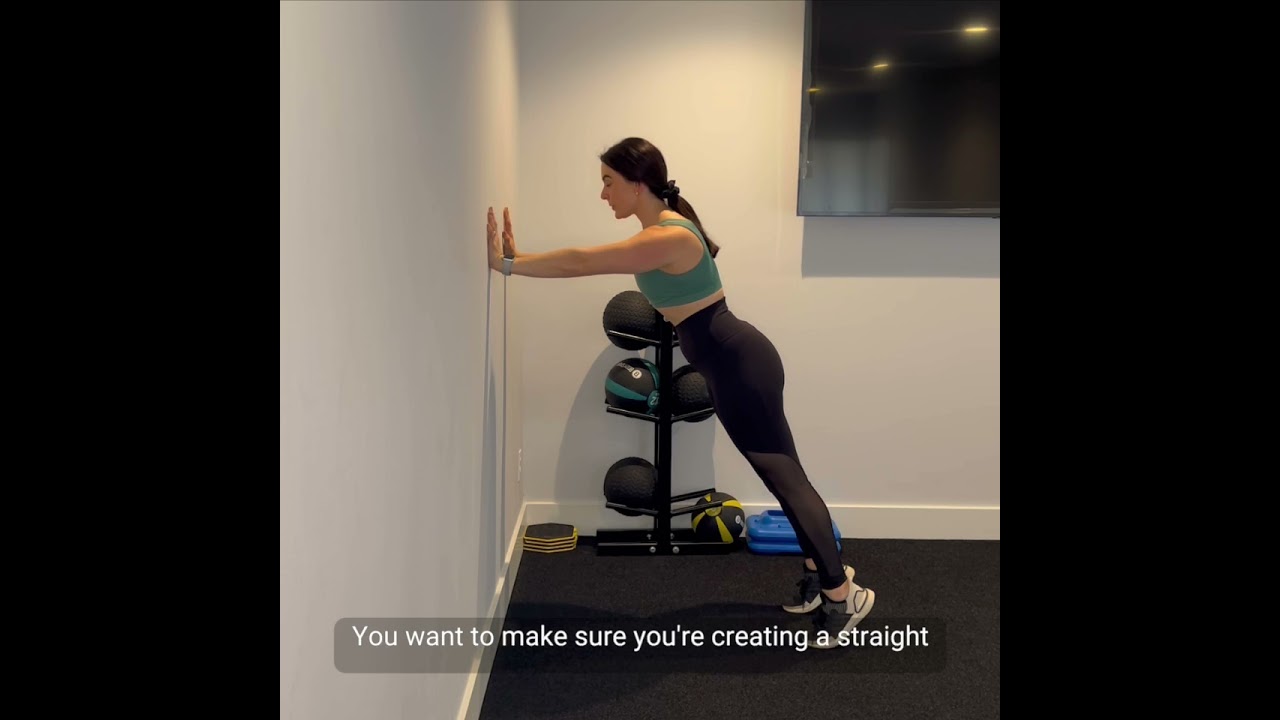
- Stand facing a wall.
- Place both hands on the wall, aligned with your shoulders.
- Step your feet back until your body is in a diagonal line.
- Engage your core.
- Hold in this position for 15-30 seconds.
4. Wall push up
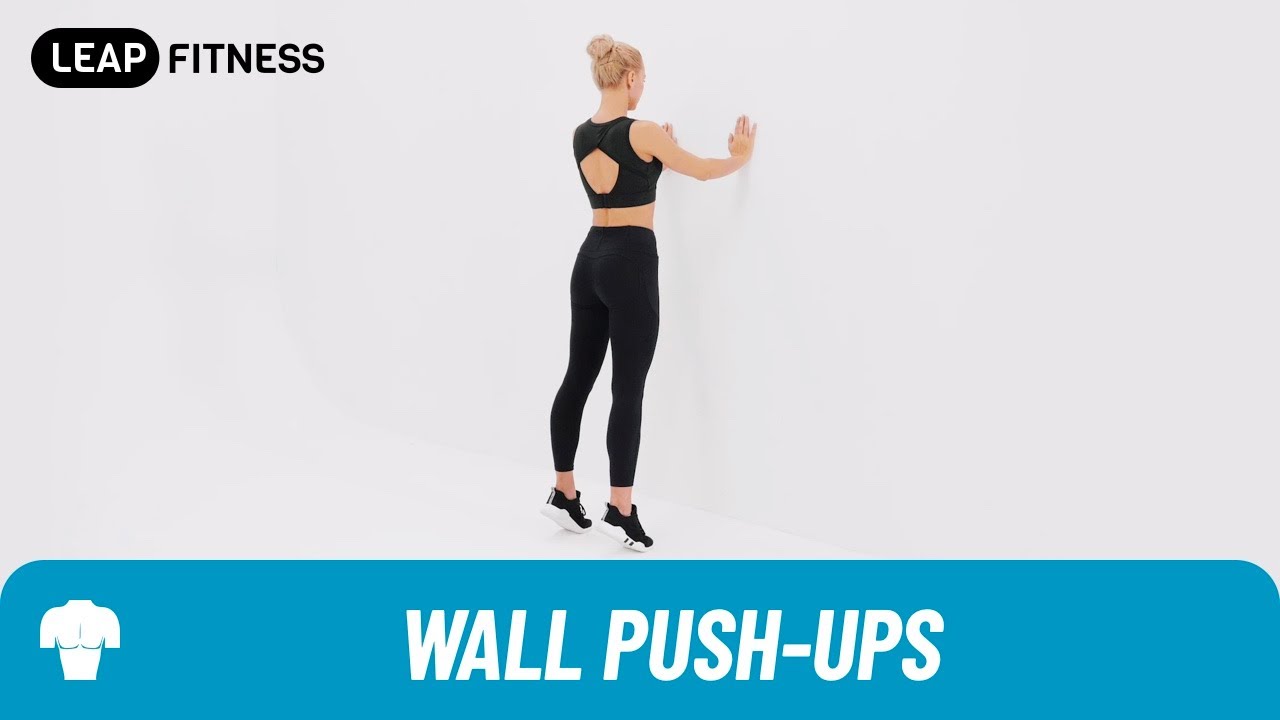
- Stand tall in front of a wall.
- Place both hands on the wall, slightly below the shoulders.
- Step your feet back until your body is in a diagonal line.
- Engage your core.
- Bend your elbows and lower your chest towards the wall, keeping your shoulders, hips, and feet in alignment.
- Push yourself back up to the starting position.
- Continue for 10-15 reps.
Benefits of the no-equipment exercises
The exercises in this routine strengthen major muscle groups in the upper body, lower body, and core without the need for extraneous equipment. They’re appropriate for total beginners, easily accessible, and relatively joint-friendly.
Diaphragmatic breathing and wall planks target muscles deep in the core, like the transverse abdominis and diaphragm. These muscles are responsible for stabilizing the pelvis and spine and maintaining proper posture.
Chair squats work your glutes, hamstrings, and quadriceps, and help to develop lower body strength and power. This exercise mimics the action of getting up and down from a seated position, making it a functional movement.
Your pectorals, shoulders, and triceps engage while doing wall push-ups. The stronger these muscles are, the easier it is to carry heavy objects or push yourself up from the floor.

Follow Tom's Guide on Google News and add us as a preferred source to get our up-to-date news, analysis, and reviews in your feeds. Alternatively, you can read our content on the Tom's Guide app available now for iOS and Android.
More from Tom's Guide
- I'm a personal trainer who works with clients over 50 — these are the 3 mobility exercises I never skip
- After 60, this is the 10-minute routine I use with my clients to stay strong, mobile and independent
- 'I’m a Pilates instructor, and I recommend these 5 core exercises to help older clients build strength and improve posture'