Tom's Guide Verdict
The Spatial Sleep Headband uses audio resonance therapy to improve your sleep but it's an uphill climb to get there. Vibrating your skull while filling your brain with unusual noises, the first few nights are rough going, but it does eventually pay off... slightly. The soothing noises became a pleasant bedtime addition but any sleep changes were minimal. At $319, it's a heavy investment in tech that takes a while to show results.
Reasons to buy
- +
Clinical research suggests it can help insomnia
- +
Easy to use
- +
Soundscapes grow to be pleasant with use
Reasons to avoid
- -
Uncomfortable to wear
- -
First few weeks are disruptive to your sleep
- -
Slow wait for payoff
Why you can trust Tom's Guide Our writers and editors spend hours analyzing and reviewing products, services, and apps to help find what's best for you. Find out more about how we test, analyze, and rate.
Spatial Sleep Headband: Review in brief
When you can't sleep, you'll try anything to drift off. But I can almost guarantee you've never tried something like the Spatial Sleep Headband. This peculiar wearable uses acoustic resonance to send you snoozing. I put it to the test and yes, it's as weird as it sounds.
Type: Sleep headband
Best for: Insomnia, trouble falling asleep
Dimensions: 4" x 7.8" x 3.7"
Weight: 2.5 oz
Warranty: 90 days limited
Price: $319 at SoundHealth
The Spatial Sleep Band sits on your forehead where it vibrates and plays sound. With regular use this combo should train your brain's neural response to build better sleep, no hard work required. Although I'll be honest, the Spatial Sleep Band isn't what I'd describe as easy.
I used the Spatial Sleep headband nightly for four weeks and I'll dive into my full experience below. In brief, it's an odd sensation and one that comes with a steep learning curve. And while eventually the Spatial Sleep Band does become a soothing addition to your bedtime routine, it's a struggle to get to that point.
As someone with only mild sleep issues, I've yet to see any real benefit from the Spatial Sleep Band. And the adjustment period was frustrating enough that I'd have given up if it wasn't my job to keep going. For those with more severe sleep problems, the annoyance of the Spatial Sleep Headband will likely feel like less of an intrusion, and the benefits more noticeable.
But it's an expensive gamble, with a Spatial Sleep Headband costing $319 (although that's slightly more affordable than similar sleep headbands like the Muse S Athena and the Elemind). You do get a 45-day return period as well, and by that point you should have a good idea if this product is for you. And it's subscription-free — that's rare for this kind of sleep tech.
Spatial Sleep Headband: Design & comfort
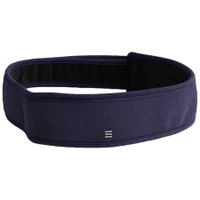
The overall design of the Spatial Sleep Headband is relatively simple. The slim band is made from a soft material and the Velcro strap is easy to adjust.
Its secret lies on the inside, where you'll find two purple nodules. These press against the forehead and deliver the acoustic vibration that makes the Spatial Headband work.

There's one more important part to the Spatial and that's the three lines on the front of the design. These are used to align the band with the center of your face, to ensure the sound is delivered to the right part of the forehead.
Spatial Sleep Headband: Performance
I used the Spatial Sleep Headband for four weeks as part of my usual routine, wearing it to bed (with an eye mask). Here's how I rate the performance...
Set up
Setting up the Spatial Sleep Headband is simple, for a piece of complex tech. First you have to charge it, then turn the headband on (there's a button on the front) and connect it to the app.
You'll be asked to scan your face — this helps Spatial create a sound just right for you. When you're ready to sleep, get the band in position and press start on the app.

The sound automatically plays for 45 minutes, at which point you should be asleep (fingers crossed). You can pause and restart the sound from the app, in case of late night wake ups.
The battery lasts for roughly 90 minutes, or two sessions, and I have used mine through two nights without charging. However, I recommend charging after every session, to avoid the sound cutting out. A USB-C cable is provided and charging takes roughly 30 minutes.
The app is mostly used to kick off the audio at night, but there's a fun memory game you can play as well.
Acoustic resonance therapy
I'm normally game for testing any kind of weird sleep tech but when I first strapped the Spatial Band to my head, I felt like I'd made a terrible mistake. Nodules pressed into my forehead and my bones rattled to a dissonant hum that sounded like pans clattering to the ground in the distance. I clenched my jaw and waited for it to end.
There was an important lesson here, echoed in the bright red dents on my forehead: do not over-tighten the band.

With a slightly looser band, night two went better. But the first week was rough. The sound and sensations of the Spatial Headband are far removed from my usual sleep comforts. I was hoping using it would help me drift off quickly but instead I lay awake, questioning the life choices that had led me to this moment.
Spatial does warn that it takes persistence before you see results and week two went better. The sound and I had gotten used to each other, meaning it no longer sat at the forefront of my mind. Now I enjoyed a pleasant background hum and only occasionally worried about my vibrating skull.
By week three I could see a glimmer of progress. The distant drone of the sleep headband had grown relaxing. One night, on the brink of sleep, I even found myself wondering what the pleasant noise was.

These benefits have yet to be reflected in my sleep score, however. On some nights it still takes me up upwards of 30 minutes to drift off fully. And I'm still experiencing brief wake ups in the night. (Including waking up to take the headband off — the nodules are uncomfortable when they press against your face.)
Last night, having reached the end of my four weeks testing period, I decided to ditch the headband and go back to my usual sleep patterns. I got an 88 sleep score from my Oura Ring, my highest in 12 nights.
As someone with only minor sleep problems, the Spatial Sleep Headband is a steep learning curve for a small advantage. But I don't want to write it off entirely. There are strong reviews from other users and Spatial has conducted some notable research. Spatial is designed to improve your natural sleep frequency, so for those who have a sleep routine that's completely off-beat, the Spatial sleep might help set the pace you need.
Spatial Sleep Headband: Should you buy?
The Spatial Headband uses acoustic vibrations and sleep-friendly frequencies to improve the quality and quantity of your sleep. It requires regular use to see the results and after several weeks the strange hum of the Spatial should be the backdrop to a decent night's rest.
The problem is that those first weeks are challenging, to put it mildly. From the sound to the feel, the Spatial band is simply strange to use. It feels like a disruptive force and you might be tempted to give up before you feel the benefits. Or rather, if you feel the benefits — I stuck with mine and noticed only minor differences.
Buy it if...
✅ You're experiencing long-term sleep deprivation: The Spatial Sleep Headband didn't work for me but it is backed by some serious research. Its impact might be more noticeable when overcoming bigger sleep problems.
✅ You've tried all kinds of sleep tech and nothing works: Acoustic resonance is unusual and not the kind of sleep enhancer you pick up on a whim. If you're struggling to improve your sleep, this might be worth a try.
✅ You're kept awake by disruptive noise: When the Spatial band is on, it drowns out most other sounds. That's good news if traffic or rowdy neighbors are contributing to your sleep problems.
Don't buy it if...
❌ You want a quick solution: Spatial suggests it takes three to four weeks to feel the benefit of the Sleep Headband, and I found week one to be a steep learning curve. The Muse S Athena sleep headband was much easier to get used to.
❌ You share a bed with a light sleeper: Some sound does leak from the Spatial headband which might disturb co-sleepers.
❌ You want a small sleep boost, rather than a total overhaul: For minor sleep issues the Spatial Sleep Band is a pricey investment that takes time to get used to. Try low-cost options like sleepy tea and guided meditations before diving in with the Spatial.
Spatial Sleep Headband: Alternatives

The Muse S Athena uses your brainwaves to track your sleep and, when it senses you're about to be disturbed, plays a sleep-inducing sound to send you back under. I tested it and found the performance impressive but it is a premium buy, retailing for $479.99 at Muse and Amazon.

The Snoozeband isn't as high-tech as the other options listed here but this comfortable set of sleep headphones can help you drift off in noisy environments. It utilizes thin speakers in a soft headband to deliver sleep sounds without the discomfort of an earbud. From $49.99 at Snoozeband.